The
AUO 10.1-inch G101EVT05.2 has carved out a distinct niche in this demanding environment, offering a balance of optical clarity, mechanical robustness, and environmental adaptability. Unlike consumer-grade displays that prioritize color saturation and thin profiles, this panel is engineered for 24/7 operation in factory floors, medical carts, and outdoor kiosks. This article dissects the technical architecture of the
G101EVT05.2, moving beyond basic specifications to explore how its design choices—from LVDS signal integrity to backlight longevity—directly serve industrial use cases. We will examine its optical performance under variable lighting, its mechanical integration challenges, and its operational longevity in harsh thermal conditions.
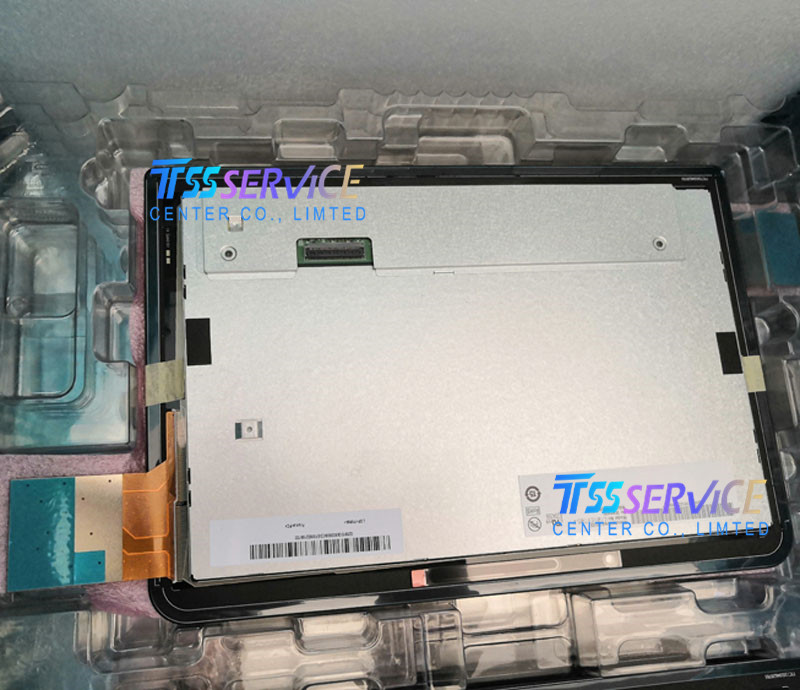
Optical Architecture and Viewing Performance Under Harsh Lighting
The
G101EVT05.2 employs an
a-Si TFT active matrix with a native resolution of 1024x600 (WSVGA), a format specifically chosen to balance detail density with processing overhead in embedded systems. However, its defining optical feature is the
700 cd/m² typical brightness. This is not a cosmetic spec; it is a calculated response to the need for readability under high ambient light, such as warehouse skylights or sunlit production lines. The panel uses a White LED backlight system, which operates at a color temperature close to 6500K, ensuring that color rendering remains neutral even when brightness is dialed down for night-shift use.
-
Contrast and Viewing Angles: With a 1000:1 contrast ratio, the panel delivers deep blacks that are essential for distinguishing subtle grayscale variations in medical imaging or quality control software. The 85°/85°/85°/85° viewing angles (CR≥10) are achieved through a specific TN+Film technology. While TN panels are often criticized for color shift, the film layer in this model compensates for gamma inversion, making it viable for multi-operator workstations where users view the screen from oblique angles.
-
Anti-Glare Treatment: The surface hardness rating of 3H and a haze value of approximately 25% reduce specular reflections without introducing a distracting sparkle effect. This is critical for touch-screen integrations, where oils from finger contact can otherwise create glare hotspots.
Mechanical Design and Thermal Management Considerations
Industrial displays must endure vibration, shock, and thermal cycling that would destroy standard monitors. The G101EVT05.2’s mechanical architecture reflects this reality. The module measures 235.0 x 143.0 x 6.1 mm, with an active area of 222.72 x 125.28 mm. Its slim profile (6.1 mm) is deceptive, as the metallic bezel and reinforced PCB mounting holes allow it to withstand up to 50G shock in non-operating conditions. The panel’s weight, under 300 grams, reduces stress on articulating arms used in CNC machine interfaces.
Thermally, the display is rated for an operating range of -20°C to +70°C. This is achieved through careful selection of the liquid crystal mixture, which maintains appropriate response times even near freezing. The response time itself is rated at 8 ms (Tr+Tf), which, while not gaming-grade, prevents ghosting in scrolling industrial logs or real-time chart updates. The backlight LED array is distributed along the edge, coupled with a heat-spreading copper layer to prevent hot spots that degrade luminance uniformity over time. For integrators, the inclusion of mounting holes on both side and bottom edges provides flexibility in vertical or horizontal chassis layouts, accommodating space-constrained cabinets.
Interface Compatibility and Signal Integrity in Noisy Environments
The electrical interface of the
G101EVT05.2 is a dual-channel 6-bit LVDS connector, operating at a voltage of 3.3V. In industrial settings rife with electromagnetic interference from motors and power inverters, LVDS remains the gold standard for differential signaling. The
40-pin compatible connector (typically JAE FI-SE series) uses a reduced swing (350 mV differential) to minimize radiated emissions. A critical but often overlooked feature is the built-in
Gamma correction buffer and
VCOM adjustment. These allow the panel to be calibrated after the system is powered on, compensating for voltage drift caused by aging components or temperature changes. This is vital for color-critical inspection tasks where consistency must be maintained across thousands of hours of operation.
The panel operates at a 60 Hz refresh rate standard, but its timing controller supports a pixel clock range that allows downclocking to 50 Hz or up to 75 Hz if needed. The default power consumption is a frugal 6.0 Watts typical (with backlight), which simplifies thermal budgeting in sealed enclosures where convection is limited. The circuit design includes a low-droop voltage regulator that maintains stable performance even when the input supply sags to 3.0V, a common occurrence in battery-backed industrial equipment during brownouts.
Lifecycle Support and Supply Chain Reliability
One of the most strategic advantages of the AUO G101EVT05.2 is not a hardware spec but a business commitment: long-term product availability. Unlike consumer panels that are discontinued within 12–18 months, AUO typically guarantees industrial panels for a minimum of five years from launch, often extending to seven. This is crucial for OEMs and system integrators who must support field-deployed equipment for a decade or more. The panel adheres to RoHS and REACH standards, ensuring compliance with evolving global environmental regulations. Furthermore, the use of standard LVDS signaling means that a replacement unit can be swapped into an existing design without a complete PCB re-spin, provided the pinout is respected.
The
AUO 10.1-inch G101EVT05.2 stands as a testament to engineering for endurance rather than aesthetics, delivering a calibrated balance of brightness, thermal tolerance, and signal integrity that is rarely found in generic displays. Its true value lies in the synthesis of high-luminance viewing, robust mechanical construction, and a long-term supply guarantee, making it a safe and economically sound choice for systems that must operate reliably over years of continuous use. For the design engineer, this panel reduces risk during certification testing and field deployment, ultimately lowering total cost of ownership while ensuring that the human-machine interface remains clear, responsive, and dependable.


