In the demanding world of industrial automation, medical instrumentation, and Human-Machine Interfaces (HMI), the display is not merely a peripheral; it is the critical nexus between operator and machine. Selecting the wrong panel can lead to operator fatigue, misread data, and costly downtime,
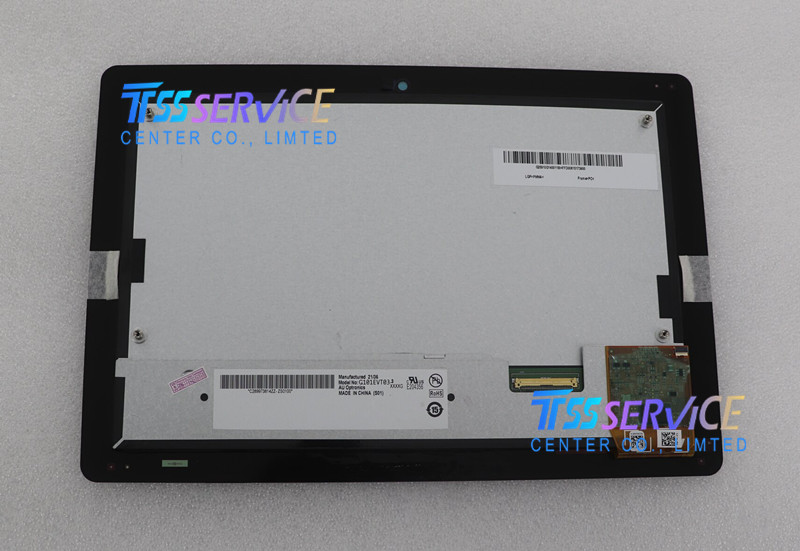
In the demanding world of industrial automation, medical instrumentation, and Human-Machine Interfaces (HMI), the display is not merely a peripheral; it is the critical nexus between operator and machine. Selecting the wrong panel can lead to operator fatigue, misread data, and costly downtime, while a superior display ensures seamless interaction and reliability. The AUO G101EVT03.3 stands as a prominent contender in this specialized arena, offering a 10.1-inch diagonal with a sharp 1280×800 (WXGA) resolution. However, claiming a panel is "industrial grade" is insufficient; one must dissect the engineering choices that make it suitable for 24/7 operation. This article delves beyond the glossy spec sheet, examining the optical characteristics, mechanical robustness, interface protocols, and long-term viability of the G101EVT03.3. We will explore how this specific model navigates the trade-offs between power consumption, brightness, viewing angles, and durability to serve as the visual backbone for environments where failure is not an option.
Optical Architecture: Balancing Brightness, Contrast, and Viewing Angles
At the heart of the G101EVT03.3 lies its Advanced Wide View technology, often based on IPS (In-Plane Switching) or a proprietary AUO variant. This is a defining feature for industrial use, where operators may view the screen from off-center positions without experiencing significant color shift or contrast inversion. Typical specifications list a brightness of 500 cd/m². While this might seem modest compared to sunlight-readable panels, it represents a deliberate balance. In a factory control room or medical cart, 500 nits is sufficient to overcome ambient indoor lighting without generating excessive heat or power strain that shortens backlight lifespan.
The contrast ratio, often listed at 1000:1, is where the panel’s depth lies. A true 1000:1 contrast ensures deep blacks are distinguishable from dark grays, which is critical for displaying complex medical imaging (e.g., X-rays) or industrial schematics with fine dark lines. The panel’s anti-glare treatment is another subtle yet crucial factor. By diffusing light from overhead fixtures, it significantly reduces specular reflections, preventing eye strain during prolonged monitoring. The 1280×800 resolution on a 10.1-inch diagonal yields a pixel density of approximately 149 PPI (Pixels Per Inch). This density is a sweet spot: it provides crisp text and icons without burdening the system’s graphics processor or requiring extreme scaling, which can introduce software compatibility issues in legacy industrial applications.
Mechanical Integrity and Thermal Management for 24/7 Operation
An industrial display must survive where consumer electronics fail. The G101EVT03.3 is engineered with a robust mechanical frame and a specific operating temperature range, typically rated from -10°C to +60°C (or wider, depending on the specific model variant). This thermal envelope is essential for applications like outdoor kiosks in winter or near hot machinery in a production line. The panel’s construction likely utilizes a wide-temperature liquid crystal material, which prevents the fluid from freezing or becoming sluggish in cold conditions, ensuring fast pixel response times even in sub-zero environments.
Critically, the backlight unit is a key determinant of longevity. This panel employs WLED (White Light Emitting Diode) edge-lit technology. Unlike CCFL (Cold Cathode Fluorescent Lamp) backlights of older generations, LEDs offer instant-on capability, lower voltage requirements, and a markedly longer lifetime—often rated at 50,000 hours or more to half-brightness. Furthermore, the LVDS (Low-Voltage Differential Signaling) interface, common in this model, is a mature standard. Its physical connector is designed for repeated insertion cycles and provides a secure lock, preventing accidental disconnection due to vibration. The mounting holes and bezel design are standardized to allow for easy integration into custom enclosures, respecting the IP (Ingress Protection) ratings of the final equipment.
Interface and Compatibility: Ensuring Seamless System Integration
The G101EVT03.3 communicates via a 40-pin LVDS connector, a reliable interface that has been the backbone of industrial display integration for years. This is not a cutting-edge interface like eDP (Embedded DisplayPort), but that is precisely its strength. LVDS is well-understood, with vast driver support across microcontroller boards, single-board computers, and industrial motherboards. The panel likely supports a 6-bit or 8-bit color depth, enabling a palette of 262K or 16.7M colors. For visual inspection or diagnostic systems, the 8-bit capability is significant as it allows for gradation in color-critical applications without false contouring.
Data timing and synchronization are where deeper attention is required. The panel demands specific timing parameters, including clock frequency (typically around 71 MHz for WXGA), horizontal back porch, and vertical sync width. An integrator must ensure that the host controller’s output matches these timings exactly; otherwise, the image will be off-center or jittery. The LVDS signal is also inherently differential, offering good noise immunity in electrically noisy factory environments. The interface cabling must be kept to a reasonable length (usually under 0.5 meters) to maintain signal integrity. This physical limitation dictates the layout of the system, forcing a tight coupling between the display and the main computing module, which is often desirable for compact industrial enclosures.
Longevity, Sourcing, and the Total Cost of Ownership
The most overlooked aspect of an industrial display is its production lifecycle. AUO (AU Optronics) commits to a long-term support program for its industrial product lines. The G101EVT03.3 benefits from this structured longevity, with the manufacturer typically guaranteeing availability for 3 to 5 years or more. This is vital for certified medical devices or safety-critical systems that require regulatory re-validation for any component change. Sourcing from a reputable vendor that can provide traceable serial numbers and original packaging is equally important to avoid counterfeit or refurbished units that may have degraded backlights.
Furthermore, power consumption is a direct factor in total cost of ownership (TCO). This panel typically draws around 6-8 watts for the backlight and roughly the same for the LCD drive logic, summing to approximately 12-15 watts. In a system operating 8,760 hours per year, the cumulative energy cost, while small per unit, becomes significant across a large deployment of kiosks or factory terminals. More importantly, lower power means less wasted heat inside the system’s enclosure, reducing or eliminating the need for active cooling fans, which are mechanical failure points. The careful engineering of this panel ensures it is a long-term asset, not a disposable component, reinforcing its role in reliable industrial infrastructure.
Conclusion
The AUO G101EVT03.3 is not merely a 10.1-inch display; it is a carefully engineered solution designed for the rigors of continuous industrial operation. Its 1280×800 resolution combined with an IPS-like viewing angle and 500-nit brightness provides a clear, legible interface for operators while the robust mechanical design and wide temperature tolerance ensure reliability in harsh conditions. The use of a mature LVDS interface simplifies integration into existing industrial systems, and AUO’s commitment to long-term production guarantees supply for critical applications. For engineers and project managers seeking a dependable, high-quality, and maintainable display for HMIs, medical carts, or embedded systems, the G101EVT03.3 represents a prudent and versatile choice that effectively balances performance, durability, and lifecycle cost.


