In the sprawling landscape of display technology, where consumer-grade panels often dominate headlines with flashy specs, a quieter, more resilient category of screens serves as the backbone of critical industrial systems. The KCG047QV1AA-A210, a 4.7-inch LCD display panel manufactured by Kyocera
In the sprawling landscape of display technology, where consumer-grade panels often dominate headlines with flashy specs, a quieter, more resilient category of screens serves as the backbone of critical industrial systems. The KCG047QV1AA-A210, a 4.7-inch LCD display panel manufactured by Kyocera, represents precisely this category—a component designed not for casual browsing, but for environments where reliability, clarity, and longevity are non-negotiable. This article delves deep into the architecture, performance parameters, and strategic value of this specific model, moving beyond superficial specifications to explore why a seemingly modest 320x240 resolution panel remains a preferred choice in sectors like medical instrumentation, heavy machinery, and outdoor kiosks. By examining its technical nuances, interface considerations, and operational resilience, we aim to provide engineers, procurement specialists, and system integrators with a comprehensive understanding of what makes the KCG047QV1AA-A210 a genuinely strategic component in high-stakes deployments.
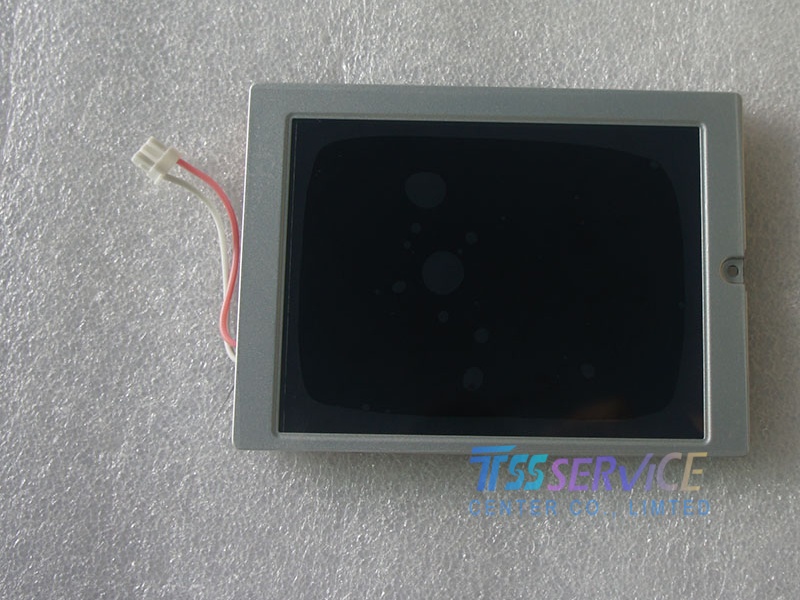
Decoding the Pixel Architecture: Why 320x240 Still Matters
In an era of 4K and high-density displays, the 320x240 QVGA resolution of the KCG047QV1AA-A210 may appear anachronistic, yet this resolution is deliberately chosen for specific operational contexts. The panel employs a transmissive a-Si TFT LCD technology with a 4:3 aspect ratio, which is mathematically ideal for displaying fixed-format data such as numeric readouts, waveform graphs, or control menus. Unlike widescreen panels that waste pixel space on letterboxing or scaling artifacts, this 320x240 grid maps directly to legacy HMI (Human-Machine Interface) layouts without computational overhead.
The pixel pitch of approximately 0.297mm ensures that at typical viewing distances of 30 to 50 centimeters—common in industrial control panels—the human eye perceives a sharp image without the need for anti-aliasing. Furthermore, the 16.7 million color depth (8-bit per channel) provides sufficient gradation for distinguishing critical status indicators like alarm thresholds or gradient heat maps. Engineers value this panel because it eliminates the risk of pixel misalignment in safety-critical readouts, a hazard that can occur when scaling lower-resolution elements to higher-resolution displays. The simplicity of the QVGA architecture also reduces the processing load on the host microcontroller, enabling faster refresh rates in real-time monitoring applications.
Engineering for Extremes: Optical Performance and Environmental Robustness
The KCG047QV1AA-A210 distinguishes itself through optical engineering tailored for harsh lighting conditions. With a typical luminance of 400 cd/m² and a contrast ratio of 500:1 (typical), this panel achieves legibility in direct sunlight—a critical factor for outdoor or semi-outdoor equipment like gas pump terminals and agricultural machinery. Kyocera achieves this through a high-efficiency LED backlight system rated for 70,000 hours of continuous operation (L70 standard), which significantly outperforms the 30,000-hour lifespan of generic CCFL-based panels.
What makes this panel truly resilient, however, is its operating temperature range of -20°C to +70°C. Many commercial panels sustain damage or image sticking when exposed to thermal cycling near freezing or mid-summer heat. The KCG047QV1AA-A210 incorporates a wide-temperature liquid crystal mixture and robust polarizer materials that prevent crystallization at low temperatures and thermal expansion dislocation at high temperatures. Additionally, the anti-glare surface treatment with a haze value of approximately 25% diffuses reflections from overhead lighting or direct sunlight, reducing operator eye strain during prolonged shifts. For installations in humid environments, the panel’s connector and edge-sealing design offer basic protection against condensation, though it is not fully waterproof—a compromise that keeps cost reasonable while meeting IP54-level integration standards.
Interface and Integration: The Backbone of Seamless Connectivity
Beyond its visual performance, the KCG047QV1AA-A210 excels in integration flexibility through its 24-bit parallel RGB interface. This traditional but robust interface standard allows direct connection to a wide range of microcontrollers, FPGAs, and ARM-based processors without requiring complex protocol conversion or expensive bridge chips. The pin assignment is documented with meticulous timing diagrams that specify setup and hold times as low as 5 nanoseconds, enabling high-speed data transfer at up to 60 frames per second.
From a system design perspective, this panel requires only a single 3.3V power supply for logic and 10V for the LCD driver, simplifying power tree design in battery-operated or power-sensitive devices. The integrated TCON (Timing Controller) generates all necessary gate and source driver signals internally, meaning the host processor only needs to provide pixel data and basic sync signals (HSYNC, VSYNC, DE). This minimal pin count reduces PCB routing complexity and electromagnetic interference risks. For engineers migrating from older monochrome STN displays, the KCG047QV1AA-A210 offers a drop-in replacement path with improved viewing angles (typically 70/70/60/70 degrees) while maintaining backward compatibility with existing 8-bit interface logic. Samples of initialization code are available from Kyocera’s application notes, drastically reducing firmware development cycles from weeks to days.
Lifecycle Management and Strategic Procurement Considerations
Perhaps the most compelling argument for selecting the KCG047QV1AA-A210 lies in Kyocera’s product lifecycle policy. Unlike consumer electronics manufacturers who may discontinue panels within 18 months, Kyocera typically guarantees availability for five to seven years from the date of first production. This long-term support is critical for industries where re-certification of medical devices or industrial control systems is costly and time-consuming. The panel’s RoHS and REACH compliance ensure global regulatory acceptance, while the mask revision level (indicated by the -A210 suffix) provides traceability for quality audits.
For procurement teams, it is essential to understand that this model is available in both standard and customisable versions, where Kyocera can modify the cover glass thickness (0.5mm to 1.1mm) or apply optical bonding for enhanced shock resistance. Inventory planning should account for a typical lead time of 8 to 12 weeks for OEM volumes, but the absence of end-of-life notices since 2020 indicates strong market confidence. When sourcing, verify that the panel ships with the correct FPC connector orientation (right-angle vs. straight), as field reversals can damage the fragile driver IC. Distributors like Mouser and DigiKey maintain safety stock, but for production lines, establishing a direct supply agreement with Kyocera’s Industrial Components Division is recommended to lock pricing and avoid allocation risks during global component shortages.
The KCG047QV1AA-A210 is not a cutting-edge consumer panel, but rather a meticulously engineered industrial component that solves real-world problems of readability, reliability, and longevity in demanding environments. Its 320x240 resolution, robust wide-temperature design, simple parallel interface, and long lifecycle support make it a strategic choice for any system where failure is not an option. For engineers seeking to reduce field failures and total cost of ownership, this display from Kyocera offers proven performance that transcends superficial specifications, delivering confidence that the interface between human and machine will remain clear, responsive, and durable for years to come.


