In the demanding landscape of industrial automation, medical instrumentation, and human-machine interface (HMI) systems, the display is more than a simple output device
In the demanding landscape of industrial automation, medical instrumentation, and human-machine interface (HMI) systems, the display is more than a simple output device; it is the critical point of interaction between human operators and complex machinery. The market is flooded with consumer-grade screens, but the true backbone of reliable operation lies in specialized industrial components. The AM-800480R2TMQW-01H-F, a 7.0-inch TFT LCD module manufactured by Ampire, represents this exact class of robust engineering. This article delves beyond superficial specifications to explore the architectural depth, interface logic, optical engineering, and environmental resilience that define this specific display. We will analyze why this particular model, with its 800 × 480 resolution and Ampire’s stringent design philosophy, is uniquely positioned to serve critical applications where a pixel failure is not a mere inconvenience but a potential operational hazard.
Architecture and Resolution: The Goldilocks Zone for Industrial HMI
Selecting the correct resolution for an industrial application is a balance between detailed data presentation and processing overhead. The AM-800480R2TMQW-01H-F employs an 800 × 480 (WVGA) resolution on a 7.0-inch diagonal. This is not an arbitrary choice. In the industrial domain, higher resolutions like Full HD on a small screen often necessitate frequent zooming or result in unreadably small text, while lower resolutions like QVGA lack the real estate to display complex schematics or multiple data points simultaneously. The 800 × 480 configuration provides a sweet spot—ample pixel density to render crisp kanban charts, process flow diagrams, and soft control buttons without straining the microprocessor’s graphics capabilities.
Furthermore, the "R" in the model number signifies a specific revision involving the TFT (Thin-Film Transistor) backplane. This architecture ensures active matrix addressing, where each pixel is controlled by its own transistor and capacitor. This is crucial for preventing crosstalk—where a signal intended for one pixel inadvertently affects a neighbor—a common problem in passive matrix displays. For an industrial operator monitoring a critical temperature variable, this pixel-level stability ensures that the number "85°C" is solid and ghost-free, eliminating visual fatigue and potential misreads that could lead to costly downtime or safety incidents.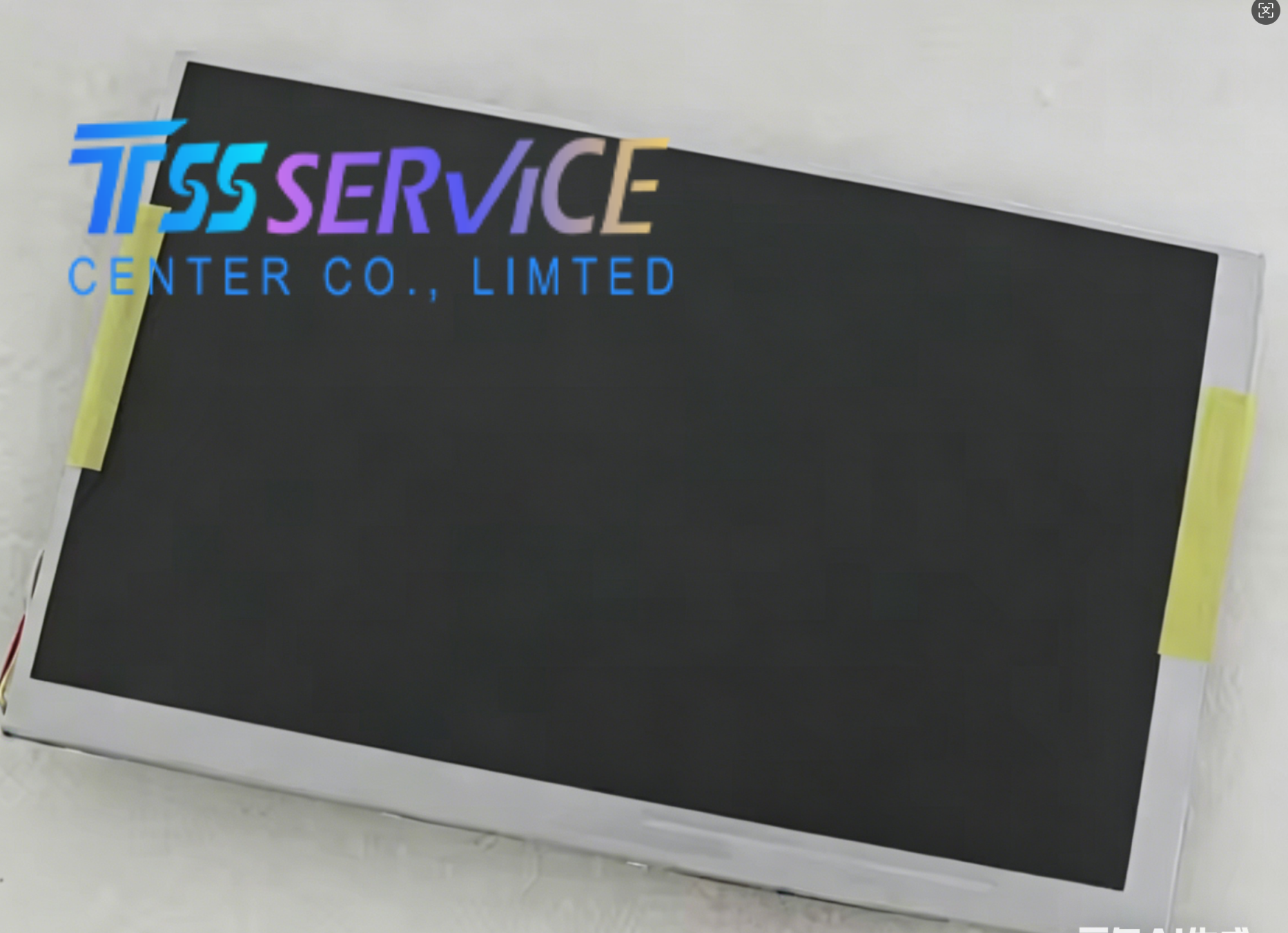
Interface and Data Integrity: Ensuring Real-Time Visual Fidelity
The physical connection between a display and a host controller is often an overlooked vulnerability in harsh environments. The AM-800480R2TMQW-01H-F utilizes a standard 40-pin RGB (Red-Green-Blue) parallel interface. While HDMI or LVDS are common in consumer gear, the parallel interface remains the gold standard for many high-reliability industrial MCUs (Microcontroller Units) and FPGAs (Field-Programmable Gate Arrays). Its simplicity allows for lower latency, as there is no encoding or decoding protocol overhead. For a controller adjusting a robotic arm’s trajectory on a millisecond scale, this direct pixel-mapping capability is non-negotiable.
Beyond the protocol, the module’s PCB (Printed Circuit Board) layout is designed with signal integrity in mind. Industrial environments are rife with electromagnetic interference (EMI) from motors, solenoids, and power supplies. Ampire integrates specific routing and grounding strategies on the 40-pin connector to minimize jitter and data corruption. This means that even when a large industrial motor cycles on and off just inches from the display, the image—whether a static warning icon or a rapidly updating FFT (Fast Fourier Transform) spectrum—remains stable and free from line noise. This robust interface design directly translates to lower system failure rates and more reliable operator feedback.
Optical Engineering: Visibility Through Extreme Conditions
A display is only as good as its readability in the specific lighting of its deployment. The AM-800480R2TMQW-01H-F is typically configured with a high-brightness LED backlight and an optimized viewing angle. The "QW" in the code often indicates a specific polarizer or surface treatment. Unlike a smartphone screen designed for a single, direct user, an industrial display must be legible from wide angles—for a technician looking from the side of a panel or a crane operator viewing a terminal from above. The architectural design of this module ensures a contrast ratio that does not collapse when viewed at extreme angles, a critical failure point for cheaper displays.
The optical stack is also engineered for specific transmissive characteristics. By carefully matching the LCD glass with the backlight’s color temperature and diffuser film, Ampire achieves a uniform luminance across the entire 7.0-inch surface. In a medical device monitoring a patient’s vitals, a hotspot or dim edge on the display could obscure a critical waveform. The engineering of the white LED backlight also considers long-term degradation; the circuit is designed to maintain constant current to the LEDs, ensuring that the display’s brightness does not drift significantly over its operational lifespan of tens of thousands of hours.
Environmental Resilience: Built for the Factory Floor
The most distinguishing feature of an industrial-grade display like the AM-800480R2TMQW-01H-F is its ability to survive and function in physically punishing conditions. This is not a standard commercial component. The module is designed to operate across a wide temperature range, typically from -20°C to +70°C, which is essential for installations near manufacturing ovens, freezers, or in outdoor kiosks. The liquid crystal fluid itself and the polarizers are selected for their ability to maintain response times and contrast at these extremes, preventing the "ghosting" or blackening that occurs with consumer screens in cold environments.
Furthermore, the mechanical construction emphasizes vibration and shock resistance. The LCD glass is often bonded to the backlight frame using a robust adhesive, and the module’s physical mounting points are reinforced. In a portable diagnostic tool or a panel mounted on a vibrating conveyor system, this prevents micro-fractures in the glass or the critical flex cables that connect the driver ICs. The inclusion of a robust front bezel and the treatment of the polarizer surface with an anti-glare (AG) coating further enhance its durability. The combination of a wide operating temperature range, vibration tolerance, and a chemically resistant surface makes this display a prime candidate for severe industrial environments where consumer electronics would fail catastrophically within days.
Conclusion
The AM-800480R2TMQW-01H-F is far more than a commodity screen; it is a meticulously engineered component designed for the unforgiving reality of industrial operations. From its goldilocks 800×480 resolution that balances data density with readability, to its robust parallel interface that resists EMI, every specification is a response to a specific industrial challenge. Its optical stack ensures visibility when it matters most, and its environmental ruggedness guarantees a long, reliable life on the factory floor. For engineers and system integrators building equipment where failure is not an option, this Ampire display provides the confidence that the operator’s window into the machine will always be clear, stable, and true.


