In the realm of industrial human-machine interfaces, the choice of display technology can make or break the user experience. Today, we delve into a specific component that has quietly become a workhorse in medical, automation, and instrumentation applications
Introduction: Unlocking the Precision Potential of the TX18D16VM1CBB
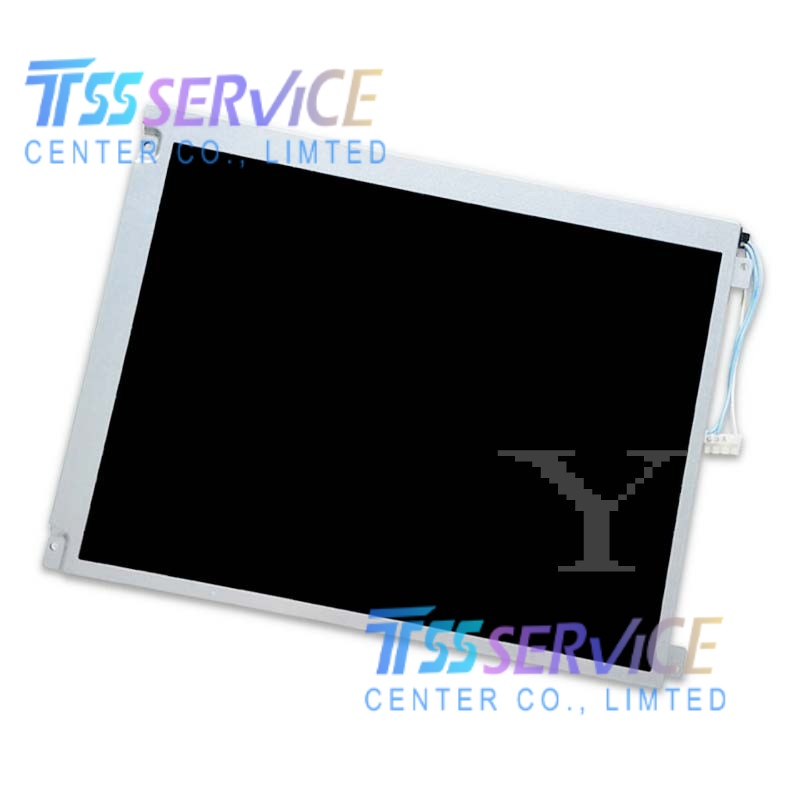
In the realm of industrial human-machine interfaces, the choice of display technology can make or break the user experience. Today, we delve into a specific component that has quietly become a workhorse in medical, automation, and instrumentation applications: the TX18D16VM1CBB. This 7.0-inch TFT LCD panel from Hitachi is not merely a screen; it represents a deliberate engineering compromise between optical clarity and tactile interaction. By integrating a 4-wire resistive touch layer directly into the assembly, this module addresses a critical pain point for designers who require a reliable, cost-effective interface that functions flawlessly in environments where capacitive touch fails. The following analysis will dissect its optical characteristics, the technical rationale behind its resistive touch implementation, the mechanical design constraints it imposes, and its strategic fit within modern embedded systems. Our goal is to move beyond datasheet specifications and explore how this component’s architecture influences system-level design decisions.

Optical Architecture: More Than Just Resolution
When evaluating the TX18D16VM1CBB, one must first understand that its 7.0-inch diagonal, with a native resolution of 800 x 480 pixels (WVGA), is deliberately chosen for a specific viewing dynamic. This is not a pixel-dense smartphone screen; rather, it aligns with the 16:9 aspect ratio that is widely adopted for video-based interfaces and diagnostic imaging in industrial settings. The panel utilizes TN (Twisted Nematic) technology, which, while having narrower viewing angles compared to IPS, offers significant advantages in response time and power consumption. For an operator monitoring a real-time process, the 25ms typical response time ensures that moving graphics or cursor actions are rendered without noticeable ghosting.
Critically, the optical design is calibrated for high luminance (typically 400 cd/m² or higher), a necessity for operation in brightly lit factory floors or medical theaters. The inclusion of an anti-glare coating is not a luxury but a functional requirement when the resistive touch overlay introduces an additional air gap. This air gap can cause internal reflections, and the treatment of the top polarizer is engineered to mitigate this. Furthermore, the color gamut, while limited to approximately 50% of NTSC, is deliberately tuned for stability over temperature, ensuring that a technician reading a blood gas analyzer sees consistent colors from a cold start to full operational temperature. The true depth of this panel lies in how its optical traits are optimized not for entertainment, but for readability under harsh lighting and thermal stress.
The Tactile Interface: Why 4-Wire Resistive Remains Relevant
While the market has shifted heavily toward capacitive touch, the 4-wire resistive touch integrated into the TX18D16VM1CBB is a testament to the adage that the best solution is the right solution for the environment. The fundamental advantage is hardware-level simplicity and environmental isolation. A 4-wire resistive sensor works by pressing two conductive layers together; it detects position based on a voltage gradient. This mechanism provides three distinct functional benefits for industrial use.
First, it is immune to surface contaminants. Gloves, water droplets, grease, or residue from chemical cleaning agents do not interfere with the touch detection mechanism. In a surgical suite or a food processing plant, this is non-negotiable. Second, the touch controller (typically an external IC like the ADS7846) is extremely low power, and the sensing matrix requires no complex capacitive sensing channels, reducing the overall BOM cost. Third, the 4-wire construction is inherently rugged against accidental activation; it requires intentional physical pressure, preventing false triggers from dust or small insects.
However, the trade-off is a reduction in optical clarity (typically a 5-10% light loss) and the lack of multi-touch gestures. But for the intended application domains—where a single, precise point of input is required for a button press or a slider movement—the 4-wire resistive touch is not a compromise; it is an optimized interface. The calibration stability of these sensors is also excellent, with most requiring only a single factory calibration to maintain linearity over years of use, provided the mechanical stack is properly designed to prevent flexing.
Mechanical Integration and Durability Constraints
The physical design of the TX18D16VM1CBB imposes specific constraints that system integrators must respect to ensure longevity. The LCD cell itself is a glass substrate, but the top surface is a polyester (PET) film that forms the flexible outer layer of the resistive touch sensor. This film is susceptible to scratching if not protected, but its hardness is sufficient for stylus or gloved finger interaction. The critical mechanical parameter is the activation force, typically specified between 50g and 100g. Driving a system with a touch that requires too light a touch leads to false activations; too heavy leads to user fatigue.
Beyond the touch interface, the panel’s physical size (approximately 165mm x 100mm with a depth of around 7mm including the backlight) dictates a design that must prioritize uniform backlight pressure. The module uses an LED array backlight, and its longevity (often rated for 50,000 hours to half-brightness) depends on adequate thermal dissipation through the mounting frame. Integrators must avoid clamping pressure points that could cause Newton’s rings (optical interference patterns) or localized bright spots on the LCD. The connector interface—typically a 50-pin or 60-pin FPC—requires a secure locking mechanism, as vibration can cause intermittent display failures. Proper mechanical integration involves not just a mounting bezel, but a gasket system to prevent dust ingress, as the air gap between the resistive touch and the LCD can become a dust attractor if not sealed.
Strategic Fit in Embedded System Design
Selecting the TX18D16VM1CBB is a strategic decision that affects the entire system architecture. From a firmware perspective, the panel requires a parallel RGB interface (typically 24-bit), which demands GPIO-rich microcontrollers or dedicated display processors. This is a more resource-intensive interface than SPI-based serial displays, but it provides the bandwidth needed for smooth video and fast frame updates. The backlight driver must be a constant-current LED driver with PWM dimming capability to control brightness, which is essential for adapting to ambient light conditions in fixed installations.
From a software perspective, the 4-wire resistive touch requires a dedicated ADC (Analog-to-Digital Converter) channel and a touch-controller IC that handles the signal conditioning. The firmware must manage the X/Y coordinate acquisition, typically at 200 Hz, and apply a debounce filter to reject noise from mechanical bounce. Because resistive touch is pressure-based, the system can also interpret touch-pressure level, a feature often unused but valuable for distinguishing between a deliberate press and a resting hand. Furthermore, the panel’s operating temperature range (typically -20°C to +70°C) allows for deployment in cold storage or near industrial ovens, a capability that consumer-grade capacitive panels cannot match. The long-term availability guarantee from Hitachi (often 5-7 years) makes this panel a safe choice for medical devices that require regulatory recertification if components change.
In conclusion, the TX18D16VM1CBB is not a commodity display but a carefully engineered solution for harsh environments where reliability trumps aesthetics. Its combination of a stable TN panel, a 4-wire resistive touch interface that tolerates gloves and contaminants, and a robust mechanical stack make it an enduring choice for industrial and medical systems designers. The true value lies not in the pixel count, but in the predictable, glitch-free performance over years of operation in demanding conditions. For any integration team prioritizing uptime and user safety over flashy interactions, this panel remains a benchmark of practical engineering.


