Airports are embarking on a visual revolution, transforming from functional waypoints into immersive digital gateways. At the heart of this shift is the adoption of flexible OLED technology for flight information displays. This article delves into how these ultra-thin, bendable screens are being seamlessly integrated into the most challenging architectural spaces, such as curved ceilings, to create a unified and dynamic passenger information ecosystem. We will explore the technical advantages, design possibilities, and profound impact this upgrade has on operational efficiency, passenger experience, and the very identity of the modern airport.
The Limitations of Legacy Display Systems
Traditional flight information display systems, primarily relying on LCD or LED panels, are inherently rigid in both form and function. Their physical inflexibility forces architects and designers to work around them, often resulting in bulky, obtrusive installations that clash with modern, flowing airport aesthetics. More critically, their operational limitations are significant. They consume substantial power, generate noticeable heat, and offer constrained viewing angles and inferior contrast ratios, especially in brightly lit terminal environments. This creates information "dead zones" and forces passengers to congregate in specific areas, contributing to congestion. The maintenance of these large, heavy units is also a logistical challenge, often requiring significant downtime and disrupting passenger flow. These shortcomings highlight the pressing need for a more adaptable, efficient, and visually superior solution.
Flexible OLED: A Technological Paradigm Shift
Flexible Organic Light-Emitting Diode (OLED) technology represents a fundamental leap forward. Unlike LCDs that require a separate backlight, each pixel in an OLED panel emits its own light. This allows for perfect blacks, exceptional contrast, and vibrant colors that remain consistent across wide viewing angles. The revolutionary aspect is the substrate: using flexible plastics or metal foils instead of glass, these displays can be bent, curved, and even rolled. This inherent flexibility unlocks unprecedented design freedom. For airports, it means displays are no longer an afterthought but an integral, malleable component of the built environment. The technology is also more energy-efficient, as black pixels are simply turned off, reducing overall power consumption and heat output—a crucial factor for large-scale, 24/7 installations.
Seamless Integration into Architectural Forms
The true magic unfolds when flexible OLED meets ambitious architecture. The most striking application is the seamless installation onto curved and vaulted ceilings. Designers can now create continuous, sweeping ribbons of digital information that flow with the terminal's roofline, transforming the ceiling itself into a cohesive canvas. This eliminates the visual clutter of multiple, disjointed screens. The displays can be fabricated in custom shapes and sizes, wrapping around structural columns, blending into curved walls, or creating panoramic information bands. This integration does more than just look stunning; it turns the entire terminal space into an intuitive guide. Passengers can glance up from almost anywhere and receive clear, legible flight updates, naturally dispersing crowds and reducing stress points around traditional, monolithic display boards.
Enhancing Operational Agility and Content Dynamism
Beyond aesthetics, flexible OLED displays grant airport operations teams superior agility. The digital canvas can be dynamically partitioned and reconfigured in real-time. During peak hours, a large curved display might show a high-density grid of departing flights. In an instant, a section can transform to broadcast urgent security announcements, wayfinding maps during a gate change, or local cultural content during lulls. This dynamic content management allows for proactive crowd control and more effective communication during disruptions. Furthermore, the superior image quality ensures that information is instantly legible from a distance, reducing passenger queries at information desks. From an operational standpoint, the thinner, lighter panels simplify installation and future upgrades, while their durability and lower thermal output translate to reduced long-term maintenance costs and increased reliability.
Redefining the Passenger Experience and Journey Flow
The passenger experience is elevated from transactional to experiential. The ambient, glare-free light emission of OLED is easier on the eyes, reducing travel fatigue. Information is presented not as a stark bulletin but as a natural part of the surroundings, making the process of finding flight details less frantic and more intuitive. The architectural integration can also be used for subtle wayfinding, with visual cues flowing along the display path toward gates or amenities. This creates a calmer, more organized environment. The technology also opens the door for future interactive integrations, such as touch-sensitive zones for personalized journey updates or augmented reality overlays accessible via smartphones. The airport transitions from a place of waiting to a space of seamless, informed transition.
Future Trajectory and Industry-Wide Implications
The adoption of flexible OLED in airports is a pioneering step with far-reaching implications. As the technology matures and costs decrease, we can expect even more innovative applications: fully rollable display banners for temporary check-in areas, transparent OLED windows that double as information panels, or immersive, wrap-around displays in premium lounges. This trend sets a new standard for public information systems, influencing transportation hubs like train stations and convention centers worldwide. It signifies a shift where digital infrastructure is no longer separate from architectural design but is a primary, flexible material in itself. The airports leading this charge are not just upgrading screens; they are investing in a future-proof, adaptable digital nervous system that enhances every facet of their operation and brand perception.
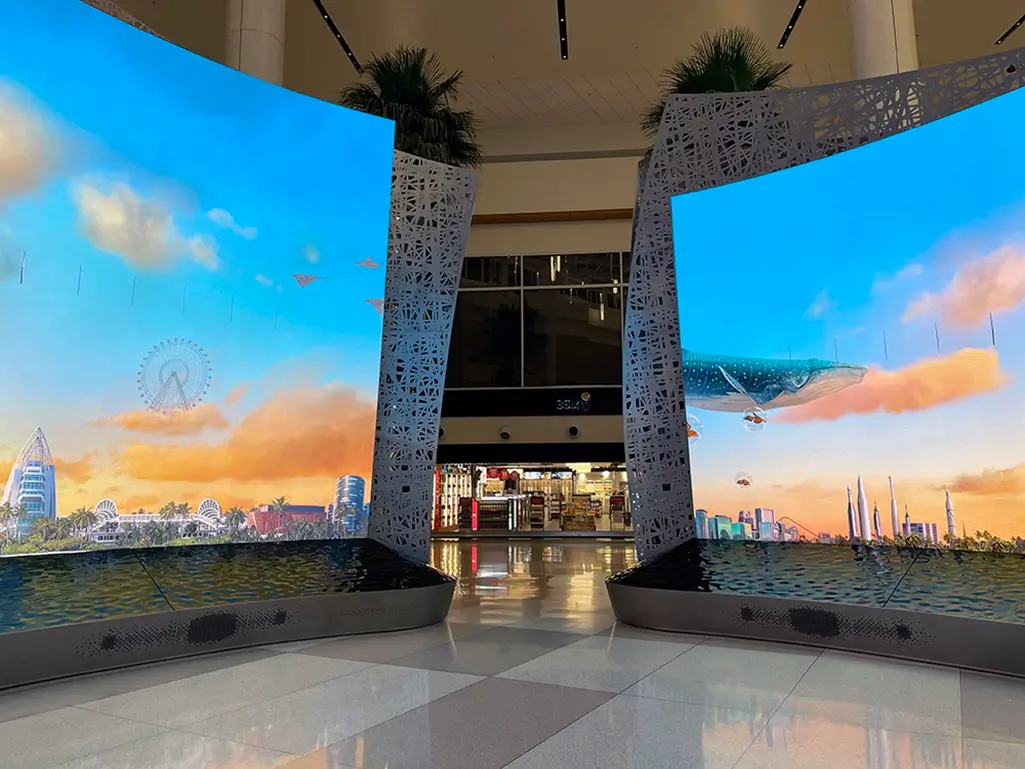
The upgrade to flexible OLED flight info displays is far more than a simple screen replacement; it is a strategic convergence of technology, design, and human-centric planning. By enabling seamless integration into curved ceilings and complex architectures, it solves core operational headaches while crafting a visually cohesive and calming passenger environment. This innovation enhances information clarity, operational flexibility, and aesthetic harmony, fundamentally redefining the airport as a gateway of efficiency and experience. As this technology evolves, it promises to further blur the lines between physical infrastructure and digital intelligence, setting a transformative benchmark for public spaces everywhere.


