Decoding the Product Designation: What the Model Number Reveals
In the evolving landscape of human-machine interfaces, the choice of a display is not merely a technical decision—it is a foundational element that defines user experience, system reliability, and product lifecycle. Among the myriad of options available to design engineers, the
Ampire AM-800480R3TMQW-A1H has established itself as a reliable, high-performance solution for demanding embedded applications. This article provides a comprehensive, technically rigorous examination of this 7.0-inch TFT-LCD module, moving beyond basic specifications to analyze its engineering merits, design integration, and real-world applicability.
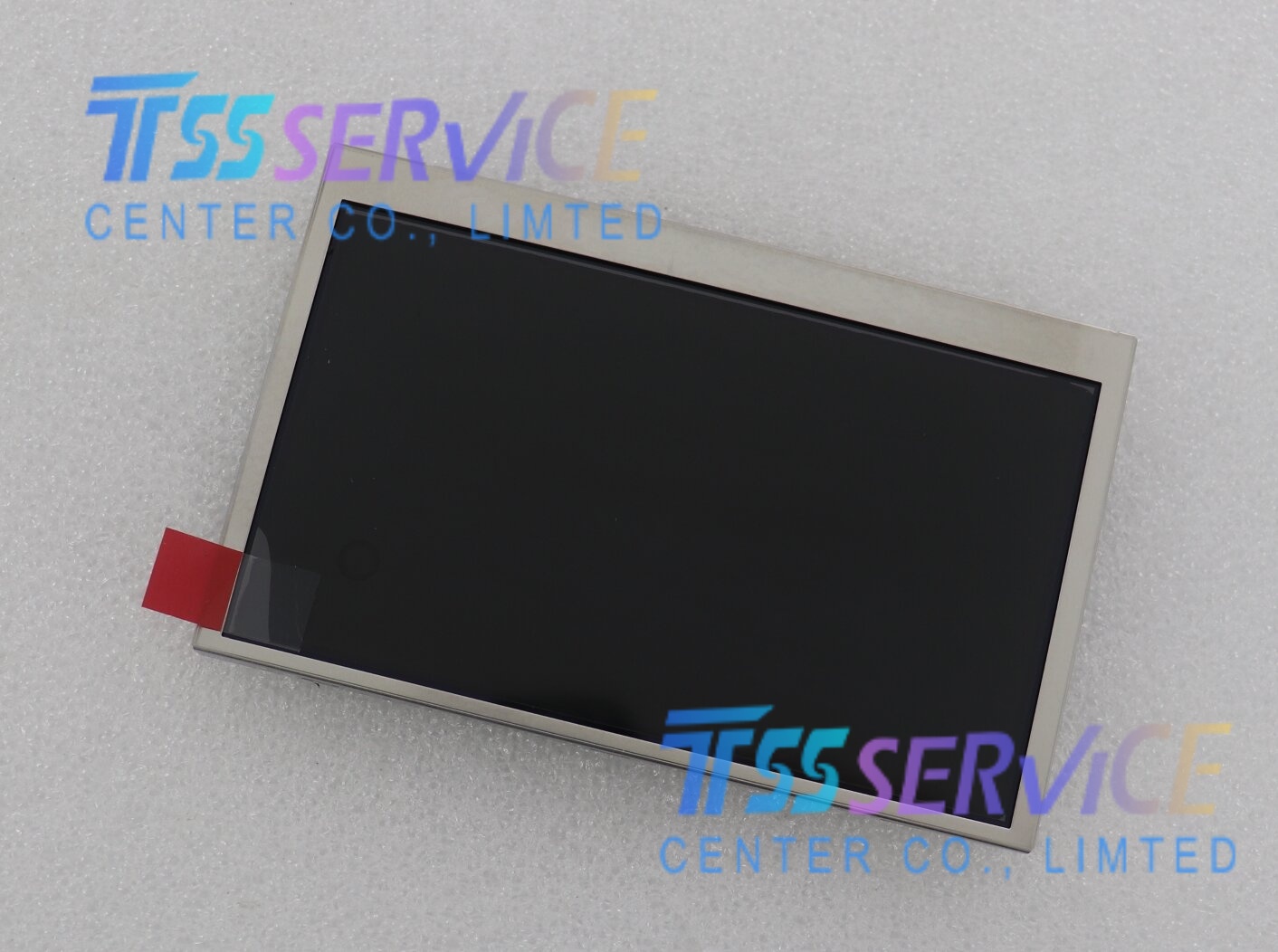
Ampire’s nomenclature offers immediate insight into the module’s core attributes. The prefix AM denotes standard Ampire modules, while the numerical sequence 800480 directly references the native pixel resolution of 800 × 480, commonly known as WVGA. The R3 suffix is critical; it specifies a high-brightness, true-color variant with an optimized white LED backlight configuration. The TM indicates a TPM (Touch Panel Module) ready interface, although this specific variant is typically specified for resistive touch integration. Finally, QW-A1H details the specific revision of the LCD glass and polarizer stack, ensuring consistent optical performance across manufacturing batches. Understanding this code allows procurement engineers to verify compatibility with legacy Ampire designs without cross-referencing entire datasheets.
Optical Performance: More Than Just Pixels
While a 7-inch diagonal and 800×480 resolution may appear standard, the true engineering value of the AM-800480R3TMQW-A1H lies in its carefully tuned optical characteristics. The module utilizes a-Si TFT (amorphous silicon) technology with an active matrix drive, delivering a contrast ratio typically exceeding 500:1 under ambient conditions. This is achieved through a normally white TN (Twisted Nematic) mode, which balances fast response times (in the range of 10-25 ms) with low power consumption. A critical specification often overlooked is the viewing angle. The module provides a 70/70/50/60 (L/R/U/D) degree range. While not as wide as IPS panels, this orientation is deliberately optimized for landscape-centric industrial and medical interfaces, where the primary user is positioned directly in front of the screen. The surface treatment is an anti-glare coating, rated at 3H hardness, which significantly reduces specular reflection in high-ambient-light environments such as factory floors or outdoor kiosks.
Interface Architecture and Signal Integrity
From a system integration perspective, the interface is the lifeline of the display. The
AM-800480R3TMQW-A1H employs an
18-bit parallel RGB interface (typically 6 bits per channel, which translates to 262,144 colors). This is a mature, deterministic interface that offers extremely low latency, making it ideal for reactively updating graphics in real-time control systems. The connector is a standard
0.5mm pitch FPC (Flexible Printed Circuit) with 50 pins. A key design consideration for engineers is the
logic voltage: the module operates at 3.3V I/O, which is directly compatible with modern ARM Cortex-M and Cortex-A series microcontrollers without requiring external level shifters. The backlight drive is separate, requiring a constant-current supply of approximately 20mA per LED string (typically 6-9 LEDs in series). Designers must ensure that the backlight driver circuit provides
low ripple (<5%) to prevent visible flicker or audio noise coupling into adjacent analog subsystems.
Mechanical Integration and Environmental Ruggedness
The mechanical footprint of this display is designed for panel-mounting in standard cutouts. The outline dimension is precisely 184.0 mm × 110.0 mm, with an active area of 154.08 mm × 85.92 mm. The module thickness, including the standard backlight and bezel, is approximately 9.5 mm, which is notably slim for a 7-inch panel of this robustness class. Ampire specifies that the module is rated for an operating temperature range of -20°C to +70°C, with a storage range extending to -30°C to +80°C. This makes it suitable for unheated industrial environments, outdoor terminals, and medical cart systems that may be moved between different climate zones. The module also features a mechanical lock hole pattern (typically M2 screws) on the left and right sides, allowing for secure mounting against vibration without stress on the FPC connector. Engineers should note that the module requires a clean, dry assembly environment; the polarizer is sensitive to prolonged exposure to volatile organic compounds (VOCs) common in potting compounds or certain adhesives.
Touch Integration and User Experience Design
While this specific model is most commonly paired with a 4-wire resistive touch panel, its mechanical design allows for easy integration. The resistive touch layer provides a tactile response that is superior to capacitive touch in environments where operators wear gloves (e.g., medical, laboratory, or cold-storage applications). The touch panel is optically bonded using a dry-film adhesive, which reduces internal reflections and improves sunlight readability by approximately 15-20% compared to air-gap constructions. When integrating the touch controller, designers must consider pen input accuracy—resistive panels typically achieve less than 1.5% linearity error, which is sufficient for precise UI elements such as numeric keypads or scrolling lists. For applications requiring multi-touch gestures, alternative capacitive variants exist, but this model is optimized for single-point, high-durability, glove-compatible interaction.
Comparative Analysis: The Right Fit for Vertical Markets
When compared to newer high-resolution IPS panels or OLED displays, the
AM-800480R3TMQW-A1H offers distinct advantages in specific verticals:
-
Industrial Automation (PLC/HMI Panels): The TN mode and anti-glare surface reduce latency and prevent washout under factory lighting. The interface is directly compatible with 5V-tolerant logic often found in older industrial bus systems.
-
Medical Equipment (Patient Monitors, Diagnostic Devices): The consistent color uniformity and absence of PWM-induced flicker (when driven with a proper constant-current backlight) meet the stringent requirements for DICOM part 14 grayscale display standards when properly calibrated.
-
Transportation and Marine (GPS/Radar Displays): The wide temperature range and hardened polarizer make it suitable for dashboard and bridge installations where direct sunlight and thermal cycling are common.
-
Retail/Point-of-Information Kiosks: The resistive touch layer provides an affordable and highly durable solution for public-facing kiosks that see high-frequency, rapid interactions with unknown users.
Signal Integrity and PCB Layout Recommendations
To achieve optimal image quality and electromagnetic compliance (EMC), careful PCB layout is essential. The parallel RGB interface operates at clock frequencies between 30-40 MHz; therefore, trace length matching (within 5 mm) for all data lines (D0-D17), HSYNC, VSYNC, and DE (Data Enable) is critical to avoid skew-induced pixel errors. The datasheet from Ampire explicitly calls for a 0.1µF decoupling capacitor close to each power pin on the FPC connector (for both logic and backlight power). Use a solid ground plane on the top layer beneath the FPC connector to reduce common-mode emissions. Additionally, series termination resistors (typically 22–33 ohms) placed near the driver output can dampen ringing on the clock line, significantly reducing electromagnetic interference (EMI) in sensitive medical or avionics applications.
Lifecycle Management and Supply Chain Reliability
One of the most underrated aspects of the Ampire AM-800480R3TMQW-A1H is its long-term production stability. Unlike consumer-grade displays which may be discontinued after 18 months, Ampire guarantees a minimum of 5 years of production for this industrial series. For OEMs requiring 10-year product lifecycles in medical or automation, this stability reduces the risk of costly redesigns due to display obsolescence. The module also uses standard, RoHS-compliant materials, and Ampire provides certified inspection reports (MIL-STD-810G equivalent) for shock and vibration on request. This traceability allows design teams to confidently pass rigorous regulatory audits for IEC 60601 (medical) or IEC 61010 (industrial) compliance without performing additional module-level qualification testing.
Conclusion: A Pragmatic Choice for Professional Applications
The
Ampire AM-800480R3TMQW-A1H is not a commodity display; it is a carefully engineered subsystem designed for the rigors of professional-grade equipment. It offers a pragmatic balance of optical clarity, electrical simplicity, mechanical robustness, and supply chain security. For the design engineer, the value lies not in flashy specifications but in the proven reliability and ease of integration—attributes that directly translate to reduced time-to-market and improved final product quality. When the application demands a 7-inch display that must perform consistently across industrial temperature extremes, through countless touch interactions, and for years of service, this module remains a reference standard in the embedded display market.


