The automotive lighting landscape is undergoing a profound transformation, shifting from a purely functional role to a dynamic, intelligent communication interface.
The automotive lighting landscape is undergoing a profound transformation, shifting from a purely functional role to a dynamic, intelligent communication interface. At the forefront of this revolution is the strategic partnership between two European semiconductor powerhouses: ams OSRAM and Infineon Technologies. Their collaboration focuses on developing integrated solutions for automotive smart LEDs, a move that promises to redefine vehicle interaction, safety, and design.
This alliance is not merely a component supply agreement; it is a deep technological fusion. By combining ams OSRAM's world-leading optoelectronics expertise with Infineon's mastery in automotive-grade microcontrollers and power management, the partnership aims to create seamless, programmable LED systems. This article delves into the synergy behind this collaboration, explores the transformative applications it enables, and examines its significant implications for the future of the automotive industry.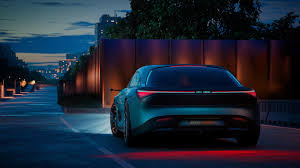
The Synergy: Marrying Light with Intelligence
The core innovation of this partnership lies in the seamless integration of the light source with its control "brain." Traditionally, LEDs and their drivers were separate components. Now, ams OSRAM and Infineon are co-developing solutions where high-performance, multi-pixel EVIYOS®-based LED chips from ams OSRAM are intimately paired with Infineon's AURIX™ microcontrollers and LED driver ICs.
This creates a fundamentally smarter system. The AURIX MCU, a workhorse for safety-critical automotive applications, provides the robust computational platform. It can individually address and control thousands of LED pixels in real-time based on input from vehicle sensors. Meanwhile, the dedicated driver ICs efficiently manage power and data transmission to the LED arrays. The result is a holistic, software-defined lighting system where light becomes a programmable medium, enabling functionalities far beyond simple illumination.
Beyond Illumination: Applications Redefining Vehicle Interaction
The true value of this smart LED integration is realized in its groundbreaking applications. These systems move past static lighting to enable adaptive, communicative, and personalized light functions. Key applications include:
-
Advanced Adaptive Driving Beam (ADB): Headlights can precisely mask out individual pixels to avoid dazzling oncoming drivers while keeping the rest of the road fully illuminated, significantly enhancing night-time safety.
-
Dynamic Light Signatures and Communication: Tail lights and front grilles can project warnings, battery status for EVs, or turning intentions directly onto the road, creating a new language between the vehicle and its surroundings.
-
Interior Personalization and Well-being: The cabin transforms with ambient lighting that can adjust for mood, synchronize with driver alertness monitoring, or provide subtle visual cues for navigation or incoming calls, enhancing both experience and safety.
These applications turn the vehicle's exterior and interior into responsive surfaces, bridging the gap between the digital cockpit and the physical world.
Strategic Impact and the Road Ahead
The ams OSRAM-Infineon partnership is a strategic maneuver with wide-ranging implications. Firstly, it accelerates the industry's shift toward centralized E/E architectures. By providing a pre-validated, integrated hardware and software solution, they reduce complexity for automakers, shortening development cycles for next-generation lighting systems. Secondly, it establishes a high technical barrier for entry, combining niche expertise in photonics, automotive-grade silicon, and functional safety that few competitors can match.
Looking forward, this collaboration lays the essential hardware foundation for the software-defined vehicle. Lighting becomes a service that can be updated and enhanced via over-the-air updates, enabling new features long after purchase. Furthermore, it paves the way for tighter integration with LiDAR and other ADAS sensors, where coordinated light patterns could assist in object detection and classification. The partnership positions both companies not just as suppliers, but as critical architects of the intelligent vehicle's sensory and communicative layer.
The partnership between ams OSRAM and Infineon represents a pivotal convergence in automotive technology, transforming passive LEDs into intelligent, communicative nodes. By fusing superior optoelectronics with robust automotive computing, they are enabling a future where light enhances safety, personalization, and vehicle-to-environment interaction in unprecedented ways. This collaboration not only delivers immediate advancements in adaptive lighting but also strategically positions both companies at the heart of the software-defined vehicle evolution. As cars become more automated and connected, the intelligent control of light will undoubtedly shine as a critical component of the automotive experience, making this alliance a beacon for the industry's illuminated future.


