In a move that signals a significant shift in display technology strategy, Apple has reportedly entered a strategic partnership with Taiwanese LED manufacturer Epistar.
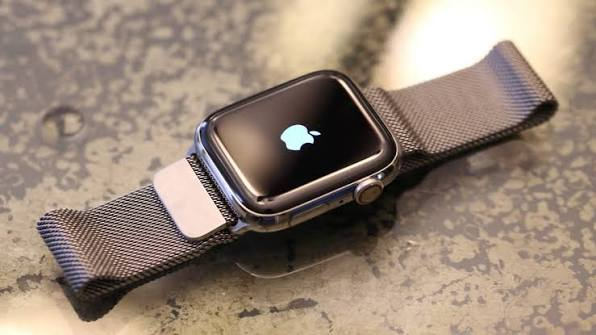
In a move that signals a significant shift in display technology strategy, Apple has reportedly entered a strategic partnership with Taiwanese LED manufacturer Epistar. The collaboration is squarely focused on accelerating the development and production of next-generation Micro LED displays, with initial applications targeting the Apple Watch. This partnership is far more than a routine supplier agreement; it represents Apple's most decisive step yet toward bringing Micro LED from the laboratory to the consumer's wrist, aiming to secure a critical competitive edge.
The implications are profound. By moving beyond its long-standing reliance on Samsung and LG for OLED displays, Apple is seeking to control a core technology that could define the future of wearables and, eventually, all its devices. This article delves into the strategic rationale behind this partnership, explores the technical advantages Micro LED promises over current display technologies, and examines the formidable challenges that lie ahead on the path to commercialization.
The Strategic Imperative: Beyond OLED Dependence
Apple's partnership with Epistar is fundamentally a strategic maneuver to reduce technological dependency and future-proof its product ecosystem. For years, Apple's premium devices, especially the iPhone and Apple Watch, have been powered by advanced OLED panels predominantly sourced from Samsung Display. This reliance, while fruitful, places a portion of Apple's innovation roadmap and supply chain stability in the hands of a key competitor.
Micro LED represents a path to technological sovereignty. Unlike OLED, where Samsung holds numerous foundational patents and manufacturing leads, the Micro LED landscape is still taking shape. By partnering with Epistar—a leader in LED chip technology but not a dominant display panel integrator—Apple gains direct access to the core light-emitting component while retaining control over the intricate transfer and integration processes. This allows Apple to own more of the IP and manufacturing secrets, creating a proprietary display technology that competitors cannot easily replicate. It’s a long-term investment in building a unique selling proposition that is "Designed by Apple" at the most fundamental level.
Micro LED: The Technical Leap for Wearables
So, why is Apple willing to invest billions and navigate a complex manufacturing shift? The answer lies in Micro LED's transformative potential. This technology uses millions of microscopic, inorganic light-emitting diodes to form each pixel. Unlike OLED's organic materials, these inorganic LEDs are incredibly stable and efficient.
For a smartwatch, the benefits are game-changing:
-
Superior Brightness and Efficiency: Micro LEDs can achieve extreme brightness levels with lower power consumption, making displays perfectly readable in direct sunlight while significantly extending battery life—the holy grail for wearables.
-
Enhanced Durability and Longevity: With no organic compounds to degrade, Micro LED displays are immune to burn-in and have a vastly longer operational lifespan than OLED.
-
Unmatched Contrast and Color: Each pixel is self-emissive and can be completely turned off, delivering true blacks and a theoretically infinite contrast ratio, alongside a wider color gamut.
This combination results in a display that is not only more stunning but also more functional and durable, perfectly aligning with the always-on, on-the-go nature of a smartwatch.
The Daunting Path to Commercial Reality
Despite its promise, the road from partnership to product is fraught with monumental engineering and economic challenges. Micro LED's primary hurdle is not in making the microscopic LEDs themselves, but in the "mass transfer" process—picking up millions of these hair-thin chips and placing them onto a substrate with perfect precision and yield. This process is currently slow, exorbitantly expensive, and prone to defects.
Apple's choice of Epistar is telling. Epistar's expertise in LED epitaxy and chip fabrication is crucial, but the partnership's success hinges on co-developing a scalable, cost-effective transfer and bonding solution. Furthermore, Apple must build or secure entirely new supply chains for driver electronics, testing, and module assembly. Industry analysts suggest the initial cost of a Micro LED display for the Apple Watch could be several times that of the current OLED, posing a serious challenge for mainstream adoption. The partnership's goal is to crack this code, driving down costs through innovation in manufacturing technology before scaling to larger devices like iPhones or MacBooks.
Apple's partnership with Epistar is a bold bet on defining the next decade of display technology. It underscores a strategic pivot towards greater vertical integration and control over a core user interface component. While the technical and economic obstacles to bringing Micro LED to market are substantial, the potential rewards—unmatched display performance, product differentiation, and supply chain independence—are too significant for Apple to ignore. If successful, this collaboration will not only revolutionize the Apple Watch but will also illuminate the path for Micro LED to eventually become the display standard across the entire Apple ecosystem, setting a new benchmark for the entire industry.


