The modern industrial sector demands display solutions that transcend consumer-grade standards, requiring components engineered for longevity, reliability, and performance under duress. At the heart of this niche lies the AUO 13.3-inch G133HAN02.2 LCD display, a model that exemplifies the convergence of optical precision and rugged design. This article delves deeply into the technical architecture and practical applications of this specific panel, moving beyond superficial specifications to explore its role in mission-critical environments. We will dissect why this particular model—with its unique blend of high brightness, wide viewing angles, and robust construction—has become a preferred choice for integrators and engineers. By examining its optical parameters, interface compatibility, and operational resilience, this analysis aims to provide a comprehensive understanding of its value proposition in an increasingly digitized industrial landscape.
Optical Engineering and Visual Performance
The G133HAN02.2 is distinguished by its adoption of AHVA (Advanced Hyper-Viewing Angle) technology, a proprietary AUO variant that competes directly with IPS (In-Plane Switching). This is not merely a marketing term; it represents a tangible advantage in color consistency and contrast retention across extreme viewing angles. With a specified 178° viewing angle in all directions, the display ensures that operators viewing the screen from an oblique position—common in control room consoles or embedded machinery—still perceive accurate data without gamma shift or color washout.
Beyond viewing angles, the panel delivers a luminance level of 1000 cd/m². This is a critical differentiator for industrial use, as standard displays (typically 250-400 cd/m²) become unreadable in high ambient light conditions, such as factory floors with skylights or outdoor kiosks. The high brightness allows for the implementation of optical bonding, where a cover glass is laminated directly to the LCD cell using optical-grade resin. This process eliminates the air gap, reducing reflection and improving sunlight readability without boosting power consumption. Furthermore, the contrast ratio of 1000:1 provides sufficient depth for distinguishing fine details on complex GUI layouts, from machinery control panels to medical imaging interfaces.
The color gamut covers 72% of the NTSC standard, which, while not suitable for professional photo editing, is perfectly optimized for the consistent reproduction of safety-critical color codes (e.g., red alarms, green status indicators). The 16.7 million color support via 8-bit driving ensures smooth gradients, preventing banding in graphical user interfaces.
Mechanical Build and Environmental Resilience
Industrial displays face threats that would quickly destroy standard consumer panels: vibration from heavy machinery, thermal stress from unventilated enclosures, and particulate ingress. The G133HAN02.2 is constructed to mitigate these risks. Its mechanical design is centered around a robust metal backlight frame, which serves as both a heat sink and a structural stabilizer. This frame dissipates heat generated by the WLED backlight efficiently, maintaining stable luminance over extended operational hours.
The panel operates within a wide temperature range of -20°C to +70°C. For integrators, this is a decisive specification. It means the display can be deployed in unheated warehouses in winter or near industrial ovens in summer without requiring active heating or cooling elements, reducing system complexity and power draw. The storage temperature extends even further to -30°C to +80°C, allowing for safe logistics and storage in non-climate-controlled environments.
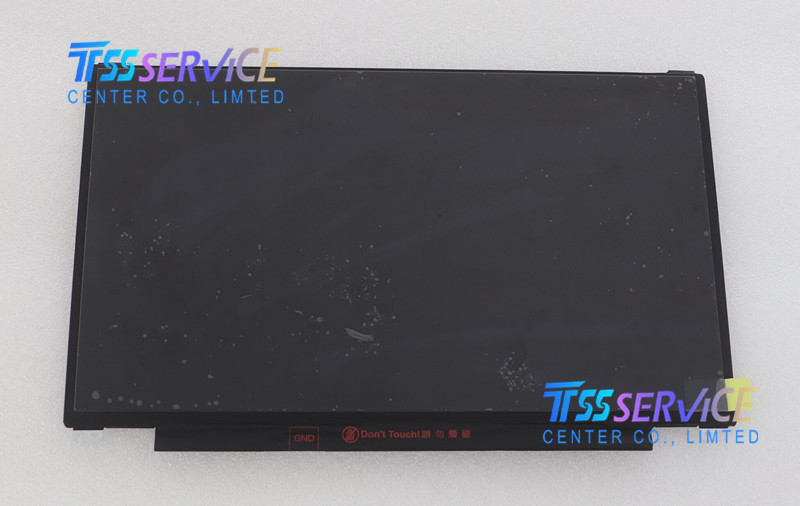
Mechanically, the module adheres to the standard 13.3-inch form factor with a slim bezel design, measuring only 2.4mm on the active area edge. This permits tighter integration into existing chassis or custom enclosures. The interface connection utilizes a robust 30-pin eDP (Embedded DisplayPort) 1.2 connector, which supports high-speed signal transmission over a thin cable, while the latch mechanism ensures the cable remains connected under vibration. This is a marked improvement over older LVDS interfaces, which are more prone to contact degradation over time in dusty environments.
Interface Integration and Signal Compatibility
Seamless integration is paramount for time-to-market in industrial product development. The G133HAN02.2 simplifies this by requiring only a single eDP connection for both video data and LED driver control. The panel features a dual-link eDP interface supporting a native resolution of 1920x1080 (Full HD). At 13.3 inches, this pixel density results in a crisp 166 PPI (Pixels Per Inch), offering sharp text and fine detail without the need for scaling, which can introduce latency or artifacts in real-time control systems.
The electrical design is equally considerate. The module requires a typical power consumption of approximately 11.2 watts, a figure that includes both the logic circuit and the backlight. This efficiency is crucial for fanless embedded systems where thermal management is a constraint. The LED driver supports PWM (Pulse Width Modulation) dimming for smooth brightness control from 0% to 100%, allowing the system to reduce brightness in dark environments or extend backlight lifespan during night shifts.
For system designers, the panel supports a 6-bit + FRC (Frame Rate Control) color depth, effectively simulating 8-bit performance. While pure 8-bit is superior for static images, FRC is highly effective for video and dynamic GUI transitions, and it keeps the interface bandwidth requirements lower, simplifying PCB layout and reducing electromagnetic interference (EMI). The interface timing parameters are documented in the official AUO specification, allowing for precise configuration of the display controller without trial-and-error debugging.
Application Scenarios and Reliability Metrics
Understanding where the G133HAN02.2 excels is the final piece of the puzzle. Its combination of features makes it a strong candidate for Human-Machine Interface (HMI) terminals in factory automation. The high brightness ensures visibility even when the operator is standing under bright overhead lighting, while the wide viewing angle allows a supervisor to glance at the screen from a distance without misinterpretation of data.
In the medical sector, particularly for patient monitoring systems and diagnostic ultrasound carts, the panel’s color accuracy and low latency meet the requirements for displaying real-time waveforms and vitals. The wide temperature tolerance also ensures reliable operation in mobile emergency vehicles where internal temperatures can fluctuate rapidly. For digital signage in transportation hubs or retail environments, the slim bezel design allows for tiling multiple units into a video wall, and the anti-glare surface treatment (typical for industrial panels) reduces distracting reflections under harsh overhead lighting.
Reliability is quantified through the Mean Time Between Failures (MTBF), which for this model is typically rated above 50,000 hours at the standard operating temperature of 25°C. The LED backlight lifespan is rated at 50,000 hours to half-brightness (L50), ensuring multi-year service intervals. Additionally, the panel complies with RoHS and REACH regulations, confirming the absence of hazardous substances like mercury, which is critical for compliance in European and North American markets.
Conclusion
The AUO 13.3-inch G133HAN02.2 is not a generic display module; it is a finely engineered component designed for the rigors of continuous operation. Its 1000-nit brightness and 178-degree viewing angle directly address the visibility challenges of industrial environments, while its robust thermal and mechanical design ensures long-term reliability. For integrators and engineers, this panel offers a balanced solution: high-performance optics matched with a user-friendly interface and proven durability. By choosing this display, system designers invest in a component that reduces maintenance overhead and enhances user interaction quality, making it a sound technical and economic decision for demanding applications.


