In the rapidly evolving landscape of digital signage and industrial automation, the display panel is often the most critical yet underappreciated component. While consumer-grade monitors prioritize aesthetics and refresh rates, professional environments demand reliability, luminous consistency, and extended operational lifespans
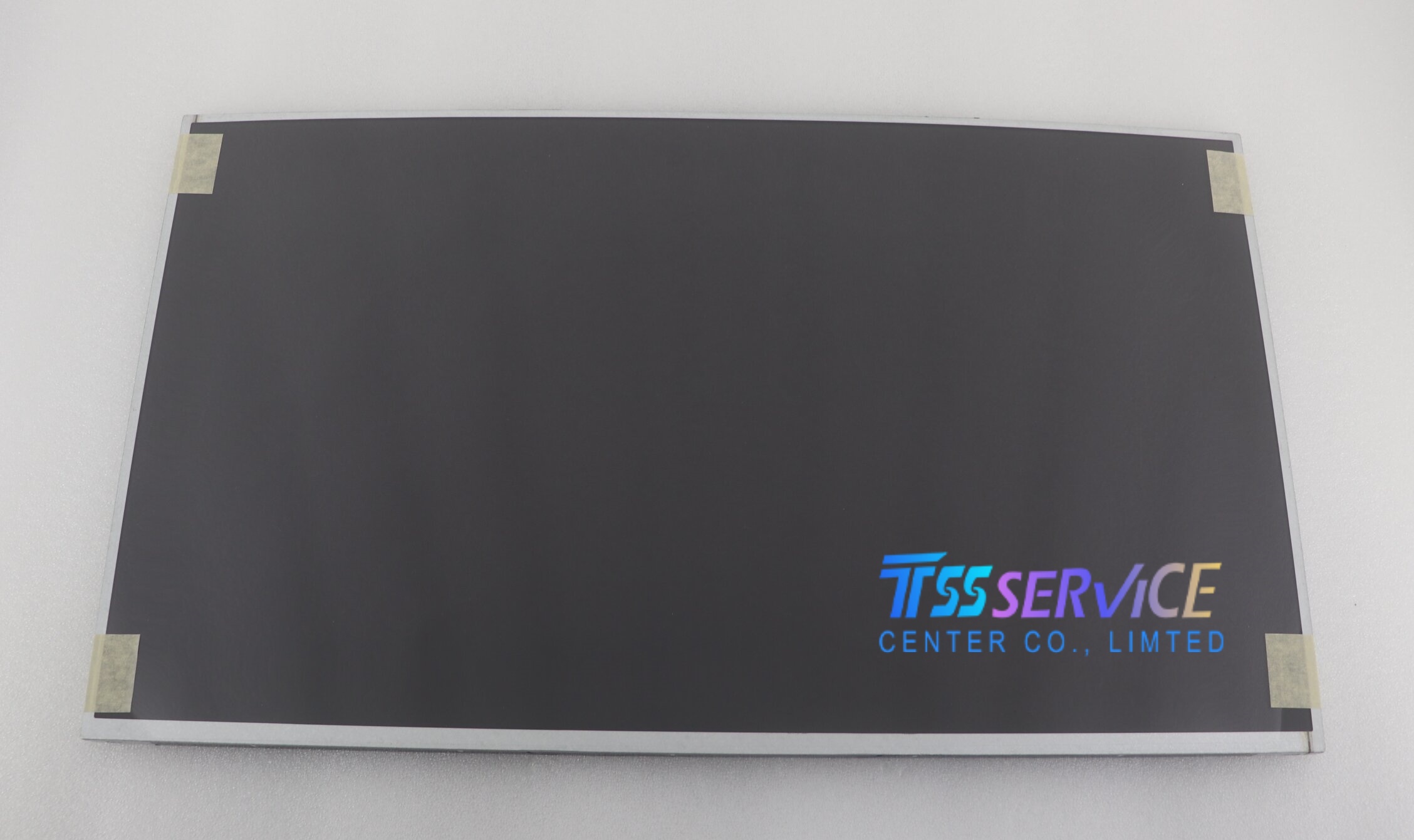
In the rapidly evolving landscape of digital signage and industrial automation, the display panel is often the most critical yet underappreciated component. While consumer-grade monitors prioritize aesthetics and refresh rates, professional environments demand reliability, luminous consistency, and extended operational lifespans. This article delves deep into the AUO 27-inch LCD Panel Display P270HAN01.0, a model that has quietly become a staple in non-consumer applications. We will explore why this specific panel, with its unique technological architecture, is engineered specifically for the rigors of 24/7 digital signage and harsh industrial settings. Rather than a simple spec sheet review, this analysis focuses on the engineering trade-offs and design philosophies that make the P270HAN01.0 a superior choice for professionals who need a display that refuses to fail.
Architecture of Resilience: Beyond Standard IPS Technology
The P270HAN01.0 is not merely another 27-inch In-Plane Switching (IPS) panel; it is a re-engineered variant optimized for endurance. At its core, the panel utilizes AUO’s proprietary Advanced Hyper-Viewing Angle technology, which delivers a standard 178-degree viewing angle. However, the critical differentiator lies in its high-brightness backlight unit. Unlike standard monitors that average 250 cd/m², this panel typically operates in the 350 to 400 cd/m² range, a necessity for digital signage exposed to ambient retail or lobby lighting.
Furthermore, the backlight is designed for continuous operation. The LED driver circuit incorporates enhanced heat dissipation and voltage regulation to prevent flicker and luminance decay over time. From a structural perspective, the panel uses a reinforced metal bezel and a specialized LCD glass cell that withstands higher operating temperatures. This thermal management is crucial because industrial and signage environments lack the controlled airflow of a home office. The panel also supports a native 1920 x 1080 Full HD resolution with a 16:9 aspect ratio, balancing pixel density with power efficiency—a key requirement for systems running video loops 16 hours a day.
Lifespan Engineering: Why 50,000 Hours Matters More Than Refresh Rate
For the average gamer, a 60Hz refresh rate might seem limiting, but for signage and industrial HMI (Human-Machine Interface), it is a feature of reliability. The P270HAN01.0 is specifically optimized for static image display stability. One of the silent killers of LCD panels is image retention, often mislabeled as burn-in. AUO mitigates this through a specialized polarizer and voltage compensation algorithm that reduces ionic impurity buildup within the liquid crystal layer.
The panel is rated for a backlight lifetime of over 50,000 hours to half-brightness (L50). This translates to roughly 5.7 years of continuous operation. More importantly, the operating temperature range is wider than consumer-grade panels, typically spanning from 0°C to 50°C. This allows the unit to function in semi-outdoor kiosks or factory floors where temperature fluctuations are common. The low input voltage (3.3V for logic) and single-channel LVDS interface reduce the complexity of the driver board, lowering the potential points of failure in embedded systems. For system integrators, this means lower total cost of ownership (TCO) and fewer field repairs.
Optical Performance in Challenging Environments
Visibility under direct light is a primary challenge for any non-consumer display. The P270HAN01.0 addresses this through its surface treatment and optical stack. While standard monitors use a glossy or standard matte finish, this AUO panel employs an Anti-Glare (AG) treatment with a hardness rating of 3H, reducing specular reflection without diffusing the image into a hazy blur. The contrast ratio, rated at 1000:1 typical, is maintained through a precise color filter that prevents light leakage at the edges—a common flaw in cheaper IPS panels.
Color accuracy is another subtle strength. The panel covers approximately 72% of the NTSC color gamut (equivalent to sRGB). While not suitable for professional photo editing, this gamut is ideal for displaying logos, safety warnings, and dynamic advertising content with correct color temperature. The 8-bit color depth (16.7 million colors) ensures smooth gradients, which is critical for simulating analog gauges in industrial control panels. Additionally, the response time of 14ms (Tr+Tf) is deliberately slower than gaming panels to eliminate overshoot and ghosting, ensuring that text and numbers remain sharp and static when used in data-heavy dashboards.
Interface and Integration: LVDS in a World of eDP
A key technical characteristic of the P270HAN01.0 is its reliance on the LVDS (Low-Voltage Differential Signaling) interface, specifically a 30-pin, 2-channel configuration. In an industry that is rapidly migrating to Embedded DisplayPort (eDP), the choice of LVDS offers a distinct advantage for industrial integrators. LVDS is a proven, mature standard with immense backward compatibility. Legacy industrial motherboards, single-board computers, and video controllers still rely heavily on LVDS because of its robustness against electromagnetic interference (EMI) in noisy factory environments.
This interface standard allows for simple cable runs of up to 5-10 meters without active signal boosters, which is contrasted by eDP’s shorter physical range. The panel requires specific voltage supplies: +5.0V for the backlight and +3.3V for the logic. This split voltage rail is common in industrial power supplies. Importantly, the panel adheres to the standard 300mm x 300mm VESA mounting pattern with M4 screw holes, allowing it to be fitted into standardized enclosures, kiosks, or swing arms without custom adapters. For the engineer designing a control panel, this translates to shorter design cycles and easier procurement.
Conclusion: The Unseen Standard for Continuous Operation
The AUO 27-inch P270HAN01.0 may lack the headline-grabbing specs of a flagship gaming monitor, but it represents a triumph of specialized engineering. It is a display built not for fleeting moments of entertainment, but for the relentless demands of digital signage and industrial control. From its high-stability backlight and thermal management to its robust LVDS interface and anti-glare optics, every component serves a single purpose: unyielding reliability. For decision-makers in retail, manufacturing, and public information systems, this panel offers a proven path to reducing maintenance overhead while maintaining professional-grade image quality. It is a reminder that in the world of professional displays, the best technology is often the one you never have to think about.


