The modern industrial landscape demands display solutions that transcend mere visual output; they require reliability, precision, and endurance under relentless operational conditions.
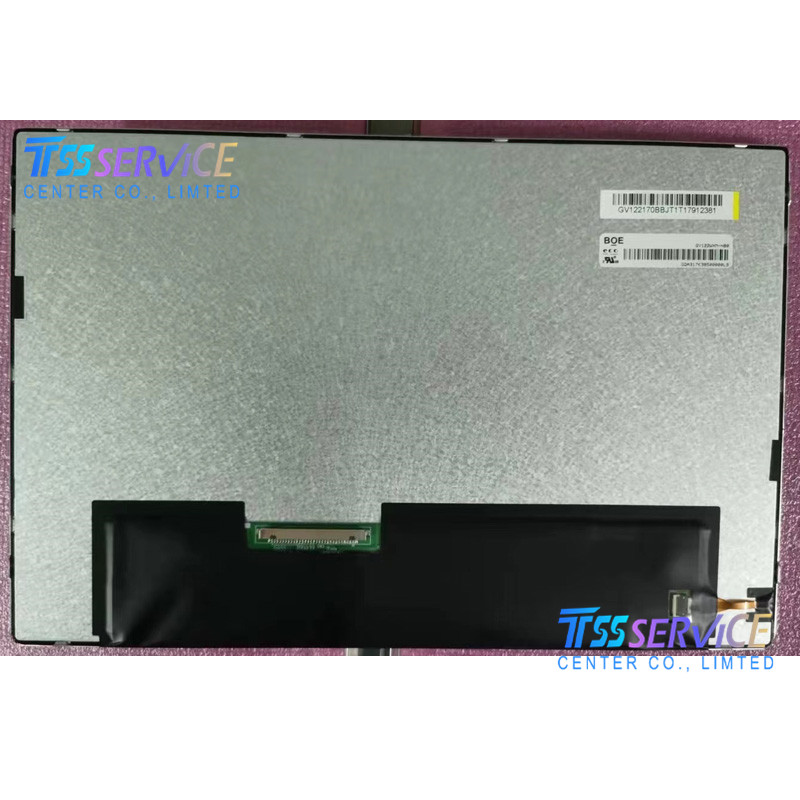
The modern industrial landscape demands display solutions that transcend mere visual output; they require reliability, precision, and endurance under relentless operational conditions. As factories embrace automation and human-machine interfaces (HMIs) become more sophisticated, the choice of display technology directly impacts equipment uptime and user safety. The BOE 12.2 Inch LCD Panel Display GV122WXM-N80 emerges as a strategic component in this ecosystem, designed not for consumer comfort but for rigorous industrial application. This article delves deep into the technical architecture, operational advantages, and integration realities of this specific panel. We will move beyond basic specifications to explore how its optical characteristics, mechanical design, and environmental resilience solve tangible problems for system integrators and original equipment manufacturers (OEMs). By understanding what makes the GV122WXM-N80 distinct, engineers can make informed decisions that enhance system longevity and reduce total cost of ownership.
Optical Engineering: Balancing Visibility and Power Efficiency
At the heart of the GV122WXM-N80’s value proposition lies its meticulously engineered optical stack. With a native resolution of 1920 x 720 pixels and a 16:6 aspect ratio, this panel is purpose-built for widescreen applications such as control room dashboards and equipment status monitors where horizontal data density is paramount. The IPS (In-Plane Switching) technology ensures consistent and accurate color reproduction across an ultra-wide 178-degree viewing angle—a critical factor when operators view screens from off-center positions on a factory floor. However, the standout feature is its 1200 cd/m² high brightness specification. Unlike standard consumer panels that struggle under harsh ambient light, the GV122WXM-N80 maintains crisp readability even in sunlit environments or near welding stations. This high luminance is achieved without compromising contrast ratio (typically 1000:1), thanks to advanced backlight unit (BLU) design that minimizes light leakage. For system designers, this means fewer costly retrofits for external shielding or brightness upgrades. Additionally, the panel’s low power consumption architecture—typically under 10 watts—reduces thermal stress in enclosed cabinets, directly improving the Mean Time Between Failures (MTBF) of the entire system.
Mechanical Resilience and Thermal Management
Industrial displays are frequently subjected to vibrational stress, temperature extremes, and physical shock that would quickly degrade consumer-grade components. The GV122WXM-N80 addresses these challenges through a robust mechanical design and optimized thermal characteristics. The panel utilizes a metal frame with reinforced corner mounts, which not only protects the delicate liquid crystal layer but also provides stable mounting points for custom enclosures. Its operating temperature range of -20°C to +70°C is a testament to its suitability for unheated warehouses, outdoor kiosks, or proximity to hot machinery. Thermal management is a hidden but crucial strength here. The backlight driver ICs and timing controller (TCON) are laid out to dissipate heat evenly, preventing localized hot spots that cause pixel discoloration or premature aging. For integrators designing fanless sealed systems, this panel’s low thermal output simplifies heat sinking requirements. Furthermore, the 12.2-inch form factor strikes a balance between providing adequate information real estate and fitting into standard 19-inch rack mounts or existing control panel cutouts—often eliminating the need for custom sheet metal work. This mechanical intelligence directly translates into faster deployment cycles and lower installation costs for industrial projects.
Interface Compatibility and Industrial Protocol Integration
Modern industrial environments are not monolithic; they comprise a mix of legacy equipment and cutting-edge automation systems. The GV122WXM-N80 is engineered with industrial-grade interface flexibility to bridge this divide. The panel supports both LVDS (Low-Voltage Differential Signaling) and eDP (Embedded DisplayPort) options, allowing it to interface seamlessly with a wide range of single-board computers (SBCs) and embedded controllers commonly used in Programmable Logic Controllers (PLCs) and Human-Machine Interfaces (HMIs). This dual-protocol support is not merely a convenience; it is a strategic advantage. For systems still operating on 5V or 3.3V logic levels typical of older Rockwell or Siemens controllers, the LVDS variant eliminates the need for costly signal converters. Conversely, eDP compatibility future-proofs designs for next-generation processors that demand higher data bandwidth for rich graphical HMIs. Additionally, the panel’s pixel clock optimization ensures stable refresh rates (typically 60Hz) even over longer cable runs common in distributed control systems. System integrators do not need to stress over impedance matching or signal degradation, as BOE’s driver circuitry includes robust electromagnetic interference (EMI) filtering. This electrical resilience reduces debugging time during system commissioning, a factor often overlooked but critical for project profitability.
Longevity, Supply Stability, and Total Cost of Ownership
Perhaps the most underappreciated aspect of industrial component selection is long-term availability and lifecycle management. The BOE GV122WXM-N80 is part of a committed industrial product line with a guaranteed 3-5 year production lifecycle, which is significantly longer than the 12-18 month cycles of consumer displays. For OEMs designing equipment that must be serviceable for a decade, this reliability in the supply chain is invaluable. A sudden display end-of-life (EOL) notice can force expensive redesigns and recertifications; BOE mitigates this risk through transparent roadmap communication. Moreover, the panel’s inherent durability—supported by its wide temperature range and vibration resistance—directly impacts the Total Cost of Ownership (TCO). Fewer field failures mean lower warranty claims and less production line downtime, which in automotive or pharmaceutical manufacturing can cost tens of thousands of dollars per hour. The specific optical and thermal design also prolongs the backlight lifespan (often exceeding 50,000 hours to half-brightness), reducing the frequency of replacement or maintenance interventions. For procurement professionals, the GV122WXM-N80 represents not just a component purchase, but a long-term partnership that stabilizes their product’s service profile. Choosing this panel is an investment in operational continuity rather than a piecemeal cost-saving measure that invites future headaches.
Conclusion
The BOE 12.2 Inch LCD Panel Display GV122WXM-N80 is a masterclass in industrial optimization—where every specification, from its 1200-nit brightness to its robust operating temperature range, is a direct answer to the harsh realities of factory-floor and outdoor deployment. It successfully bridges the gap between high-performance optics and mechanical durability, while its flexible interface options simplify integration into both legacy and modern control systems. System integrators and OEMs who choose this panel are not merely selecting a screen; they are investing in reduced field failures, lower total cost of ownership, and supply chain predictability. In an industry where reliability is the currency of trust, the GV122WXM-N80 stands as a technically sound and strategically wise foundation for next-generation industrial interfaces.


