In the rapidly evolving landscape of industrial automation and human-machine interaction, the display panel is no longer a mere output device—it is the critical interface between operator and system
In the rapidly evolving landscape of industrial automation and human-machine interaction, the display panel is no longer a mere output device—it is the critical interface between operator and system. While consumer electronics often grab headlines with high refresh rates and vibrant color gamuts, the industrial sector demands a different set of priorities: durability, longevity, and optical clarity under harsh conditions. The BOE UV215FHM-N10, a 21.5-inch LCD panel, exemplifies this shift toward specialized hardware. This article delves deep into the technical architecture and practical advantages of this specific model, exploring why it has become a preferred solution for factory floors, medical kiosks, and outdoor information terminals. Rather than simply listing specifications, we will analyze how its design philosophy addresses the core pain points of industrial deployment—from thermal management to viewing angle stability—providing engineers and procurement specialists with the context needed to make informed decisions.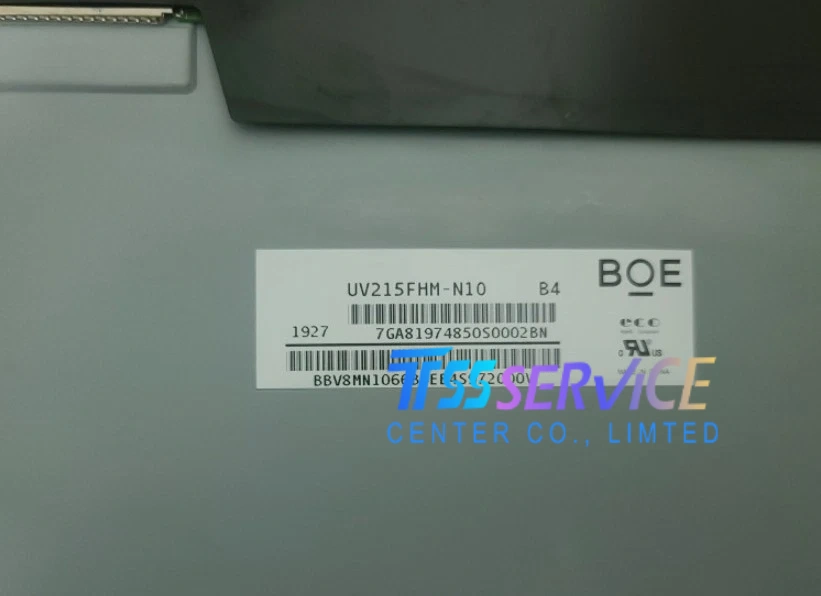
Engineering for the Environment: Beyond Standard Commercial Displays
The primary differentiation of the BOE UV215FHM-N10 lies not in its resolution but in its environmental resilience. Standard commercial monitors are designed for climate-controlled offices, where temperature fluctuations are minimal and ambient light is predictable. Industrial environments, however, are unpredictable. The UV215FHM-N10 is engineered to operate reliably across a wide temperature range, typically from -20°C to +70°C. This thermal tolerance is not accidental; it results from specific material choices in the liquid crystal mixture and the polarizer layers. Liquid crystals can become sluggish or even freeze at low temperatures, causing ghosting or permanent damage. BOE addresses this by using a specialized LC fluid that maintains viscosity and response times even in cold storage facilities or unheated manufacturing plants. Conversely, high-temperature stability is achieved through heat-dissipating backlight structures that prevent the panel from reaching the clearing point of the liquid crystals. Furthermore, the panel often incorporates a robust metal chassis and reinforced mounting points, allowing it to withstand the vibration and shock common in CNC machinery or transportation hubs. This level of engineering ensures that the display remains legible and responsive, even when the surrounding environment is far from forgiving.
Optical Performance and Readability Under Variable Conditions
While durability is paramount, the panel's optical performance directly impacts operator efficiency and error reduction. The UV215FHM-N10 typically features a Full HD (1920 x 1080) resolution, which for a 21.5-inch diagonal yields a pixel density of approximately 102 PPI. This is a deliberate sweet spot: high enough to render detailed schematics and control interface widgets clearly, yet low enough to keep power consumption and thermal output in check. More critically, the panel utilizes IPS (In-Plane Switching) technology. In the industrial context, IPS is not just about pretty colors; it is about accessibility. A machine operator viewing the screen from a 45-degree angle to the side will see consistent brightness and contrast, without the color shift or luminance inversion typical of TN panels. This is vital for multi-station work cells where one display might be viewed by several workers simultaneously. The panel also typically offers a high brightness rating, often between 250 to 400 cd/m², and is frequently paired with an anti-glare surface treatment. This reduces specular reflections from overhead factory lighting or indirect sunlight, preventing operator eye strain during long shifts. In essence, the optical tuning of the UV215FHM-N10 prioritizes information clarity over cinematic flair, ensuring that critical alarm states or sensor readings are unmistakably visible at a glance.
Interface Integration and Longevity Planning in System Design
A robust display is useless if it cannot seamlessly communicate with industrial controllers. The connectivity architecture of the UV215FHM-N10 is tailored for stability and backward compatibility. Standard versions of this panel support LVDS (Low-Voltage Differential Signaling) interface, a mature and noise-immune protocol that is still the backbone of most embedded industrial motherboards and single-board computers. Unlike the consumer-focused eDP interface, LVDS allows for longer cable runs and is less susceptible to electromagnetic interference from nearby motors or switching power supplies. This is a critical consideration for system integrators who must route cables through cable trays alongside high-voltage lines. Furthermore, the panel's power consumption is optimized for 24/7 operation. Industrial displays often run for years without being turned off. The UV215FHM-N10 is designed to minimize heat generation through efficient LED backlighting and careful current regulation, which in turn reduces the load on internal cooling fans (if any) and extends the lifespan of the electrolytic capacitors on the driver board. From a lifecycle perspective, BOE typically guarantees a long product lifespan and stable supply for several years, preventing the costly need for re-qualification and re-tooling that can occur when a display is discontinued prematurely. For the procurement manager, this supply chain stability is as valuable as the technical spec sheet.
The Role of Mechanical Form Factor in System Enclosure Design
The physical dimensions and mounting options of the UV215FHM-N10 directly influence the mechanical design of the final product. Measuring approximately 495.6 mm x 292.2 mm for the active area, the panel typically conforms to standard 21.5-inch cutouts, simplifying the design of custom bezels and enclosures. Its slim profile, despite the metal chassis, allows it to be integrated into shallow-depth housings required for wall-mounted kiosks or embedded control panels. Key mechanical features include specific mounting hole patterns, often compliant with VESA standards or proprietary industrial norms, allowing for secure attachment to heavy-duty swing arms or vibration-dampening brackets. The location of the LVDS connector and its pinout are standardized to match common industrial drive boards, which reduces the risk of wiring errors during assembly. Additionally, the panel's weight—typically just over one kilogram—is a practical consideration for handheld or mobile industrial terminals. By providing a predictable, rigid mechanical baseline, the UV215FHM-N10 allows enclosure designers to focus on sealing and ingress protection (IP ratings) without worrying about display warping or misalignment. This mechanical predictability ensures that the display performs reliably not just electrically, but physically, in the demanding hands-on world of equipment assembly and field installation.
The BOE UV215FHM-N10 represents a convergence of three critical industrial imperatives: environmental resilience, optical reliability, and lifecycle stability. It is not the cheapest or the flashiest panel, but it is engineered to deliver consistent performance where failure is not an option. For system integrators and OEMs, choosing this panel means choosing a proven platform that reduces design risk, simplifies global certification, and supports extended product lifecycles. In an industry where downtime costs thousands of dollars per minute, the value of a display that simply works—day after day, year after year—far outweighs any initial cost savings from using lower-grade components. This is the silent efficiency that separates a successful industrial installation from a costly maintenance nightmare.


