The landscape of industrial automation and embedded control is undergoing a quiet revolution, driven by an insatiable demand for intuitive, reliable, and cost-effective Human-Machine Interfaces (HMIs). As legacy button-based panels give way to capacitive touch interfaces
The landscape of industrial automation and embedded control is undergoing a quiet revolution, driven by an insatiable demand for intuitive, reliable, and cost-effective Human-Machine Interfaces (HMIs). As legacy button-based panels give way to capacitive touch interfaces, the selection of a display module becomes the critical linchpin of system performance. The DMC New Touch Screen AST3201 AST3201-A1-D24 represents a significant milestone in this evolution, offering a sophisticated blend of hardware robustness and functional adaptability. Specifically engineered for demanding environments where precision and clarity are non-negotiable, this module is not merely a peripheral; it is the central nervous system of operator interaction. This article delves into the architectural excellence, operational versatility, integration strategies, and comparative advantages of the AST3201-A1-D24, providing a comprehensive guide for engineers and procurement specialists seeking to enhance their control systems with a durable, high-performance touch interface.
Architectural Precision: Deconstructing the Hardware DNA
At the core of the AST3201-A1-D24 lies a carefully engineered hardware stack designed to withstand the rigors of continuous industrial use. The module features a 3.2-inch TFT LCD display, a form factor that strikes a critical balance between providing sufficient operational visibility and maintaining a compact footprint for panel mounting. The native resolution of the display is optimized for stark contrast and wide viewing angles, ensuring that critical data remains legible under harsh ambient lighting conditions, including direct sunlight exposure in factory floor settings. The "D24" nomenclature in the part number hints at its voltage architecture, typically designed to operate on a 24V DC industrial power standard, which directly simplifies integration into existing PLC cabinets and power distribution systems without the need for intermediate regulators.
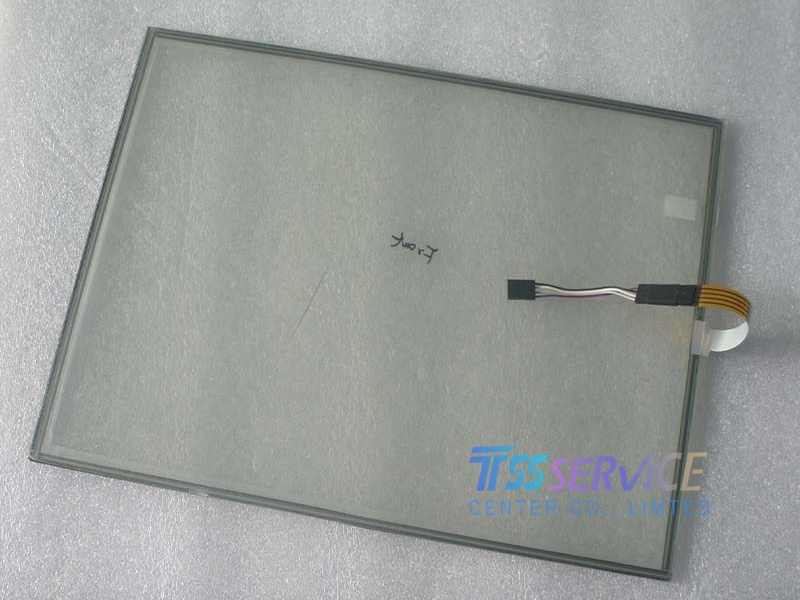
Beyond the visual panel, the touch sensing layer employs resistive touch technology, a deliberate choice over capacitive alternatives for certain operational contexts. Resistive touch provides significant advantages in environments where operators wear gloves, or where the surface may be exposed to moisture, dust, or chemical splashes. This technology registers touch through pressure, meaning it can be activated by a finger, a stylus, or a gloved hand with equal precision. The interface connector is standardized to facilitate plug-and-play replacement, a feature that drastically reduces downtime during field servicing. Furthermore, the backlight design utilizes long-life LEDs, rated for tens of thousands of hours of continuous operation, which underscores the module's lifecycle suitability for applications where maintenance windows are infrequent.
Connectivity and Data Flow: The Communication Backbone
The value of any HMI module is inherently tied to how seamlessly it communicates with the host controller. The DMC AST3201-A1-D24 is equipped with a robust suite of interfaces that prioritize both speed and compatibility. The primary data pathway is provided through a parallel 24-bit RGB interface, a high-bandwidth standard that allows for rapid frame updates without the compression artifacts or latency introduced by serial protocols. This interface is crucial for applications that require real-time data visualization, such as updating a moving graph on a CNC machine or refreshing a live monitoring dashboard on a medical device.
In addition to the parallel bus, the module supports standard I2C or SPI protocols for touch controller data transmission, separating the touch input stream from the display data stream. This architectural separation prevents bottlenecking and ensures that touch response remains instantaneous even during complex screen redraws. The pinout layout is designed to be compatible with a wide range of standard microcontrollers and single-board computers, from ARM Cortex-based MCUs to FPGAs. This broad compatibility reduces the engineering overhead required for initial hardware integration. For industrial communication, the module's design accommodates the integration of optional serial protocols (RS-232/RS-485) through the host board, meaning that the display itself becomes a gateway for operator commands to be transmitted back to distant PLCs or SCADA systems, thus acting as a true node on the control network rather than a simple peripheral.
Firmware and User Experience: Bridging the Operator Gap
Hardware is merely the canvas; the true value of the AST3201-A1-D24 is realized through its firmware ecosystem and the resulting user experience. The display module operates on a controller IC that supports hardware acceleration for basic graphic primitives, such as rectangle fills, line drawing, and bitmap transfers. This offloads significant processing bandwidth from the main system CPU, allowing for smoother animations and faster menu navigation even on resource-constrained host processors. For developers, this translates to the ability to implement complex graphical user interfaces (GUIs) using standard libraries such as LVGL, emWin, or STemWin, which provide pre-optimized drivers for the ILI9341 or similar driver ICs commonly associated with this display resolution.
The user experience is further enhanced by the calibration stability of the resistive touch layer. Once calibrated in the factory or during initial setup, the touch coordinates drift minimally over time, reducing the need for recalibration in the field. The interface supports multi-zone touch detection, allowing designers to create large, easy-to-hit virtual buttons that comply with ergonomic standards for industrial environments. The anti-glare surface treatment of the touch panel is another critical UX feature, reducing eye strain during prolonged monitoring tasks. By providing a combination of stable driver support and responsive touch feedback, this module allows UI/UX designers to focus on workflow optimization and error reduction, rather than wrestling with low-level hardware idiosyncrasies.
Comparative Advantage and Application Ecology
When positioned against competing modules of similar size and resolution, the DMC AST3201-A1-D24 distinguishes itself through a superior balance of durability, availability, and cost-efficiency. Many alternative modules in this form factor sacrifice mechanical robustness to achieve a lower bill of materials (BOM) cost, often by using thinner glass or lower-tolerance connectors. The AST3201-A1-D24 is built with a reinforced bezel and a thicker polarizer layer, making it significantly more resistant to mechanical shock and vibration, which is a common failure mode in portable or mobile equipment applications.
Its practical applications span a broad ecosystem. In medical device manufacturing, the glove-friendly resistive touch is a strict requirement, as is the stability of the display in high-humidity sterilization environments. In building automation, the AST3201 serves as an ideal interface for HVAC zone controllers or lighting management panels, where a 3.2-inch display provides enough real estate for intuitive control without overwhelming the aesthetic of a wall-mounted unit. For vending and kiosk systems, the module’s robust calibration reduces service calls caused by touch misalignment. The fact that DMC maintains a consistent revision history for the AST3201-A1-D24 ensures that replacement units are electrically and mechanically identical, providing long-term supply chain security for OEMs. This operational consistency is often undervalued but is paramount in sustaining multi-year product lifecycles where design changes can necessitate costly recertification.
The DMC New Touch Screen AST3201 AST3201-A1-D24 is more than a standard display replacement; it is a strategic component engineered for longevity and precise user interaction in demanding environments. Its balanced architecture, combining a resilient resistive touch layer with a high-clarity TFT display, provides a dependable foundation for applications ranging from industrial controls to medical interfaces. By prioritizing connectivity stability, driver compatibility, and mechanical robustness, this module empowers engineers to build systems that are not only functional today but remain maintainable and upgradeable years into the future. For any project requiring a compact HMI that bridges the gap between operator intuition and machine logic, the AST3201-A1-D24 represents a investment in interface reliability.


