In the demanding world of industrial automation, medical instrumentation, and human-machine interfaces, the display is far more than a mere output device; it is the primary conduit for critical data and operator control. Selecting the wrong display can lead to increased error rates
In the demanding world of industrial automation, medical instrumentation, and human-machine interfaces, the display is far more than a mere output device; it is the primary conduit for critical data and operator control. Selecting the wrong display can lead to increased error rates, operator fatigue, and costly system downtime. The ET0570B0DHU – a 5.7-inch TFT-LCD module featuring a 640×480 resolution and an integrated touch screen – represents a specific, purpose-built solution designed to bridge the gap between raw performance and practical usability. This article dissects the architectural decisions behind this module, examining how its size, resolution, and interface technology converge to solve real-world challenges in embedded system design. We will move beyond basic specifications to explore the engineering logic that makes this display a compelling choice for engineers seeking reliability and clarity in space-constrained environments.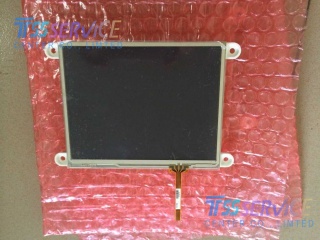
The Strategic Advantage of the 5.7-Inch SVGA Standard
The choice of a 5.7-inch diagonal size is not arbitrary; it is a calculated decision rooted in ergonomic and spatial optimization. In a landscape cluttered with smaller 3.5-inch or 4.3-inch panels and much larger 7-inch or 10.1-inch alternatives, the 5.7-inch form factor occupies a unique niche. It provides a viewing area large enough to present complex data dashboards, multi-parameter readings, or detailed schematics without overwhelming the physical footprint of a control panel or portable device. The 640×480 resolution – often referred to as VGA or more precisely, SVGA in this context – is a critical component of this balance.
Unlike lower-resolution QVGA (320×240) panels that can make text appear blocky or anti-aliased, the 640×480 standard delivers a pixel density that supports crisp, readable fonts and sharp graphical icons. For an operator standing several feet away from an industrial machine, this clarity reduces cognitive load and the likelihood of misreading a value. Furthermore, using a standard 4:3 aspect ratio is a deliberate choice. While widescreen formats are ubiquitous in consumer electronics, the 4:3 format aligns perfectly with legacy industrial software, control system layouts, and portrait-mode applications where vertical information density is paramount. The ET0570B0DHU leverages this standard to ensure backward compatibility and predictable performance in systems that do not require the horizontal scrolling common in widescreen interfaces.
Decoding the TFT-LCD Architecture for Optimal Readability
To understand the visual performance of the ET0570B0DHU, one must look beyond simple resolution numbers and examine its core display technology. Thin-Film Transistor (TFT) LCD architecture is fundamentally different from passive matrix displays. Each pixel in a TFT panel is controlled by its own dedicated transistor, enabling precise voltage control and, consequently, superior contrast and response times. This active matrix technology eliminates the crosstalk and ghosting that plague passive displays, making it essential for applications involving moving graphics, live video feeds, or rapidly updating numerical charts.
Specifications for the ET0570B0DHU typically include a brightness rating in the range of 300 to 500 nits (cd/m²) and a contrast ratio often exceeding 500:1. These numbers translate directly to real-world performance. A brightness level above 300 nits is generally sufficient for indoor industrial environments with controlled lighting, but the module's design also considers the use of an anti-glare surface treatment in many variants. This is not merely a luxury; it is a functional necessity. In a factory setting with overhead LEDs or sunlight streaming through a window, glare can render a glossy screen unreadable. The combination of adequate luminance and surface diffusion allows the display to maintain legibility under challenging ambient conditions. The TN (Twisted Nematic) technology common in this class often provides fast response times, which is crucial for touch interaction to feel immediate and lag-free, preventing the frustrating disconnect between user input and visual feedback.
Touch Integration: The Critical Interface Between User and Machine
Integrating a touch screen transforms a passive display into an active input device, but the technology behind that integration is decisive for the user experience. The ET0570B0DHU is offered with either Resistive or projected Capacitive (PCAP) touch options, and understanding the distinction is vital for correct application.
-
Resistive Touch: This technology relies on pressure to create contact between two conductive layers. Its primary advantage is its ability to operate with any stylus, gloved hand, or even a simple tool. In environments where operators wear heavy-duty gloves, for instance in a chemical plant or cold storage facility, resistive touch is often the only reliable choice. It is also significantly more resistant to contaminants like oil, dust, and water splashes. However, it offers lower optical clarity (approximately 80% light transmission) and is less sensitive to light swipes.
-
Projected Capacitive (PCAP) Touch: PCAP technology detects the electrical properties of a conductive object, typically a human finger. It offers superior optical clarity (over 90%), multi-touch gesture support (pinch-to-zoom, swipe), and a more responsive, intuitive feel akin to a smartphone. This is the preferred option for modern, aesthetically-driven medical devices or commercial kiosks. Its primary limitation is its high cost and poor performance with non-conductive gloves or in high-humidity environments.
For the ET0570B0DHU, the choice of touch technology is a trade-off between durability and sensitivity. A design engineer must evaluate the end-user's environmental constraints to select the correct interface, as this selection directly impacts system reliability and user satisfaction. The display controller is typically configured to handle the specific protocol (e.g., USB or I2C) required by the chosen touch overlay.
System Integration, Controllers, and Long-Term Durability
The value of the ET0570B0DHU extends beyond its optical and tactile properties to its electrical and mechanical architecture. A display module is only as good as its ability to communicate with the host microcontroller. This module commonly supports parallel RGB interfaces (typically 18-bit or 24-bit), which provide a direct, high-bandwidth connection for real-time video data. This is a critical distinction from slower SPI-based displays, as the parallel interface allows for full-frame, 60fps refresh rates without buffer overflow or lag, essential for animation or video playback.
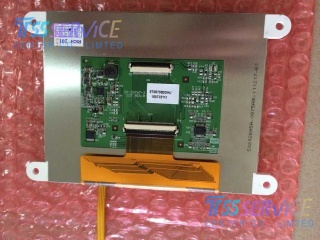
Durability is another cornerstone of its design. The module typically features an integrated LED backlight unit with a rated lifetime of 50,000 to 70,000 hours. This translates to roughly 5.7 to 8 years of continuous 24/7 operation, far exceeding the lifespan of many consumer-grade displays. Furthermore, the mechanical design often includes mounting holes and a rigid metal frame, ensuring the display can withstand the vibration and shock common in industrial vehicles or heavy machinery. The optical bonding process—a lamination technique that fills the air gap between the touch sensor and the LCD cover glass—is another key feature. Optical bonding reduces internal reflections, increases sunlight readability, and prevents dust or moisture from seeping into the sensitive layers of the module. This attention to environmental sealing and mechanical rigidity ensures that the ET0570B0DHU is not a weak link in a long-term embedded system deployment.
The ET0570B0DHU 5.7-inch TFT-LCD with touch screen is not a commodity component but a carefully engineered subsystem where resolution, interface, and environmental resilience are balanced for professional-grade applications. Its value lies not in novelty but in its proven reliability and the strategic compromise between screen size, pixel density, and touch responsiveness. For design engineers, it represents a mature, well-supported platform that minimizes integration risk. Whether deployed in a ruggedized factory terminal or a precise medical monitor, its architecture ensures that the final product delivers clarity, durability, and an intuitive user interaction that reduces operational errors, making it a cornerstone of dependable system design.


