In the relentless pursuit of the perfect home viewing experience, television manufacturers have long been caught on the horns of a dilemma. On one side lies the dazzling allure of peak picture quality: deeper blacks, explosive brightness, and colors that pop with almost unnatural vibrancy. On the other stands the growing, non-negotiable demand for eye comfort—a screen that doesn't strain, flicker, or fatigue viewers during marathon sessions. For years, these goals seemed mutually exclusive; enha
In the relentless pursuit of the perfect home viewing experience, television manufacturers have long been caught on the horns of a dilemma. On one side lies the dazzling allure of peak picture quality: deeper blacks, explosive brightness, and colors that pop with almost unnatural vibrancy. On the other stands the growing, non-negotiable demand for eye comfort—a screen that doesn't strain, flicker, or fatigue viewers during marathon sessions. For years, these goals seemed mutually exclusive; enhancing one often meant compromising the other. This longstanding trade-off is precisely what Hisense's latest technological suite aims to dismantle.
Hisense is not merely adding another feature to a spec sheet. It is engineering a fundamental reconciliation between visual spectacle and visual health. This article delves into the sophisticated technologies behind this dual achievement, exploring how Hisense has engineered a television that is as kind to your eyes as it is captivating for your senses, truly delivering on the promise of excellence in both picture quality and protection.
The Core Conflict: Why Brilliance Often Comes at a Cost
To appreciate Hisense's breakthrough, one must first understand the inherent tension in display technology. Traditional high dynamic range (HDR) and high brightness, essential for a lifelike and immersive picture, are typically achieved through powerful backlighting systems. These systems, especially in LED/LCD TVs, can cause issues like Pulse Width Modulation (PWM) dimming flicker—an invisible but perceptible rapid cycling of the backlight that can lead to eye strain and headaches over time. Furthermore, to achieve contrast, many sets use aggressive dimming algorithms that create a phenomenon known as "black crush" or distracting "blooming" around bright objects, forcing the eyes to constantly readjust.
The blue light emitted by LEDs is another well-documented concern. While all screens emit it, the intense light output required for premium HDR can amplify its potential impact on circadian rhythms and contribute to digital eye strain. For years, the industry approach was binary: a "Eye Comfort" mode would drastically reduce blue light and brightness, washing out the picture and nullifying the premium visual experience. Hisense's mission was to resolve this conflict at a hardware and algorithmic level, not through a simple software filter that degrades performance.
Hisense's Dual-Engine Approach: ULED X and Light Sensing Pro
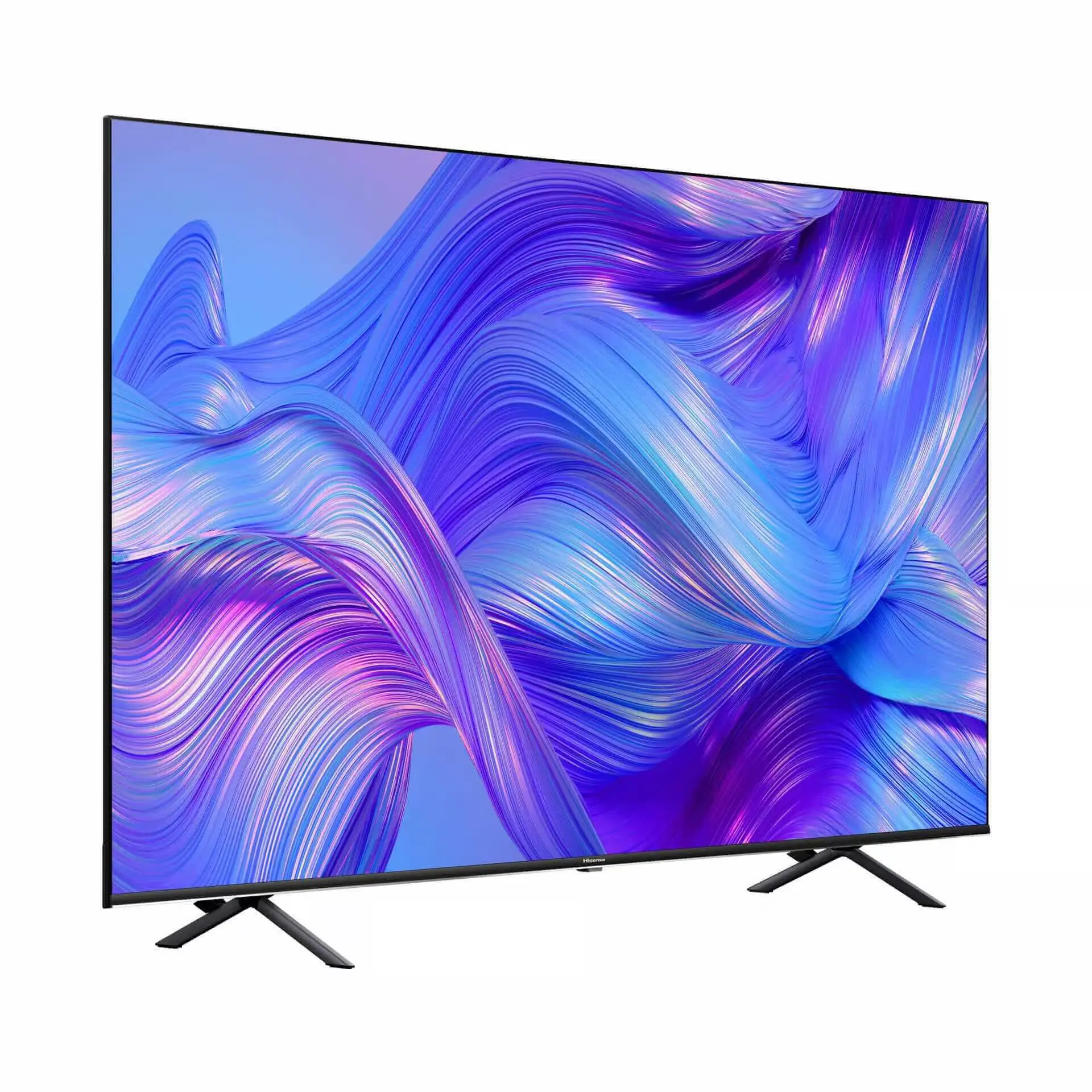
Hisense's solution is a two-pronged, integrated platform. The first engine is the ULED X Display Technology. This isn't just a marketing term; it represents a holistic upgrade to the optical system. It employs a meticulously engineered Mini-LED backlight array with thousands of precisely controlled zones. This allows for extraordinary contrast—deep, inky blacks right next to searing highlights—without the halo effect, because control is so granular. Paired with advanced quantum dot layers, it delivers a color gamut that meets the cinema-grade DCI-P3 standard with remarkable accuracy.
Crucially, this precision control means the panel doesn't need to rely on harsh, full-screen brightness spikes to appear vibrant. It can deliver peak highlights where needed while keeping the overall scene comfortable. This hardware foundation is then managed by the second engine: the Light Sensing Pro system. A dedicated ambient light sensor continuously measures the room's illumination, allowing the TV's processor to minutely adjust not just brightness, but also color temperature, contrast, and gamma in real-time. This ensures the picture remains optimally balanced and easy on the eyes whether you're watching in a pitch-black room or a sunlit lounge.
Decoding the Eye Protection Arsenal: Beyond Blue Light Filters
While automatic adjustment forms the first line of defense, Hisense deploys a dedicated suite of eye care technologies that work in concert with the ULED X platform. The cornerstone is a flicker-free backlight driver that uses Direct Current (DC) dimming-like technology to regulate brightness, eliminating the PWM flicker endemic to many high-brightness displays. This provides a stable, constant light source that drastically reduces the subconscious strain caused by rapid flashing.
Secondly, Hisense implements a smart low-blue-light design. Instead of applying a blanket yellow tint that distorts colors, the system uses a specialized LED phosphor and optical film combination that inherently reduces the peak energy in the harmful high-energy blue light spectrum (415-455nm) at the source. This allows the TV to maintain rich, accurate colors while minimizing potential circadian disruption. Combined with features like automatic brightness limiters and content-adaptive settings, these technologies create a multi-layered protective barrier that operates seamlessly in the background.
The User Experience: Where Technology Meets Real-World Viewing
The ultimate test of any technology is its impact on daily life. A Hisense TV equipped with these systems offers a distinctly different viewing experience. During a dark-room movie night, the incredible contrast of the ULED X panel makes scenes pop with cinematic depth, yet the absence of flicker and aggressive blooming allows you to watch for hours without that familiar tired feeling. When watching a sports game in a bright room, the Light Sensing Pro ensures the picture remains vivid and glare-free without becoming a blinding beacon.
The seamless integration is key. There's no need to manually toggle between a "Vivid" mode and an "Eye Saver" mode, a switch that traditionally meant choosing between quality and comfort. The television intelligently manages this balance, proving that the two are not mutually exclusive. For parents, the inherent low-blue-light design offers peace of mind for family viewing. For the home cinema enthusiast, it means enjoying reference-level picture quality without the physical toll that sometimes accompanied it in the past.
Hisense's new technological paradigm successfully redefines what a premium television should be. By synergizing the precision of ULED X display science with proactive, intelligent eye comfort systems like Light Sensing Pro and flicker-free solutions, it breaks the zero-sum game between spectacular imagery and visual well-being. This achievement marks a significant step toward more humane and sustainable viewing habits. The future of home entertainment isn't just about sharper pixels or brighter nits; it's about creating technology that serves our senses without compromising our health, and Hisense has positioned itself at the forefront of this essential evolution.


