In the intricate world of industrial electronics, the display often serves as the critical interface between complex machinery and human operators. For engineers and procurement specialists sourcing components for Hitachi systems, identifying the right LCD module is a task that balances precise specifications with long-term reliability.
In the intricate world of industrial electronics, the display often serves as the critical interface between complex machinery and human operators. For engineers and procurement specialists sourcing components for Hitachi systems, identifying the right LCD module is a task that balances precise specifications with long-term reliability. This article delves into a specialized component designed for this exact purpose: the SP14Q002-B1 5.7-inch 320x240 FSTN-LCD.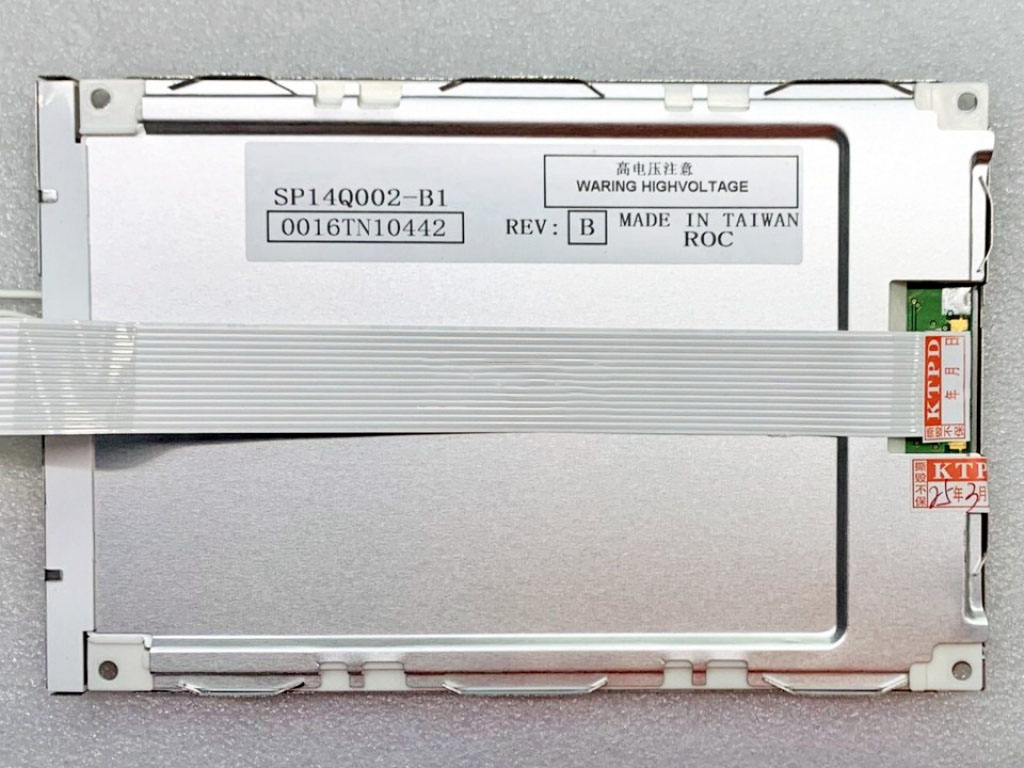
Our exploration will move beyond basic datasheet parameters to examine the technological rationale behind its design, its seamless integration within Hitachi's ecosystem, the tangible performance benefits it delivers in demanding environments, and the strategic sourcing considerations for professionals. This deep dive aims to provide a comprehensive understanding of why this specific module is more than just a display—it's a vital link in the chain of operational excellence.
Decoding the Specification: The Technology Behind FSTN Clarity
At first glance, the alphanumeric code SP14Q002-B1 signifies a tailored component, but its true value is unlocked in the technical details. The 5.7-inch diagonal measurement provides an optimal balance between viewable area and physical footprint, a size historically prevalent in industrial control panels and instrumentation. The 320x240 pixel resolution, adhering to the QVGA standard, offers sufficient density for displaying detailed alphanumeric data, schematic symbols, and user interface elements without unnecessary graphical complexity that can drive up cost and power consumption.
The cornerstone of this module's performance is the FSTN (Film Compensated Super Twisted Nematic) technology. Unlike simpler TN displays, FSTN incorporates a retardation film that dramatically improves contrast and widens the viewing angle. This compensation film neutralizes the inherent birefringence of the STN layer, turning a characteristic blue-on-yellow or green-on-silver appearance into a sharp, high-contrast black-on-white or white-on-black presentation. This results in superior readability under various lighting conditions, reducing operator eye strain—a critical factor in environments where monitoring screens for extended periods is the norm.
Engineered for Integration: Compatibility with Hitachi Systems
A standard off-the-shelf display can create significant engineering overhead. The SP14Q002-B1 module distinguishes itself by being expressly FOR Hitachi, implying a design philosophy centered on seamless integration. This compatibility spans multiple dimensions. Electrically, the module's interface—likely a parallel RGB or MPU system—is designed to match the signaling voltage, timing, and pin-out expectations of Hitachi's controller boards, minimizing the need for level shifters or complex adapter circuits.
Mechanically, its form factor, mounting hole patterns, and bezel dimensions are engineered to drop into existing chassis or panel cutouts designed by Hitachi. This plug-and-play compatibility eliminates costly mechanical redesigns, accelerates development cycles, and ensures a perfect fit. Furthermore, this dedicated design suggests thorough validation and testing against Hitachi's internal quality and environmental standards, providing engineers with a higher degree of confidence in the component's performance and longevity within the intended application ecosystem.
Delivering Reliability in Demanding Operational Environments
Industrial and professional equipment does not operate in the controlled conditions of an office. The value of the SP14Q002-B1 is proven in its ability to perform reliably under stress. FSTN LCDs themselves are known for stable performance across a wide operating temperature range, a specification that is rigorously tested for modules destined for Hitachi's diverse product lines, from medical devices to factory automation.
The module's construction is geared for durability. It typically features a robust metal frame for structural integrity and resistance to vibration, a constant threat in industrial settings. The choice of a CCFL or LED backlight system (depending on variant) is made with both longevity and power efficiency in mind. LED backlights, in particular, offer:
-
Extended Lifespan: Drastically outlasting CCFLs, reducing maintenance cycles.
-
Lower Power Consumption: Contributing to energy-efficient system design.
-
Enhanced Robustness: Greater resistance to shock and vibration compared to fragile CCFL tubes.
This resilience translates directly to reduced downtime and lower total cost of ownership for the end-user.
Strategic Sourcing and Lifecycle Considerations for Professionals
For procurement managers and design engineers, selecting a critical component like this LCD extends beyond initial technical fit. It involves strategic supply chain thinking. Opting for the authentic SP14Q002-B1, as opposed to a "compatible" alternative, mitigates significant risk. It guarantees:
-
Performance Consistency: Every unit meets the exact electrical and optical specifications required by the Hitachi system design.
-
Quality Assurance: Adherence to the manufacturer's stringent production and testing standards.
-
Supply Chain Stability: Reliable access to a component with a documented and predictable lifecycle, crucial for long-term product support and manufacturing.
Understanding the product lifecycle status—whether it's in active production, nearing end-of-life (EOL), or already obsolete—is paramount. Proactive engagement with authorized distributors or the manufacturer allows for informed planning, including last-time buys or pre-planned redesigns, thereby avoiding costly production halts. This foresight is a hallmark of professional component sourcing.
The SP14Q002-B1 5.7-inch FSTN-LCD exemplifies how a purpose-built component becomes a keystone of system reliability. Its FSTN technology ensures superior readability, its Hitachi-specific design guarantees effortless integration, and its rugged construction delivers unwavering performance in challenging conditions. For professionals, sourcing this module is not merely a purchase but a strategic decision that safeguards product quality, streamlines development, and ensures long-term operational stability. In the mission-critical interfaces of Hitachi equipment, this display module proves that clarity, compatibility, and resilience are the true metrics of value.


