In the evolving landscape of industrial automation and medical instrumentation, the display panel is far more than a simple output device—it is the critical interface between human operators and complex machine intelligence.
Introduction: The Unseen Enabler of Industrial Precision
In the evolving landscape of industrial automation and medical instrumentation, the display panel is far more than a simple output device—it is the critical interface between human operators and complex machine intelligence. While consumer electronics often chase high refresh rates and pixel density, the professional sector demands durability, readability under harsh lighting, and precise touch responsiveness. The Hitachi TX09D70VM1CAA 3.5-inch LCD panel with integrated touch screen represents a specialized solution where reliability trumps novelty. This compact module is engineered for environments where failure is not an option: from handheld diagnostic tools to factory floor controllers. This article dissects the technical architecture, application logic, and performance characteristics that define this component, offering a comprehensive analysis for procurement engineers, integrators, and system designers who require more than surface-level specifications.
Anatomy of a Specialized Display: Resolution and Optical Engineering
The TX09D70VM1CAA is distinguished by its 320 x 240 pixel (QVGA) resolution, a deliberate choice that prioritizes functional clarity over visual extravagance. At a diagonal of 3.5 inches, this pixel density yields a sharp enough image for displaying graphs, numeric data, and simplified user interfaces without the unnecessary overhead of higher resolution driving circuits. The panel employs a TN (Twisted Nematic) technology, which offers a significant advantage in industrial contexts: fast pixel response times and lower power consumption compared to IPS variants.
What sets this unit apart is its high-luminance backlight system, typically rated for operation in daylight or bright ambient conditions. The optical stack includes a polarizer and anti-glare treatment that minimizes reflection, ensuring that a surgeon reading vitals or a technician calibrating a sensor is not battling glare from overhead lighting. The viewing angle, while narrower than consumer-grade panels, is intentionally optimized for direct, head-on interaction—the most common human-machine interface scenario in a fixed-installation environment. This optical design reduces electrical noise interference and extends the life of the backlight, often exceeding 50,000 hours of continuous operation under rated conditions.
Touch Integration: Beyond Capacitive Simplicity
Unlike modern smartphones that rely on projective capacitive touch, the Hitachi TX09D70VM1CAA commonly integrates a 4-wire resistive touch screen. This is not a technological regression but a deliberate engineering compromise for mission-critical reliability. Resistive touch technology functions by detecting pressure applied to the screen, which means it can be activated with gloved hands, a stylus, or even through a protective overlay—an impossibility for standard capacitive panels.
The resistive film used in this module is engineered for high cycle life, typically exceeding one million touches per point without sensitivity degradation. The interface is a simple analog voltage divider, making it compatible with low-cost microcontrollers and legacy control boards. For the integrator, this means no complex driver firmware or I²C configuration is required. The trade-off—a slight loss in optical clarity and multi-touch capability—is irrelevant in a control panel where a single point of interaction is the norm. The dust-proof and moisture-resistant seal around the touch layer further enhances its suitability for food processing or pharmaceutical production environments where sanitation cycles are frequent.
System Integration: Electrical and Mechanical Considerations
From a hardware perspective, the TX09D70VM1CAA operates on a single 3.3V power rail for both the LCD drive and the touch controller, simplifying power supply design in battery-operated or low-voltage systems. The parallel RGB interface, common in the industrial display ecosystem, requires 18-bit color data input (6 bits per channel), allowing the rendering of 262,144 colors. While this is a fraction of the 16.7 million colors in contemporary panels, the human eye perceives smooth gradients in medical waveform displays or industrial trend charts without visible banding when properly calibrated.
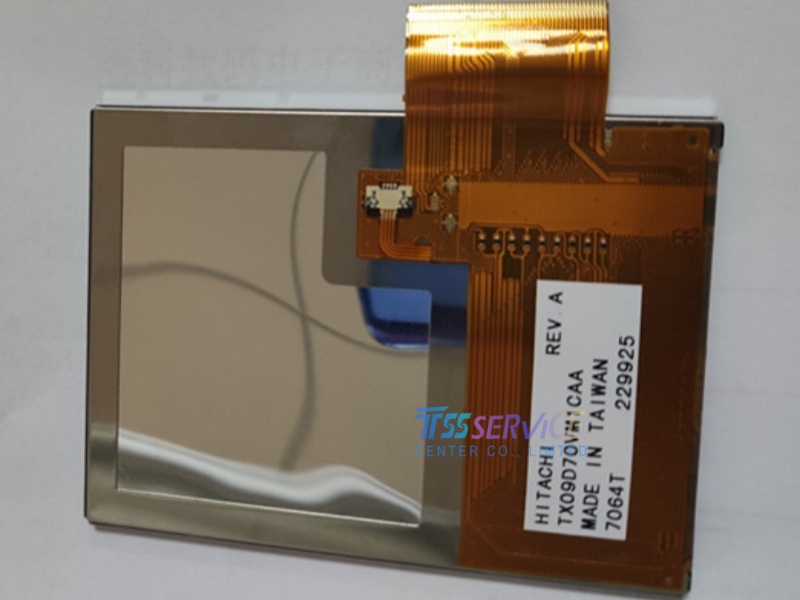
Mechanically, the module comes with a metal frame bezel that acts as both a mounting bracket and an electromagnetic interference (EMI) shield. The mounting hole pattern is standardized to fit into a 90mm x 70mm cutout, making it a drop-in replacement for legacy Hitachi models or compatible third-party panels. Integrators must note the operating temperature range: typically -20°C to +70°C. This wider-than-consumer range ensures functionality in cold warehouses or near hot machinery. Proper heat sinking of the backlight driver IC is recommended when the unit operates at the upper thermal limit for extended periods to prevent luminance degradation.
Application Domain: Where This Panel Excels
The true value of the Hitachi TX09D70VM1CAA reveals itself in specific vertical applications. In portable medical devices, such as handheld ultrasound scanners or patient monitors, the resistive touch screen allows for operation while wearing surgical gloves, and the low resolution ensures that battery life extends beyond critical procedures. In industrial automation, it serves as an HMI (Human-Machine Interface) for robotic controllers, conveying motor status and error codes with the reliability required for 24/7 factory operations.
Another key domain is avionics and cockpit instrumentation, where the panel’s resistance to vibration and wide operating temperature is non-negotiable. The 3.5" size is ideal for secondary displays or as a compact primary screen in unmanned aerial vehicle (UAV) ground stations. The conservative pixel resolution also reduces the computational load on embedded processors, allowing engineers to use lower-cost MCUs without sacrificing user experience. Furthermore, the optical stability over time—low color shift and consistent luminance—makes it suitable for calibration-sensitive equipment like spectrophotometers or gas analyzers, where display accuracy directly affects data interpretation.
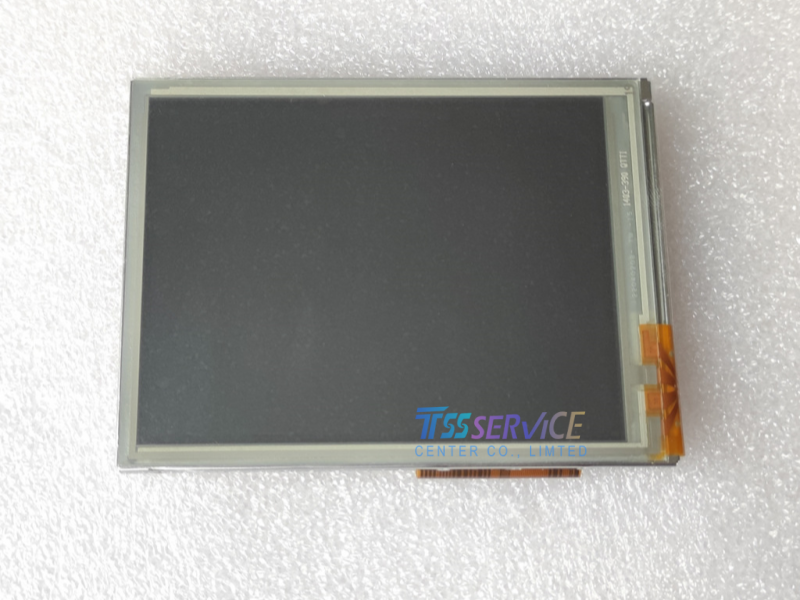
Challenging the notion of progress, this panel reminds us that in industrial design, reliability and fit-for-purpose engineering often outweigh raw specifications. The Hitachi TX09D70VM1CAA is not a display for everyone, but for the specialist who requires a proven, robust, and easily integrated 3.5-inch touch screen solution, it remains a benchmark. Its enduring presence in supply chains reflects a deep understanding of real-world constraints: gloved interfaces, harsh lighting, vibration, and the need for decades of software compatibility. As a procurement or engineering decision, choosing this module is an investment in operational continuity rather than technological flash, a choice that pays dividends in reduced field failures and simplified maintenance cycles.


