Introduction: Decoding the TX18D16VM1CAB – A 7.0-Inch Industrial Benchmark
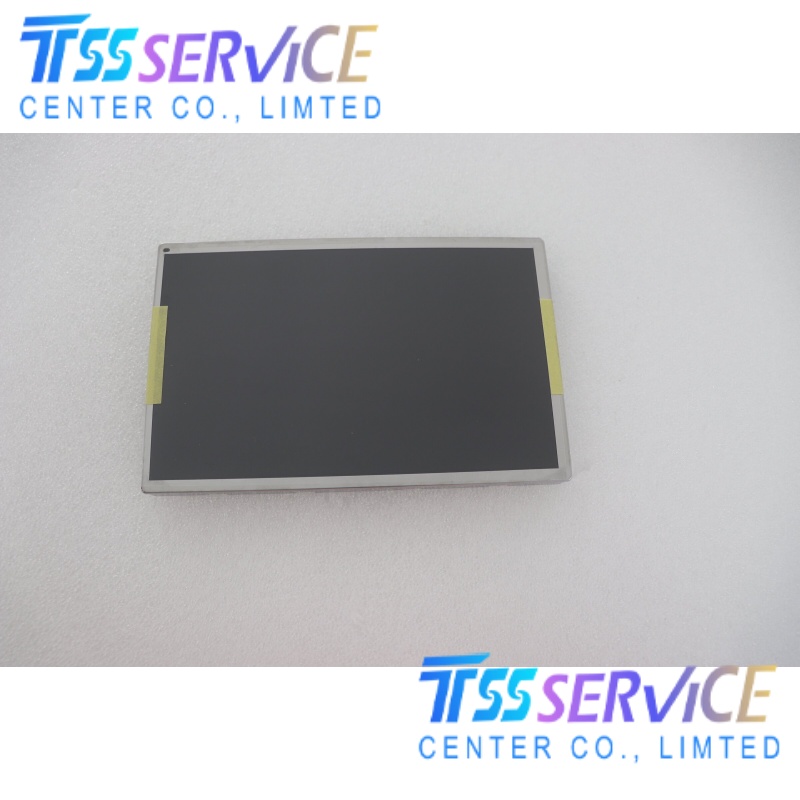
The TX18D16VM1CAB, a 7.0-inch diagonal TFT-LCD panel from Hitachi, represents a specific class of industrial display solutions where reliability, optical performance, and longevity are paramount. In an era dominated by high-resolution consumer electronics, this panel’s 800×480 resolution—commonly known as WVGA—may seem modest, yet its architecture is purpose-built for demanding environments. Hitachi, a legacy manufacturer known for rigorous quality standards, designed this module to serve as a bridge between human operators and complex machinery. This article delves beyond the surface specifications to explore the engineering philosophy, technical nuances, and practical applications of the TX18D16VM1CAB. We will examine how its optical characteristics, interface design, and material choices make it a preferred component in medical instrumentation, in-vehicle systems, and industrial automation. By understanding what makes this display tick, you can make informed procurement and integration decisions.

The Engineering Core: Resolution, Aspect Ratio, and Viewing Experience
At first glance, the 800×480 pixel count on a 7.0-inch diagonal yields a pixel density of approximately 133 pixels per inch (PPI). While this is far from the “Retina” standards of modern smartphones, it is a deliberate choice for industrial contexts. The primary advantage lies in readability at typical viewing distances of 50 to 100 centimeters, where individual pixels are not distracting, and text can rendered with sufficient clarity. The 15:9 aspect ratio (800:480 simplifies to 5:3, but the active area dimensions of 152.4 mm by 91.44 mm confirm a 15:9 ratio) is particularly suitable for displaying operator dashboards and data tables without excessive scrolling.
Hitachi’s implementation of Twisted Nematic (TN) technology in this model is noteworthy. While TN panels are often criticized for limited viewing angles, the TX18D16VM1CAB is optimized for landscape operation with a defined 6 o’clock viewing direction. This means the panel’s contrast and color accuracy are engineered to hold up best when viewed from below the center line—a common scenario in a control panel mounted at waist or chest height. The typical contrast ratio of 500:1 and brightness of 400 cd/m² provide a crisp, legible image even in moderately lit factory floors or vehicle cabins. This is not a display meant for cinematic color grading; it is a display for unambiguous, real-time data presentation.
Interface Architecture and Signal Integrity Considerations
The TX18D16VM1CAB employs a parallel RGB (Red-Green-Blue) interface, specifically a 24-bit wide bus (8 bits per color channel). This is a pivotal characteristic that influences both design complexity and performance. Unlike modern serial interfaces (e.g., MIPI DSI or LVDS), a parallel RGB interface transmits data over numerous physical lines simultaneously. For a resolution of 800×480, this involves clock signals, horizontal/vertical synchronization, data enable, and three sets of 8 data lines—totaling over 30 traces on the circuit board.
From a practical engineering standpoint, this presents both challenges and opportunities. The primary challenge is electromagnetic interference (EMI). High-speed switching on many parallel lines at frequencies around 30 MHz can generate significant noise. This requires careful PCB layout, impedance matching, and shielding in the final product. The opportunity, however, lies in low latency and deterministic timing. Because the display controller has direct, unencoded access to each pixel’s color value, there is no protocol overhead. This makes the TX18D16VM1CAB an excellent choice for real-time systems where delays of even a single frame are unacceptable, such as in medical patient monitors or CNC machine controls.
Furthermore, the panel incorporates an integrated timing controller (TCON). The input signals required are standard TTL (Transistor-Transistor Logic) levels, making it compatible with a wide range of microcontrollers and system-on-chips without the need for specialized interface converter chips. This simplifies the bill of materials and reduces potential failure points, aligning with the industrial design philosophy of robustness over advanced features.
Mechanical Robustness and Environmental Tolerance in Industrial Settings
A critical differentiator between consumer and industrial displays is physical resilience, and the TX18D16VM1CAB exemplifies this. The module features a metal frame rather than a plastic bezel, providing superior structural rigidity and heat dissipation. The mounting holes on the frame allow for secure attachment to a chassis, preventing micro-vibrations from causing image flicker or connection fatigue over thousands of operational hours.
Hitachi specifies an operating temperature range of -20°C to +70°C, which is significantly wider than consumer-grade 0°C to 50°C limits. This makes the panel viable for outdoor kiosks in cold climates or machinery near hot engines. The storage temperature extends even further, from -30°C to +80°C. Additionally, the display is designed to withstand a certain level of humidity (typically 95% RH non-condensing), which is crucial for medical sterilization environments or coastal installations.
The LED backlight unit is another area of industrial-grade engineering. Rated for a typical lifespan of 50,000 hours under nominal current, this backlight can operate continuously for over 5.5 years. This longevity reduces maintenance downtime and total cost of ownership. The backlight driver circuit is also external, giving system designers the flexibility to implement their own brightness control algorithms via PWM (Pulse Width Modulation), further optimizing power consumption for battery-backed or energy-sensitive applications.
Real-World Application Scenarios and Integration Best Practices
The true value of the TX18D16VM1CAB emerges when it is deployed in specific verticals. In medical devices, such as infusion pumps or anesthesia machines, the 800×480 resolution provides enough detail for waveforms and numeric data at a size that is not overwhelming in a patient room. The TN technology’s fast response time (typically under 10 ms) minimizes motion blur when displaying scrolling vitals. Importantly, the parallel RGB interface allows engineers to design custom safety-critical boot sequences without relying on complex processor-to-display initializations.
In the automotive and heavy machinery sectors, this panel frequently appears in dashboards for agricultural tractors, forklifts, and marine navigation displays. Its 400 cd/m² brightness is sufficient to overcome glare from cabin windows, and the operating temperature range ensures functionality in both summer heat and winter cold. Integration best practices include:
Optical bonding: Applying an optical-grade adhesive between the touch sensor and the display to reduce reflections and improve sunlight readability.
Decoupling capacitance: Placing 0.1 µF capacitors near the power input pins on the FPC (Flexible Printed Circuit) to filter noise from the 3.3V supply rail.
Temperature monitoring: Adding a simple thermistor near the backlight to provide over-temperature shutdown protection if ventilation is blocked.
Finally, when sourcing replacement units or planning new designs, verifying the part number suffix is crucial. Hitachi has produced several variations of this panel, some with different backlight configurations or touch panels. Always cross-reference the specific 16-bit or 18-bit interface wiring with your controller’s datasheet to avoid signal mapping errors.
Conclusion
The TX18D16VM1CAB is a testament to the principle that in industrial electronics, refined engineering and reliability often outweigh raw specifications. With its parallel RGB interface optimized for low-latency data delivery, a metal frame designed for harsh environments, and a backlight rated for years of continuous operation, this 7.0-inch Hitachi panel remains a highly capable choice for medical, automotive, and industrial applications. While it demands thoughtful PCB design to manage EMI, its deterministic performance and wide temperature tolerance offer a proven foundation for mission-critical products. For engineers seeking a display that avoids planned obsolescence and focuses on operational integrity, the TX18D16VM1CAB stands as a reliable workhorse in a world of fleeting consumer trends.


