Introduction: The Unsung Hero of Industrial Visual Interfaces
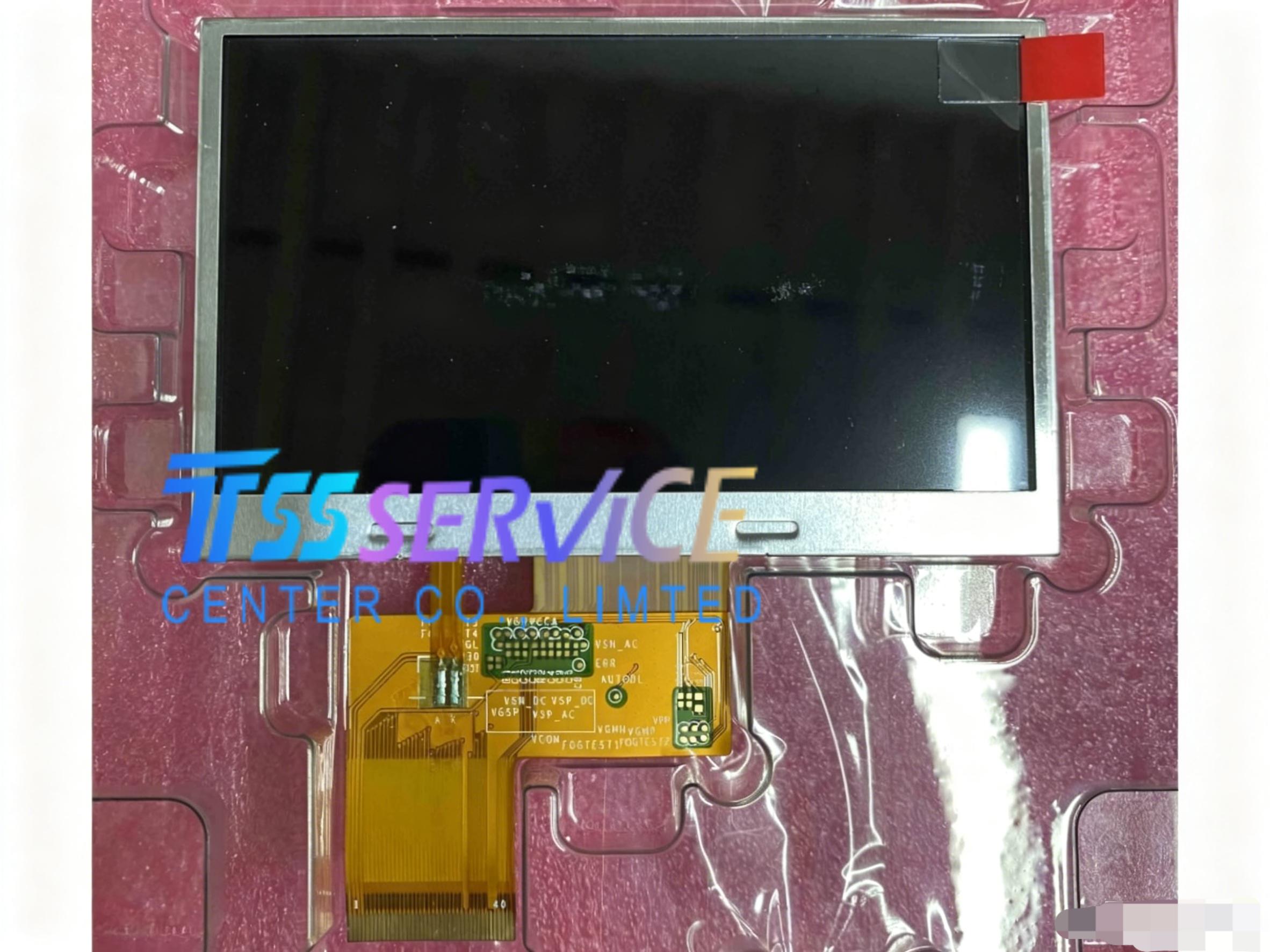
In the demanding world of industrial automation and embedded systems, the display panel is often the critical bridge between complex machine logic and human understanding. While consumer electronics chase bezel-less designs and high refresh rates, the industrial sector requires a different set of priorities: reliability, readability under harsh lighting, and consistent performance across extreme temperatures. The P0430WQF1ME10 4.3-inch TIANMA LCD Display Panel has carved a niche as a reliable workhorse in this specific arena. This article offers a deep dive into the specifications, engineering trade-offs, and application-specific advantages of this particular module. We will explore why a seemingly standard 4.3-inch panel is optimized for industrial control panels, medical devices, and point-of-sale terminals, moving beyond surface-level spec sheets to understand the engineering decisions that make it a preferred choice for system integrators and product designers alike.
Decoding the Specifications: Beyond Resolution and Brightness
To appreciate the value of the P0430WQF1ME10, one must look past the headline numbers. The panel features a 480x272 (WQVGA) resolution. While this may seem modest compared to modern smartphones, it is a deliberate choice for readability at distance and reduced processing overhead in microcontroller-based systems. The active area measures approximately 95.04 x 53.86 mm, offering a comfortable aspect ratio for displaying status dashboards and control menus.
However, the defining characteristic lies in its high brightness, typically rated at 400 to 500 cd/m². This is not a luxury; it is a necessity. In a factory environment with overhead LED lighting or indirect sunlight, standard consumer-grade screens wash out completely. TIANMA engineered this panel with a high-efficiency LED backlight to ensure readability without requiring constant system power scaling. Key structural details include:
Interface: 24-bit RGB parallel interface, allowing for direct connection to ARM Cortex-M series MCUs and FPGAs without expensive serializers.
Viewing Angle: 70/70/50/70 degrees (U/D/L/R), prioritizing landscape orientation for panel-mounted applications.
Operating Temperature: Ranging from -20°C to +70°C, a crucial spec that eliminates grade-B consumer panels from industrial consideration.
This combination of durability, interface simplicity, and optical performance positions the panel not as a cheap component, but as a robust solution for long-life cycle products.
Optical Performance and Environmental Resilience in Practice
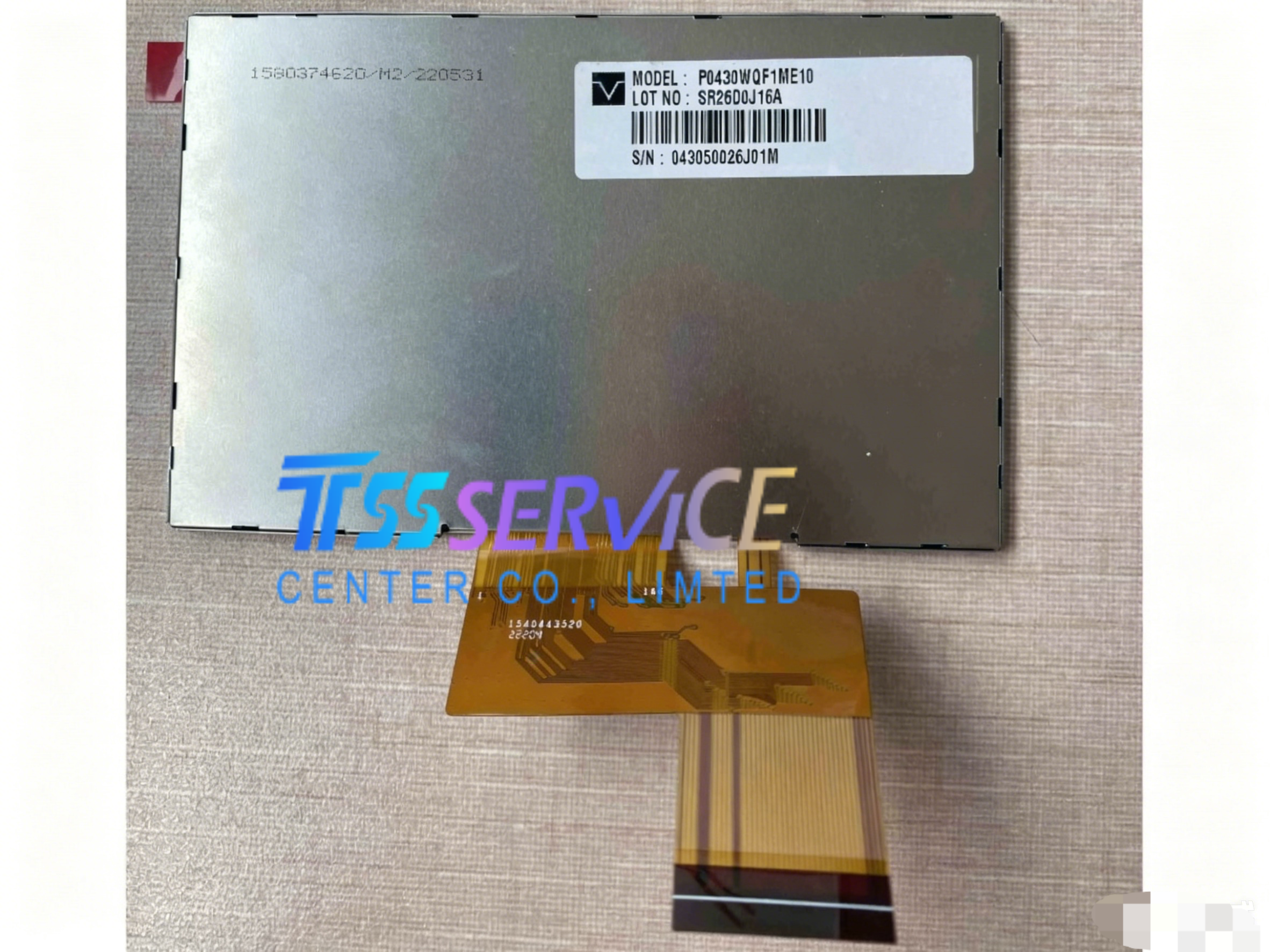
The true test of an industrial display is not its color gamut in a dark room, but its performance in a real-world factory or outdoor kiosk. The P0430WQF1ME10 utilizes TN (Twisted Nematic) technology. While IPS panels offer superior color consistency at wide angles, TN technology provides a faster response time (typically around 10-15 ms) and significantly lower power consumption. In a system that runs 24/7, the energy savings over a five-year lifespan are substantial.
Furthermore, the panel's surface treatment is a critical, often overlooked, feature. It likely includes an anti-glare (AG) coating. In a control room with overhead lights, a glossy screen creates distracting reflections that lead to operator errors. The AG coating diffuses ambient light, preserving contrast and reducing eye strain during long shifts. The 65,000-color depth, while not photographic, is entirely sufficient for rendering sharp text, system warnings (red/green status indicators), and simple graphs. The backlight lifespan is rated for 50,000 hours or more, which translates to over 5.7 years of continuous operation before brightness degrades to half its original value—a metric that underpins its "fit and forget" nature in industrial design.
Electrical Integration: Why the RGB Interface Matters
From a design engineering perspective, the choice of interface is often the deciding factor. The parallel RGB interface on the TIANMA 4.3-inch panel is a double-edged sword. It requires a large number of I/O pins (approximately 24 for data, plus control signals), which can complicate PCB layout. However, for low-latency applications—such as a real-time controller showing spindle speed or temperature—parallel RGB offers deterministic timing that SPI or I2C based displays cannot match.
This panel also supports deeper system integration thanks to its compatible touch panel overlay options. While the base model is a TFT-only module, TIANMA offers variants with a 4-wire resistive touch screen. This is a deliberate industrial choice; capacitive touch fails when users wear thick gloves or when water splashes on the screen. Resistive touch, while less sensitive to light taps, provides reliable, gloved-hand operation in machine shops and food processing plants.
The power management is equally intelligent. The backlight circuit can be driven by a dedicated PWM input, allowing the host processor to dim the screen dynamically. This is critical for outdoor kiosks that must automatically adjust to ambient light to conserve power and extend backlight life, or for medical devices that require dimming in operating theaters.
Strategic Applications: Where This Panel Excels
Identifying the correct application is the final piece of the SEO puzzle. The P0430WQF1ME10 is not a jack-of-all-trades; it is a specialist. Its primary sweet spots are in human-machine interfaces (HMIs) for industrial equipment such as CNC machines, injection molding controllers, and packaging lines. The 4.3-inch form factor is ideal when space on the panel door is constrained, but a full numeric keypad and status display are required.
Other high-value applications include:
Medical Monitoring Devices: Non-critical vital signs monitors or infusion pumps where reliability and readability under bright surgical lights are mandatory.
Building Access Control and Security: Elevator floor indicators, intercom faceplates, and biometric readers benefit from the wide temperature range and anti-theft robustness of a thick, industrial-grade panel.
Portable Test Equipment: Oscilloscopes and spectrum analyzers in rugged shells use this panel because of its ability to survive drops and temperature swings that would shatter a consumer screen.
The longevity of the TIANMA supply chain also mitigates a major industrial risk: component obsolescence. Unlike consumer phone screens that change annually, TIANMA guarantees multi-year production cycles, allowing companies to certify their medical or safety-critical equipment without fear of a redesign cycle every 18 months.
The P0430WQF1ME10 stands as a testament to thoughtful engineering for the industrial environment. It deliberately sacrifices the high pixel density and wide color gamut of consumer displays in favor of durability, thermal stability, and a reliable parallel interface. For system integrators building equipment that must operate flawlessly for a decade in harsh conditions, this 4.3-inch panel offers a balanced, proven solution. Its combination of anti-glare optics, resistive touch compatibility, and supply chain longevity ensures it remains a first-choice component for control panels and HMIs where failure is not an option. When your machine requires a window that never compromises, this TIANMA panel delivers stability over spectacle.


