In the demanding world of industrial automation and embedded systems, the display is not merely a visual accessory; it is the critical interface between human operators and complex machinery. Among the myriad of options available, the Innolux 5-inch AT050TN33 V1 LCD display screen stands out as a specialized component designed for reliability and performance under pressure.
In the demanding world of industrial automation and embedded systems, the display is not merely a visual accessory; it is the critical interface between human operators and complex machinery. Among the myriad of options available, the Innolux 5-inch AT050TN33 V1 LCD display screen stands out as a specialized component designed for reliability and performance under pressure. This article offers a comprehensive examination of the AT050TN33 V.1, moving past surface-level specifications to explore its architectural design, operational resilience, interface capabilities, and strategic role in modern industrial applications. We will dissect why this particular model has become a preferred choice for engineers seeking a balance of size, clarity, and durability, providing a valuable resource for procurement specialists and system integrators alike.
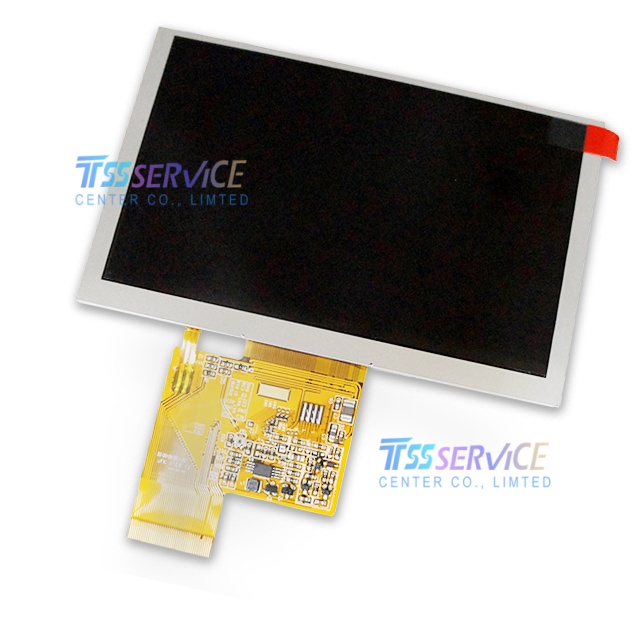
Architectural Precision: Understanding the Display Core
The foundation of any great display lies in its core imaging technology. The Innolux AT050TN33 V.1 utilizes an a-Si TFT-LCD (Amorphous Silicon Thin-Film Transistor Liquid Crystal Display) architecture, which is the industry standard for high-reliability industrial panels. This technology allows for precise voltage control at each pixel, resulting in consistent luminance and minimal crosstalk. At a resolution of 640 x RGB x 480 (VGA), this 5-inch screen delivers a pixel density that is ideal for reading data-rich interfaces, barcodes, and process control graphs without causing eye strain.
Further enhancing its utility is the aspect ratio of 4:3. While widescreens dominate consumer electronics, the 4:3 format provides a taller viewing area, making it superior for industrial HMI (Human-Machine Interface) layouts that require vertical information display—such as alarm logs or vertical menu lists. The active area measures 101.568 x 76.152 mm, a dimension specifically chosen to fit standard cutouts in many control panels. The panel’s brightness rating of typically 250 cd/m² is not the highest in the market, but it is precisely calibrated to function optimally in indoor industrial environments, avoiding the harsh glare that can plague higher-luminance panels in factory settings with overhead lighting.
Engineered for the Factory Floor: Resilience and Thermal Management
Industrial environments are inherently hostile to consumer-grade electronics. Vibrations, temperature fluctuations, and humidity are constant threats. The AT050TN33 V.1 is engineered specifically to withstand these conditions. One of its most critical features is its wide operating temperature range of -20°C to +70°C. This ensures reliable operation in unheated warehouses or near heat-generating machinery, a capability that off-the-shelf displays simply cannot match.
Beyond thermal tolerance, the display employs a robust mechanical design. The built-in LED backlight unit offers significant advantages over older CCFL (Cold Cathode Fluorescent Lamp) technology. LEDs are more resistant to shock and vibration, have a longer operational life (often exceeding 40,000 hours), and consume less power, reducing the heat load inside a sealed enclosure. Furthermore, the interface connector is designed with a secure latch and a locking mechanism, ensuring that the flex cable remains connected even when the equipment is subjected to constant movement or transport. This level of mechanical resilience makes the AT050TN33 V.1 a reliable partner in applications ranging from CNC machine controllers to portable medical diagnostic devices.
The Digital Bridge: Interface and Compatibility Considerations
A display is only as useful as its ability to communicate with the system's motherboard. The Innolux AT050TN33 V.1 employs a parallel RGB (Red, Green, Blue) interface, specifically a 24-bit (8 bits per color) digital data bus. This is a significant advantage for industrial designers because parallel RGB interfaces offer low latency and deterministic timing, which is crucial for real-time data visualization where a split-second delay could cause a reading error.
Compatibility, however, requires careful planning. Unlike modern embedded displays that use LVDS (Low-Voltage Differential Signaling) or MIPI (Mobile Industry Processor Interface), the parallel RGB interface uses higher voltage levels (typically 3.3V or 5V for logic) and requires more signal lines. This means that system integrators must ensure their microcontroller or application processor has a dedicated RGB controller or use an external timing controller (TCON) IC. The 1.2W maximum power consumption of this module is a key design specification that allows engineers to calculate total system power budgets accurately, making it suitable for battery-powered portable equipment. Documentation from Innolux provides the exact timing requirements (Hsync, Vsync, pixel clock), which allows for reliable integration into custom PCB designs.
Strategic Implementation: Real-World Applications and Value Proposition
The true measure of a component's worth is its performance in the field. The AT050TN33 V.1 excels in a diverse range of applications where reliability trumps resolution. Its primary markets include:
-
Human-Machine Interfaces (HMIs): The 5-inch size is ideal for compact control panels in factory automation, providing a clear window for process monitoring and input.
-
Medical Equipment: In patient monitors, infusion pumps, and diagnostic scanners, the display’s consistent color reproduction and wide temperature range are essential for accurate data interpretation.
-
Gaming and Kiosk Systems: Many electronic gaming machines and point-of-sale terminals rely on this panel for its proven longevity and consistent 4:3 aspect ratio.
-
Embedded Systems: Single-board computers (like Raspberry Pi, BeagleBone, or custom ARM boards) often have drivers for parallel RGB displays, making this a plug-and-play solution for prototyping.
The value proposition is clear: you are not buying the highest resolution or the thinnest bezel. You are buying a standardized, well-documented, and broadly supported industrial component. Its availability as a replacement part (the “V1” revision ensures forward and backward compatibility in most systems) makes it a low-risk investment for long-term production runs. For engineers, this translates into reduced design time, easier certification (UL, CE, etc.), and a lower total cost of ownership over the product’s lifecycle.
Conclusion
The Innolux 5-inch AT050TN33 V.1 LCD display is not a technological marvel in terms of resolution or thinness, but rather a masterpiece of industrial engineering where reliability, standardization, and predictable performance are paramount. Its robust mechanical design, wide operating temperature range, and proven parallel RGB interface make it the optimal choice for any system requiring a durable and clear 5-inch screen in a demanding environment. For engineers and procurement professionals, selecting this panel means choosing a component with a clear roadmap and abundant technical support. It is a strategic investment in quality and longevity, ensuring that your industrial interface remains clear, reliable, and operational for years to come. This is the screen that does its job without fanfare, allowing the machine and the operator to do theirs.


