In the intricate world of industrial and embedded display solutions, selecting the right panel is a critical engineering decision that balances performance, durability, and cost. At the heart of many robust human-machine interfaces (HMIs),
In the intricate world of industrial and embedded display solutions, selecting the right panel is a critical engineering decision that balances performance, durability, and cost. At the heart of many robust human-machine interfaces (HMIs), point-of-sale systems, and portable medical devices lies a component like the Innolux G104ACE-LH1. This 10.4-inch SVGA TFT-LCD panel represents a mature yet highly relevant technology standard, engineered for environments where reliability is non-negotiable.
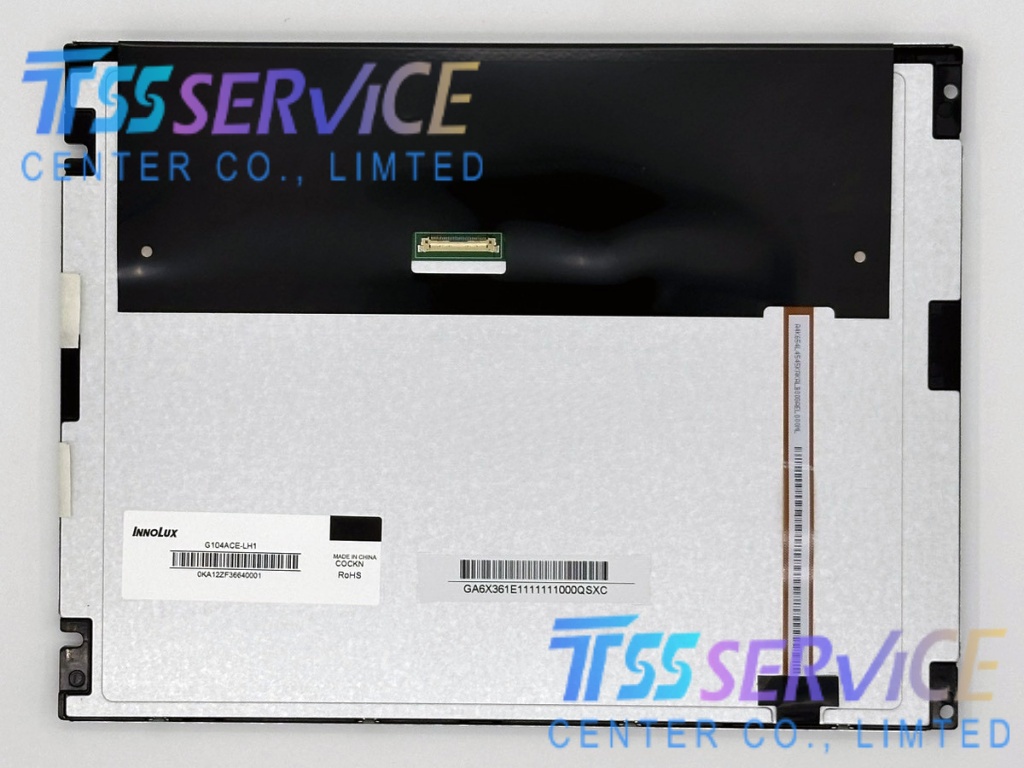
This article delves into a comprehensive analysis of the G104ACE-LH1, moving beyond basic specifications to explore its core technological architecture, the rationale behind its design choices, and its practical application landscape. We will dissect what makes this panel a persistent choice for engineers and product designers seeking a proven, high-performance display module for demanding applications.
Deconstructing the Core Technology: SVGA in a Modern Context
At first glance, an 800 x 600 pixel resolution, known as Super VGA (SVGA), might seem modest in an era of 4K displays. However, for the G104ACE-LH1, this specification is a deliberate and strategic engineering choice. This native resolution provides a sharp, clear image density suitable for displaying complex control interfaces, diagnostic data, or logistical information without overwhelming the system's processing resources or inflating power consumption.
The panel utilizes a Twisted Nematic (TN) type TFT-LCD technology, which offers distinct advantages for its target markets. TN technology is renowned for its fast response times, crucial for displaying dynamic data without ghosting or lag. Furthermore, it provides a high contrast ratio and excellent luminance, here rated at a robust 1000 nits (typical). This high brightness is a key feature, ensuring outstanding readability even under direct sunlight or in brightly lit industrial settings, a challenge where consumer-grade panels would fail completely.
Engineered for Resilience: The Durability Proposition
The true value of the Innolux G104ACE-LH1 is unlocked in its construction and endurance features. This is not a display designed for a climate-controlled office; it is built to withstand the rigors of harsh operational environments. The panel features an extended operating temperature range from -30°C to 80°C. This wide tolerance ensures reliable startup and performance in freezing cold warehouses, hot factory floors, or outdoor kiosks exposed to seasonal extremes.
Durability is further enhanced by its strong mechanical design, often incorporating a robust metal frame and surface treatments to resist vibration, shock, and contamination. The use of a Long-Life LED backlight system, with a typical lifetime of 50,000 hours, minimizes maintenance needs and total cost of ownership. For product developers, this reliability translates into reduced failure rates, lower warranty costs, and a stronger product reputation in fields like transportation, heavy machinery, and automation where downtime is prohibitively expensive.
Interface and Integration: The System Designer's Perspective
From an integration standpoint, the G104ACE-LH1 is designed to simplify the engineer's task. It features a standard LVDS (Low-Voltage Differential Signaling) interface. LVDS remains a widely adopted, robust, and noise-resistant standard for transmitting high-speed data over longer distances within a device chassis, making it compatible with a vast ecosystem of industrial-grade controllers and system-on-chip (SoC) solutions.
The panel is typically offered as a modular unit, often including the LCD, driver circuitry, backlight, and touchscreen overlay (commonly a reliable resistive or projected capacitive type) as an integrated solution. This modularity allows designers to focus on their core application logic rather than deep display subsystem engineering. Key considerations for integration include:
-
Power Sequencing: Adhering to the specified voltage and timing requirements for the panel's power rails to ensure longevity and prevent damage.
-
Mechanical Mounting: Utilizing the provided mounting holes and respecting bezel dimensions for secure installation in the end-product enclosure.
-
Signal Integrity: Properly routing the LVDS pairs on the PCB to maintain signal quality and prevent electromagnetic interference (EMI).
Strategic Application Landscapes and Market Positioning
Understanding where the G104ACE-LH1 excels clarifies its market position. It is not a general-purpose display but a specialized tool for specific verticals. Its primary applications are defined by the need for reliability, readability, and environmental hardening.
In Industrial Automation, it serves as the visual core for HMIs on PLCs, CNC machines, and test equipment. In Transportation, it is found in dashboard displays for agricultural, construction, and commercial vehicles. The Medical field utilizes it in portable diagnostic devices and patient monitoring systems where clarity and consistency are vital. Furthermore, it is a staple in Point-of-Sale (POS) terminals and self-service kiosks, where constant public use demands durability. Its positioning is strategic: it offers a superior, proven alternative to consumer panels for harsh environments and a cost-effective, high-brightness alternative to more exotic technologies for applications that don't require ultra-wide viewing angles.
The Innolux G104ACE-LH1 exemplifies how a well-executed, focused display technology retains significant value long after its initial introduction. Its strength lies not in chasing the highest resolution, but in mastering the fundamentals of reliability, readability, and resilience under pressure. For engineers and product managers developing solutions for industrial, medical, or transportation markets, this panel represents a benchmark of proven performance—a dependable component that ensures the interface between human and machine remains clear, consistent, and uncompromising, regardless of the environment. Choosing the G104ACE-LH1 is ultimately a decision for long-term operational stability over fleeting technological novelty.


