In the ever-evolving landscape of early childhood education, the integration of technology must be both purposeful and protective. A groundbreaking example is emerging in forward-thinking kindergartens: the installation of low-blue LED interactive floors combined with alphabet games for spelling. This innovation represents more than just digital play
In the ever-evolving landscape of early childhood education, the integration of technology must be both purposeful and protective. A groundbreaking example is emerging in forward-thinking kindergartens: the installation of low-blue LED interactive floors combined with alphabet games for spelling. This innovation represents more than just digital play; it is a holistic approach designed to engage young learners in critical literacy skills while actively safeguarding their visual development. This article delves into the multifaceted benefits of this technology, exploring how it transforms physical space into a dynamic learning environment that champions both cognitive growth and child well-being, setting a new standard for educational tools in the foundational years.
Beyond Screens: The Rise of Immersive Floor Technology
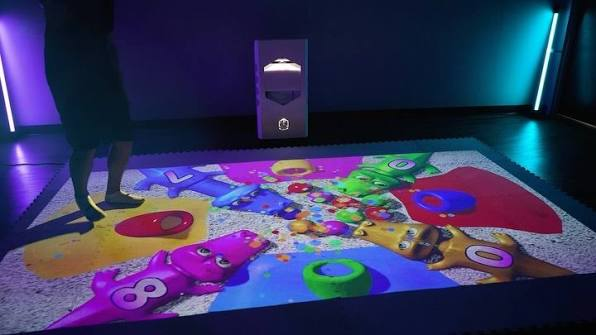
The traditional classroom model is being redefined by immersive, ground-based technology. Unlike tablets or interactive whiteboards that require children to look up and focus on a single point, interactive floors turn the entire classroom floor into a responsive canvas. This system utilizes projectors or embedded low-blue LED panels and motion sensors to create dynamic graphics that react to a child's movement. The shift from vertical to horizontal interaction is profound. It encourages full-body engagement, collaborative play, and natural social interaction as children gather around and move within the activity zone. This foundational technology moves learning from a sedentary, screen-centric task to an active, communal experience, laying the groundwork for a more physically integrated and socially rich educational approach.
Safeguarding Sight: The Critical Role of Low-Blue Light
At the heart of this system's design philosophy is a commitment to child health, specifically ocular protection. High-energy blue light, prevalent in standard LEDs and digital screens, has been linked to digital eye strain and potential disruption of circadian rhythms. For developing eyes in kindergarten-aged children, prolonged exposure is a significant concern. The low-blue LED technology specifically filters out the most harmful wavelengths of blue light, emitting a softer, warmer spectrum. This deliberate engineering choice mitigates the risk of visual fatigue and supports healthier eye development. By prioritizing eye safety from the outset, educators can integrate digital learning tools with greater confidence, ensuring that technological advancement does not come at the cost of children's long-term visual health.
Literacy in Motion: How Alphabet Games Reinforce Spelling
The true power of the platform is unlocked through pedagogically sound software, particularly alphabet and spelling games. These are not simple ported computer games; they are activities designed for kinetic learning. Imagine children hopping from letter to letter to spell their name, collaborating to stomp on letters to form a word called out by the teacher, or chasing animated letters that form a target word. This multisensory approach—combining visual, auditory, and kinesthetic learning—creates stronger neural pathways for letter recognition, phonics, and word formation. Spelling becomes a physical adventure, not a rote memorization task. The immediate audio-visual feedback for correct and incorrect answers reinforces learning in real-time, turning abstract symbols into tangible, interactive objects.
Developmental Synergy: Cognitive and Motor Skill Integration
The interactive floor creates a unique synergy between cognitive and physical development. As children engage in spelling games, they are simultaneously honing gross motor skills, balance, and coordination. Navigating the floor to select letters requires spatial awareness, planning, and rapid decision-making. This embodied cognition—the idea that physical action influences thought processes—is particularly effective for young learners. The activity also promotes executive functions like working memory (holding a word in mind while physically spelling it) and inhibitory control (waiting for a turn or choosing the correct letter among distractions). This holistic development ensures that learning is not compartmentalized but is a unified experience that benefits the whole child.
The Teacher's New Role: Facilitator in an Enhanced Environment
This technology does not replace the educator; it redefines their role from a primary source of information to a facilitator and guide. Teachers can customize game content to match lesson plans, adjust difficulty levels for differentiated instruction, and gather real-time data on class or individual performance. The interactive floor becomes a focal point for guided group instruction, sparking discussions about letter sounds, word families, and vocabulary. It frees the teacher to observe social dynamics, identify students who may be struggling, and provide targeted support. The environment encourages a more dynamic classroom management style, where the teacher orchestrates activities that blend direct instruction with student-led exploration and discovery.
Measuring Impact: Observable Benefits in the Kindergarten Classroom
The implementation of such a system yields tangible, observable benefits. Educators report marked increases in student engagement and motivation, with even reluctant learners drawn into literacy activities through the allure of play. The collaborative nature of many games fosters peer-to-peer learning, communication, and teamwork. From an academic standpoint, progress in letter-sound correlation, sight word recognition, and spelling accuracy can be accelerated due to the high-repetition, high-engagement format. Furthermore, the active nature of the learning can help regulate energy levels and improve overall classroom focus during subsequent, quieter activities. It represents a measurable return on investment in both educational outcomes and the creation of a stimulating, modern learning atmosphere
 .
The integration of a low-blue LED interactive floor with alphabet spelling games is a paradigm shift in early childhood education. It successfully marries crucial health safeguards with cutting-edge pedagogical practice, creating an environment where literacy is lived and experienced through movement. This approach transcends gimmickry, offering a sustainable model that supports cognitive, physical, and social-emotional development simultaneously. For forward-looking educational institutions, it presents a compelling investment in a holistic learning future—one where technology serves not as a distraction, but as a dynamic bridge to foundational skills, all while vigilantly protecting the well-being of its youngest users.


 .


