In a market saturated with high-resolution, edge-to-edge screens, the KOE TX14D24VM1BAA stands as a testament to the fact that industrial-grade reliability often trumps consumer-driven novelty
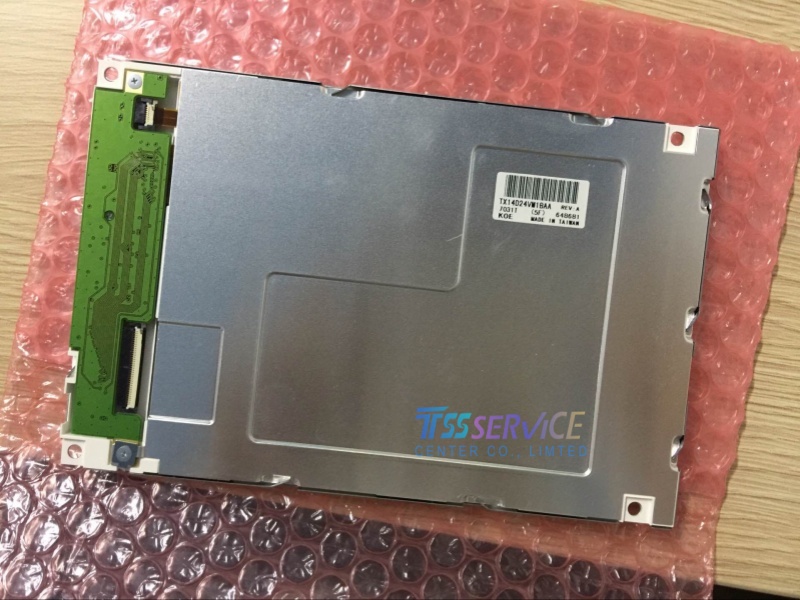
In a market saturated with high-resolution, edge-to-edge screens, the KOE TX14D24VM1BAA stands as a testament to the fact that industrial-grade reliability often trumps consumer-driven novelty. This 5.7-inch LCD panel, with its 320×240 resolution (QVGA), might appear modest by modern smartphone standards. However, its continued relevance and steady availability in stock highlight a critical truth: not every application requires 4K clarity. Many mission-critical environments—from medical patient monitors to rugged manufacturing interfaces—demand a display that is stable, readable, and built to last. This article explores the specific attributes of the TX14D24VM1BAA, moving beyond basic specifications to analyze its architecture, the logic behind its enduring market demand, its integration nuances for engineers, and the strategic value of sourcing it as a stocked unit. For design engineers and procurement specialists, this panel is not a relic; it is a precise tool engineered for specific, unforgiving environments.
Architectural Stability: Why QVGA Still Wins in Industrial Control
The core strength of the TX14D24VM1BAA lies not in pixel density, but in architectural stability. As a 5.7-inch panel employing High-Performance In-Plane Switching (IPS) technology from KOE, it offers a wide 80/80/80/80 degree viewing angle. This is not a luxury but a necessity. In a factory setting, an operator viewing a CNC controller from a 45-degree angle to the left cannot afford color inversion or contrast washout. The panel’s 500:1 contrast ratio and 6-bit color depth are optimized for clear, glare-resistant readability under ambient industrial lighting, where direct sunlight or fluorescent overheads create challenging reflections.
Furthermore, the operating temperature range of this LCD is a key differentiator. Rated for -20°C to +70°C, it surpasses the capabilities of standard commercial displays. This thermal tolerance ensures that the liquid crystal material remains responsive in unheated warehouses or near heat-emitting machinery. The panel operates via a parallel CMOS (8-bit) interface, a standard that, while older than LVDS or eDP, offers exceptional signal integrity over short distances without the need for expensive decoders. This interface simplicity reduces the Bill of Materials (BOM) cost for embedded systems using common microcontrollers like Renesas SH or ARM Cortex-M series, making it a low-latency, high-reliability choice for real-time status feedback loops.
Market Persistence: Decoding the Demand for the 320×240 Form Factor
One might question why a panel introduced years ago remains actively stocked by major distributors. The answer lies in regulatory compliance and lifecycle management. Many medical devices, particularly patient vital signs monitors and defibrillators, are certified for a production life of 7 to 10 years. Re-certifying a device with a new display is astronomically expensive, often costing hundreds of thousands of dollars in FDA or CE re-testing. The TX14D24VM1BAA is a known quantity; its electrical characteristics and optical behavior are fully documented, providing a predictable baseline for legacy product refreshes.
Additionally, the QVGA resolution creates a natural "sweet spot" for data density. In an industrial context, a 240-line display is often ideal for showing four lines of large, bold alphanumeric data (e.g., temperature, pressure, flow rate) or a simple graphical waveform without the need for rescaling. Higher resolutions, such as VGA or WVGA, require smaller fonts or anti-aliasing that complicates firmware and increases processing load on legacy 8-bit or 16-bit controllers already field-deployed. The 320×240 grid maps perfectly to a standard 4:3 aspect ratio, providing a logical canvas for status icons and bar graphs without visual distortion.
Finally, the supply chain context matters. With the global shortage of certain TFT glass substrates, manufacturers shifted production to higher-margin panels. KOE (a division of Panasonic group) has maintained disciplined manufacturing for the TX14D24VM1BAA, recognizing that its obsolescence would cripple thousands of active installations. Therefore, having this unit *in stock* is not accidental; it is a deliberate response to a consistent, non-cyclical demand from sectors that prioritize longevity over novelty.
Integration Intelligence: Critical Considerations for Hardware Designers
For the engineer tasked with integrating the TX14D24VM1BAA into a new or existing design, three technical parameters demand attention: the backlight driver, the interface timing, and the physical mounting.
First, the backlight. This panel uses a CCFL (Cold Cathode Fluorescent Lamp) backlight, not the ubiquitous LED. This is a critical distinction. CCFL requires a high-voltage inverter (typically 500V AC to 1200V AC at 40-60 kHz) for ignition and steady-state operation. The inverter module specified by KOE (such as the 0.1A-50V typical) must be carefully selected to match the 6.0W typical power draw. Using an LED driver without a proper converter will instantly burn out the lamp or cause erratic brightness flicker. However, the benefit of CCFL is a softer, more uniform light spectrum that is often preferred in medical settings to reduce eye strain under prolonged use.
Second, the 8-bit parallel interface operates at 3.3V logic levels. While this is convenient for many MCUs, it requires careful PCB layout to avoid cross-talk between data lines, especially at the 6.4 MHz Dot Clock frequency. Designers should consider series termination resistors (typically 22-33 ohms) near the source to match the trace impedance and reduce signal ringing. The DE (Data Enable) mode is standard, but the blanking intervals must be precisely timed according to the KOE datasheet. Failure to do so results in vertical line artifacts or a shifted display center.
Third, the physical outline of 130.0 x 99.0 mm with a mounting hole pattern demands attention. This is a heavy panel due to the metal frame. If used in a handheld device, the sheet metal bracket must be robust enough to prevent flexing, which could crack the glass edges. The recommended mechanical drawing indicates a sealant gap for conformal coating if used in high-humidity environments.
Strategic Sourcing: Why "In Stock" is a Risk Management Advantage
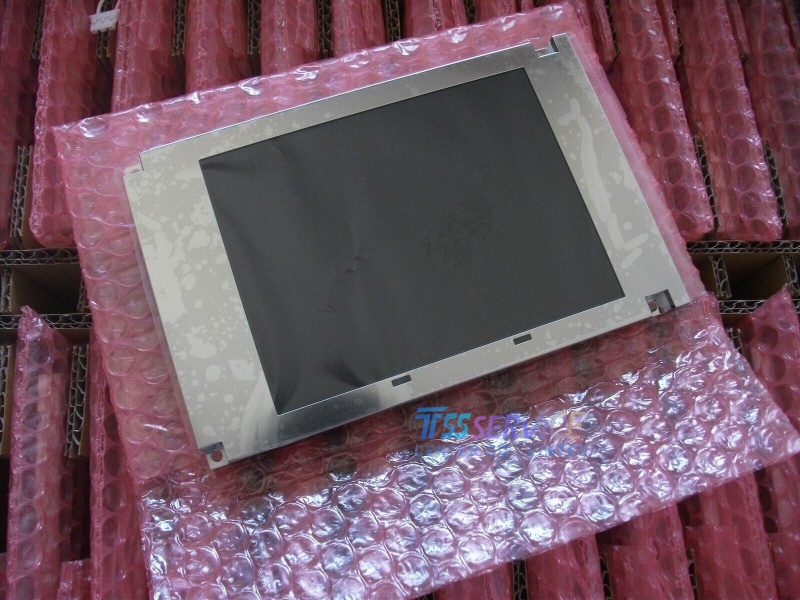
From a procurement perspective, the phrase "in stock" for the TX14D24VM1BAA carries significant weight beyond simple availability. It represents a mitigation of lead time risk. The global passive and display component lead times have stretched from 8 weeks to over 52 weeks for many custom parts. Having a specific, verified display unit held in bonded inventory at a reputable distributor means that a production line shutdown—which can cost a factory $10,000 per hour or more—is avoided.
Furthermore, "in stock" implies a commitment to lot traceability. Reputable stocking partners provide date codes and RoHS/REACH compliance certificates with each batch. When buying a stocked unit, the procurement manager eliminates the uncertainty of third-party grey-market or "pull" parts, which may have been mishandled, stored in high humidity, or are counterfeit. The TX14D24VM1BAA is a relatively simple part to counterfeit due to its straightforward connector, but only a genuine KOE piece guarantees the exact gamma curve and backlight temperature drift characteristics required for safety-critical applications.
For projects in the final stages of development or for sustaining production of a mature product, locking in a stocking commitment for this panel is a form of insurance. It allows the engineering team to finalize the firmware and mechanical design without fear of a future "end of life" (EOL) notice from the manufacturer. Knowing the part is physically available today, not just "on order from the factory," changes the dynamic from reactive procurement to proactive inventory management.
Conclusion
The KOE TX14D24VM1BAA is not merely a 5.7-inch QVGA panel; it is a strategic asset for any industrial or medical device that demands longevity, readability, and regulatory certainty. Its value lies in its proven architecture, stable CCFL backlight, and precise interface specification that fits seamlessly into long-life designs. For the engineer, it offers a known entity with predictable timing and thermal behavior. For the procurement manager, its current stock status provides crucial supply chain resilience. By choosing this panel, you are not just buying a screen—you are investing in a platform that reduces revision risk and ensures your product remains functional and certifiable for years to come.


