In the demanding world of industrial automation, medical diagnostics, and outdoor kiosk deployment, the display is often the most critical interface between human operator and machine. While consumer screens chase ever-higher pixel densities and curved form factors, the industrial sector demands a different set of priorities
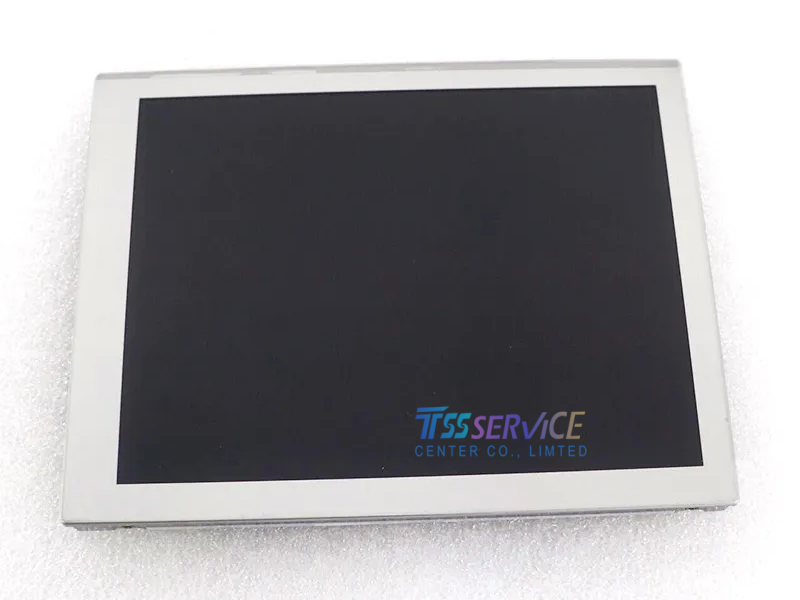
In the demanding world of industrial automation, medical diagnostics, and outdoor kiosk deployment, the display is often the most critical interface between human operator and machine. While consumer screens chase ever-higher pixel densities and curved form factors, the industrial sector demands a different set of priorities: durability, readability under harsh lighting, and extreme reliability. The KOE TX16D201VM0BAA, a 6.4-inch XGA TFT-LCD panel, sits precisely at this intersection of necessity and performance. This article delves deep into the engineering philosophy behind this specific component, examining not just its specifications, but why its combination of high brightness, proven resolution, and robust construction makes it a benchmark choice for system integrators. We will move beyond superficial datasheet numbers to explore the real-world physics of sunlight readability, the thermal management strategies embedded in its design, and the future-proofing logic that keeps a 6.4-inch XGA panel relevant in an era of 4K proliferation.
The Uncompromising Logic of XGA in a High-Brightness Envelope
When evaluating the TX16D201VM0BAA, the first point of analysis is its resolution. XGA (1024 x 768) on a 6.4-inch diagonal yields a pixel density of roughly 200 PPI. For a consumer, this might seem modest compared to a smartphone display, but for an industrial operator, it is a deliberate, strategic choice. System integrators value XGA for its transactional efficiency. At a typical viewing distance of 40-60 cm for a control panel, this resolution provides crisp character rendering for machine status text and process data without requiring the GPU overhead or complex scaling algorithms needed for higher resolutions like SXGA or UXGA.
The true genius of this panel, however, lies in its brightness output. Rated at a high luminance—often exceeding 800 cd/m²—the TX16D201VM0BAA does not simply add more LED backlight current. This design mitigates a physics problem known as the "blooming" effect, where excessive brightness from a high-density backlight washes out fine text. By marrying a moderate pixel count (XGA) with a carefully tuned, high-efficiency backlight unit, KOE ensures that contrast remains high. The panel’s low reflection architecture further enhances readability. In a sunlit factory floor or a hospital operating theater with bright surgical lighting, the display’s ability to maintain a high contrast ratio (typically 600:1 or better) under glare is what separates a usable interface from a frustrating one. This is not raw light output; it is engineered optical throughput designed for the human eye working under stress.
Thermal and Mechanical Resilience: Engineering for the Unforgiving Environment
Moving beyond the optical surface, the TX16D201VM0BAA reveals its industrial DNA through its thermal and structural design. High-brightness panels generate significant heat; a typical 800 cd/m² backlight can dissipate substantial thermal energy that must be managed to prevent liquid crystal degradation and polarization film burnout. KOE has addressed this through a two-fold strategy. First, the metallic frame of the panel acts as a heat sink, not merely a chassis. The aluminum bezel is designed with specific thermal pathways that draw heat away from the LED array and the LCD cell itself. This passive cooling solution is critical in sealed enclosures where fans are prohibited due to dust or moisture ingress.
Secondly, the panel's operating temperature range (typically -20°C to +70°C) is not a marketing afterthought; it is a function of the liquid crystal mixture and the polarizer adhesives used. Cheaper panels experience response time degradation or "ghosting" in cold start scenarios, which can be dangerous for safety-critical HMI controls. The TX16D201VM0BAA utilizes a temperature-compensated LC fluid that maintains a viable viscosity even when the machine has been idle overnight in an unheated warehouse. Furthermore, the mounting hole locations and tension specs are designed to withstand high vibration environments—think of a panel installed in a mobile excavator or a printing press—where constant mechanical stress would shear the glass on a consumer-grade screen.
Interface Standards and Real-World System Integration
A panel is only as good as its connection to the brain of the machine. The TX16D201VM0BAA employs a standard LVDS (Low-Voltage Differential Signaling) interface. While this may seem routine, its implications for system design are profound. LVDS is a mature, robust signaling standard that allows for long cable runs (up to several meters) with minimal signal degradation, which is essential when the display must be located remotely from the main controller in a large piece of equipment.
Critically, this panel uses a single-channel or dual-channel LVDS configuration depending on the specific revision, but the key integration point is its electrical compatibility. The pinout and voltage requirements are designed to match common industrial single-board computers from vendors like Advantech, Kontron, and Axiomtek. This reduces the time-to-market for system designers who can drop this panel into an existing backplane architecture without needing custom cable harnesses or level-shifting circuitry. The panel also supports a standard 40-pin or 30-pin connector profile, allowing for easy transition from a lower-brightness model during a retrofit. From a firmware perspective, the EDID (Extended Display Identification Data) is correctly programmed, ensuring that the host computer automatically recognizes the native timing parameters, eliminating the need for manual configuration in complex multi-monitor set-ups.
Longevity, Supply Chain, and the Case for a Proven Asset
The final chapter in the value proposition of the TX16D201VM0BAA is perhaps the most commercially significant: its lifecycle. In the consumer electronics industry, a display panel is often obsolete within 18 months. For industrial equipment, the design life of a machine can be 7 to 15 years. KOE (formerly Hitachi Displays) is renowned for its commitment to long-term production stability. This panel is part of a product family that is actively managed for multi-year availability, a factor that directly protects the OEM's investment in certification, tooling, and regulatory approvals.
Furthermore, the panel's 6.4-inch form factor is a de facto industry standard. It fits into bezels and cutouts used by dozens of legacy systems. For companies managing a fleet of aging machines, the ability to source a drop-in replacement that matches the exact mechanical and electrical specifications of the original is a logistical lifeline. The TX16D201VM0BAA offers not only higher brightness than older models but also improved LED backlight lifetime (often 50,000 hours to half-brightness), which translates to years of maintenance-free operation. In an industry where unplanned downtime costs thousands of dollars per hour, this reliability represents a tangible ROI.
The TX16D201VM0BAA proves that in industrial design, evolution trumps revolution. It delivers the penetrating clarity needed for high-ambient-light environments without sacrificing the thermal stability required for 24/7 operation. Its careful balance of XGA resolution, robust LVDS integration, and a guaranteed long production lifecycle makes it an anchor component for critical systems. For the engineer tasked with designing a machine that must perform flawlessly for a decade, this KOE panel offers not just a screen, but a dependable foundation for the interface that connects human intent to machine action.


