In the fiercely competitive landscape of display technology, a new benchmark for visual excellence has been set. Konka, a venerable name in consumer electronics, has officially entered the next-generation display arena with the launch of its groundbreaking glass-based Micro LED television.
In the fiercely competitive landscape of display technology, a new benchmark for visual excellence has been set. Konka, a venerable name in consumer electronics, has officially entered the next-generation display arena with the launch of its groundbreaking glass-based Micro LED television. This move is more than just a product release; it signifies a pivotal shift in the high-end TV market, challenging the dominance of established technologies like OLED and conventional LED-backlit LCDs.
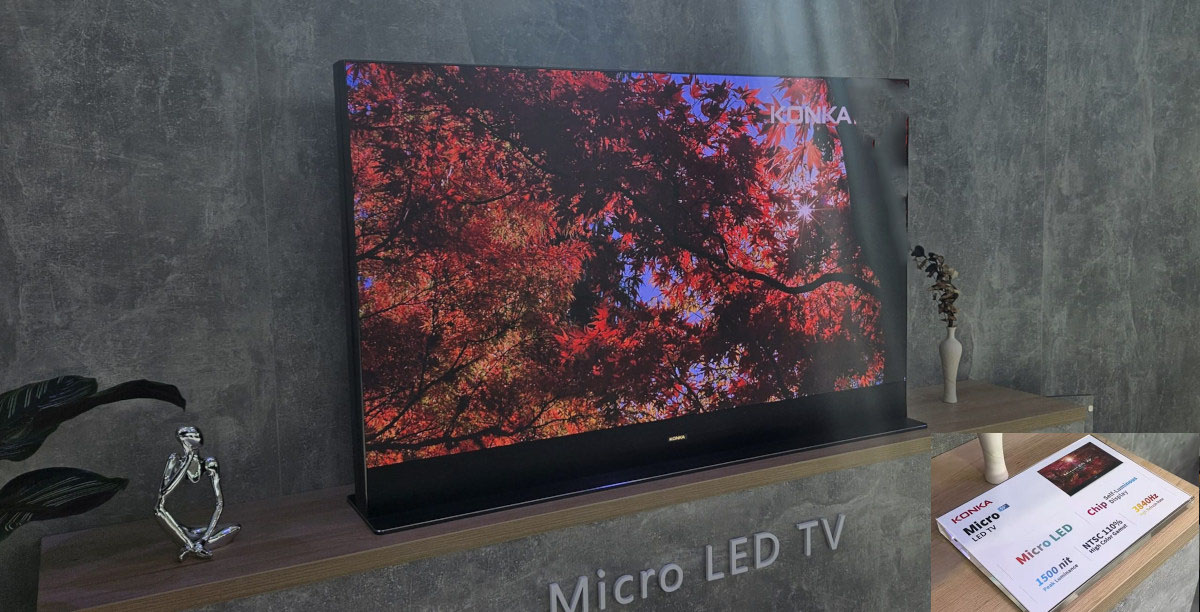
Unlike modular, self-emissive Micro LED displays that have been showcased as futuristic concepts, Konka's approach utilizes a singular, monolithic glass substrate. This article will delve into the profound implications of this design choice, exploring the technological leap it represents, the unparalleled viewing experience it promises to deliver, and the strategic market disruption it could potentially ignite in the premium home entertainment sector.
The Architectural Revolution: Monolithic Glass vs. Modular Tiles
At the heart of Konka's innovation is its departure from the mainstream Micro LED construction method. Traditional Micro LED displays are built using modular "tiles" or "cabinets"—smaller panels densely packed with microscopic, self-emissive LEDs that are tiled together to form a large screen. While impressive, this method can sometimes result in visible seams or require complex calibration to ensure uniformity.
Konka's glass-based approach fundamentally changes this architecture. By growing and transferring millions of microscopic LED chips directly onto a single, continuous piece of glass, they create a seamless, monolithic display canvas. This eliminates any risk of tiling artifacts, presenting a perfectly uniform surface. The technical hurdles here are immense, involving precision mass transfer techniques at a microscopic scale and sophisticated bonding to ensure longevity and performance. Successfully commercializing this method represents a significant manufacturing triumph, pushing the boundaries of what's possible in large-format display production and setting a new standard for seamless integration.
Unmatched Performance: Where Brilliance Meets Durability
The choice of a glass substrate and Micro LED technology coalesces to deliver a performance profile that aims to be the best of all worlds. Each Micro LED pixel is an inorganic, self-emissive light source, meaning it can turn completely on or off independently. This translates to infinite contrast ratios, with true, inky blacks sitting directly alongside intensely bright highlights, a feat that surpasses even the best OLEDs in peak brightness. Furthermore, glass provides exceptional thermal and dimensional stability, allowing for higher brightness levels and more consistent color accuracy over time without the risk of image retention or burn-in that can affect organic materials.
The benefits extend across the entire visual spectrum:
-
Color Volume: Exceptional brightness enables a wider color gamut at all luminance levels, making HDR content truly pop.
-
Response Time: Near-instantaneous pixel response eliminates motion blur for buttery-smooth sports and gaming.
-
Viewing Angles: The technology maintains color and contrast virtually perfectly, even at extreme off-center viewing positions.
-
Longevity: Inorganic Micro LEDs are inherently more durable than organic compounds, promising a dramatically longer operational lifespan.
This combination positions Konka's TV not just as an incremental improvement, but as a potential reference standard for image fidelity.
Market Implications and the High-End Redefinition
Konka's launch is a strategic salvo into the ultra-premium television market. By focusing on glass-based Micro LED, Konka is not merely launching another TV; it is attempting to redefine the pinnacle of home cinema. This move places it in direct competition with the most expensive OLED and high-end Mini-LED models from legacy brands, as well as with other modular Micro LED offerings often marketed as luxury "wall" displays. Konka's value proposition hinges on offering a superior, seamless visual experience coupled with the reliability of a single-panel design, potentially at a more accessible price point than modular wall-sized installations.
The implications are significant. It pressures established giants to accelerate their own Micro LED roadmaps and validates the technology as the likely successor to OLED in the long-term quest for perfect picture quality. For consumers, it introduces a compelling new choice that claims to eliminate traditional trade-offs between brightness, contrast, longevity, and seamlessness. Konka's success will depend on scaling production, ensuring flawless quality control, and effectively communicating the tangible benefits of this architectural leap to discerning home theater enthusiasts and early adopters.
Konka's foray into glass-based Micro LED television marks a watershed moment in display technology, blending the seamless elegance of a monolithic screen with the performance supremacy of self-emissive Micro LEDs. This architectural innovation promises to deliver unmatched contrast, brilliance, and durability, setting a new benchmark for the ultimate home viewing experience. While challenges in scaling and market penetration remain, Konka has successfully shifted the conversation, proving that the future of high-end displays is not only modular but can also be beautifully singular. This launch doesn't just introduce a new product; it illuminates the path forward for the entire industry in the relentless pursuit of visual perfection.


