In an industry where incremental updates are often marketed as revolutions, Konka has made a move that demands genuine attention. The world premiere of their latest flagship, featuring an unprecedented 230,000+ zone super-partitioned Mini AI-LED display, is not merely a spec sheet victory; it is a fundamental rethinking of how light and color are controlled in a consumer television. This technology represents a monumental leap in backlight precision, promising to deliver contrast and HDR perform
In an industry where incremental updates are often marketed as revolutions, Konka has made a move that demands genuine attention. The world premiere of their latest flagship, featuring an unprecedented 230,000+ zone super-partitioned Mini AI-LED display, is not merely a spec sheet victory; it is a fundamental rethinking of how light and color are controlled in a consumer television. This technology represents a monumental leap in backlight precision, promising to deliver contrast and HDR performance that rivals self-emissive technologies while harnessing the brightness and longevity advantages of LED.
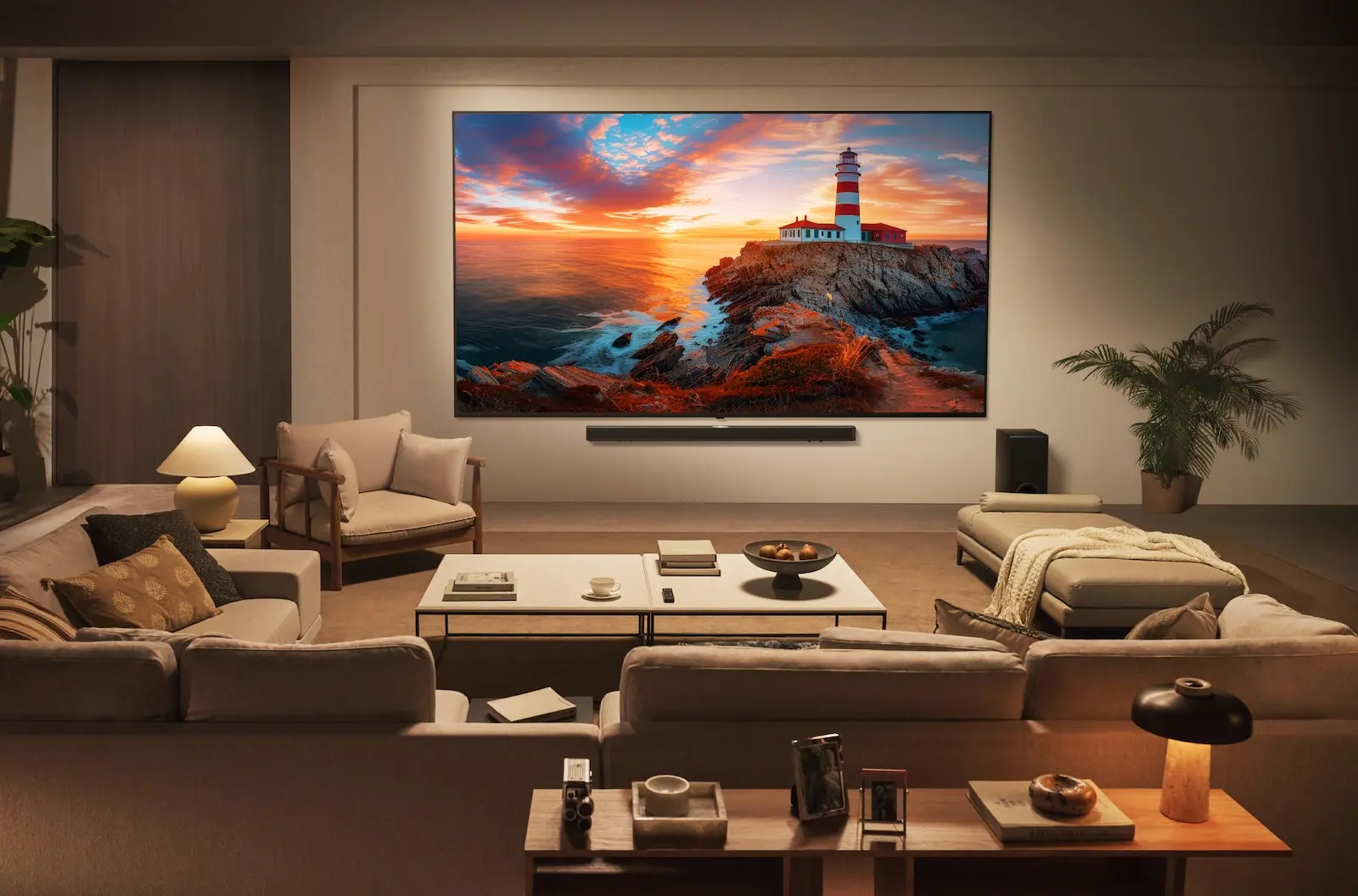
This article will delve into the engineering marvel behind this zone count, explore the "AI" that makes it intelligent, examine the tangible impact on the viewing experience, and contextualize what this means for the competitive high-end TV landscape. We are moving beyond the era of mere 4K resolution into the age of pixel-perfect luminosity, and Konka's latest announcement positions itself at the forefront of this new visual frontier.
Deconstructing the 230,000+ Zone Miracle: Beyond Spec Sheet Hype
The headline figure of 230,000+ local dimming zones is staggering. To appreciate its significance, consider that high-end Full-Array Local Dimming (FALD) TVs of just a few years ago boasted a few hundred zones. Even current flagship models from other brands typically range between 1,000 and 10,000 zones. Konka's achievement is a two-order-of-magnitude jump, made possible by the underlying Mini LED technology.
Mini LEDs are not a new type of panel but a revolutionary backlighting system. These LEDs are dramatically smaller than conventional ones, allowing thousands more to be packed into the same space. Each of these microscopic LEDs can be independently controlled, or grouped into a "zone." With 230,000+ zones, each zone governs an exceptionally small area of the screen. This granularity is the key. It means the TV can illuminate a single star in a night sky with pinpoint accuracy while keeping the surrounding space truly black, or perfectly render the subtle glow of embers in a dark scene without any unwanted halo or "blooming" effect. This moves the visual fidelity of LED-LCD technology closer than ever to the absolute per-pixel control of OLED.
The Intelligence Factor: Why "AI-LED" is a Game Changer
A super-dense backlight is a powerful tool, but without sophisticated control, it is just a complex grid of lights. This is where Konka's AI-LED system enters the equation, transforming raw hardware potential into intelligent performance. The "AI" refers to a dedicated processor and algorithm suite that performs real-time scene-by-scene, frame-by-frame analysis.
This AI doesn't just dim or brighten zones based on a simple average. It analyzes the content's metadata (like HDR10+ or Dolby Vision signals) and the actual image data to understand the intent of the content creator. It then makes micro-adjustments to each of the 230,000+ zones for parameters including:
-
Peak Brightness: Dynamically allocating power to zones that need to hit spectacular highlights.
-
Color Purity: Adjusting the backlight intensity behind colored objects to ensure hues remain rich and accurate, not washed out.
-
Contrast Transition: Managing the boundaries between extreme light and dark areas to ensure sharp, clean edges without blooming.
This continuous, intelligent optimization ensures the hardware's extreme precision is fully utilized, adapting seamlessly from a sun-drenched landscape to a shadowy thriller.
A New Visual Standard: Experiencing Uncompromised Contrast and Color
The tangible result of this hardware and software synergy is a viewing experience that sets a new benchmark. The most immediate impact is in infinite contrast ratio. With blacks that are profoundly deep and detailed (not gray or murky) and highlights that are eye-searingly bright, the TV achieves a dynamic range that brings a startling, three-dimensional realism to both cinema and games.
Furthermore, color volume—the ability to display bright, saturated colors—is vastly expanded. Because the AI can pump intense light behind a vibrant object while dimming its surroundings, colors like a neon sign in the rain or a brilliant sunset pop with unprecedented vibrance and depth. For gamers, this translates to an immersive advantage: darker scenes in adventure or horror games reveal hidden details without raising overall black levels, while fast-paced HDR content benefits from flawless motion clarity and highlight detail. The experience is one of total visual confidence, free from the distractions of backlight artifacts.
Redefining the High-End: Konka's Strategic Market Disruption
Konka's world premiere is more than a product launch; it is a strategic statement. By pushing the Mini LED zone count to a level previously unseen in the consumer market, Konka is forcefully challenging the established hierarchy. For years, the high-end TV conversation has been a bipolar debate between OLED's perfect blacks and high-end LED's superior brightness. Konka's 230,000+ zone AI-LED TV seeks to shatter that dichotomy.
It positions itself as a convergence product: offering the contrast precision that approaches OLED, while delivering peak and sustained brightness levels that far exceed what OLED panels are currently capable of, all without risk of burn-in. This creates a compelling third path for premium buyers who refuse to compromise. It pressures competitors to accelerate their own Mini LED innovations and raises the bar for what constitutes a "flagship" television. Konka is not just participating in the high-end race; it is attempting to redefine the track itself.
Konka's 230,000+ zone super-partitioned Mini AI-LED TV represents a watershed moment in display technology, where brute-force engineering meets intelligent software to create a genuinely new visual paradigm. It successfully bridges the historical gap between contrast and brightness, offering a compelling alternative that challenges the dominance of existing technologies. For discerning viewers and industry watchers alike, this launch signals that the future of home entertainment will be driven by unprecedented precision and adaptive intelligence, setting a formidable new standard for all who follow.


