In the unforgiving environment of space, where extreme temperatures, vacuum, and intense radiation conspire to disable conventional electronics, reliability is not just a feature—it is the singular requirement for survival. This is the formidable frontier being addressed by a groundbreaking partnership between Kyocera Corporation and the Japan Aerospace Exploration Agency (JAXA). Their mission: to co-develop next-generation, radiation-resistant displays capable of withstanding the harsh conditio
In the unforgiving environment of space, where extreme temperatures, vacuum, and intense radiation conspire to disable conventional electronics, reliability is not just a feature—it is the singular requirement for survival. This is the formidable frontier being addressed by a groundbreaking partnership between Kyocera Corporation and the Japan Aerospace Exploration Agency (JAXA). Their mission: to co-develop next-generation, radiation-resistant displays capable of withstanding the harsh conditions of orbital and deep-space applications.
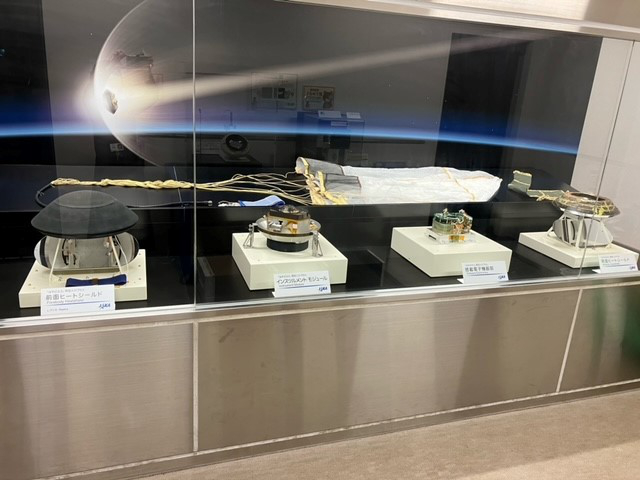
This collaboration represents a significant leap in space-grade human-machine interface technology. It merges Kyocera's advanced ceramic and materials science expertise with JAXA's rigorous space environment testing and mission-critical requirements. The resulting displays aim to ensure that astronauts and ground controllers have access to clear, dependable visual data, a cornerstone for the success of future long-duration lunar missions, Mars exploration, and sustained operations in low Earth orbit.
The Hostile Frontier: Why Space Demands Specialized Displays
The core challenge lies in a pervasive but invisible threat: ionizing radiation. In space, high-energy particles from cosmic rays and solar flares can pass through standard electronic components, causing Single Event Effects (SEEs). These can manifest as temporary glitches, corrupted data, or permanent physical damage to microelectronics, leading to display failure. Traditional mitigation often involves bulky shielding or redundant systems, which add mass and complexity—two critical constraints in spacecraft design.
Kyocera and JAXA are tackling this problem at the material and architectural level. Kyocera's deep knowledge in fine ceramics, known for their durability and stability, is pivotal. The collaboration focuses on developing display panels and driver components inherently more resistant to radiation-induced damage. This involves exploring novel substrate materials, radiation-hardened thin-film transistors (TFTs), and protective layers that can absorb or deflect damaging particles without compromising optical clarity or touch functionality, fundamentally re-engineering the display from the inside out for space resilience.
Synergy in Innovation: Merging Materials Science with Mission Pragmatism
The partnership's strength is its complementary expertise. Kyocera brings to the table its proprietary ceramic packaging technologies and experience in manufacturing highly reliable components for terrestrial extreme environments. JAXA provides the essential real-world validation framework, including access to particle accelerators for radiation testing and thermal-vacuum chambers that simulate the extremes of space. This iterative cycle of design, testing, and refinement is crucial.
JAXA's input ensures the displays meet precise operational needs: readability under intense sunlight, functionality across a vast temperature range, and minimal power consumption. The goal is to move beyond mere survival to optimal performance. This synergy accelerates development, transforming theoretical material advantages into qualified, flight-ready hardware. It's a pragmatic fusion of industrial innovation and applied aerospace science, ensuring the final product is not just radiation-tolerant but also perfectly suited for the user interface demands of a spacecraft cockpit or lunar habitat.
Beyond the Dashboard: The Broader Impact on Space Infrastructure
While cockpit displays are the immediate application, the implications of this technology extend far beyond a spacecraft's dashboard. Reliable, radiation-hardened screens are foundational for the broader ecosystem of in-space infrastructure. As plans for lunar bases, orbital manufacturing, and satellite servicing mature, robust human-machine interfaces will be essential for remote operation of robotics, monitoring of in-situ resource utilization systems, and maintenance of complex orbital facilities.
Furthermore, the technological advancements pioneered here have a strong potential for technology transfer. The materials and design principles developed for space could eventually enhance the durability and longevity of displays in terrestrial extreme environments, such as nuclear facilities, high-altitude aviation, or advanced medical imaging equipment. Thus, the Kyocera-JAXA collaboration is not only enabling deeper space exploration but also driving a cascade of innovation that may strengthen high-reliability industries on Earth.
The collaboration between Kyocera and JAXA to create radiation-resistant displays is a critical endeavor that addresses a fundamental bottleneck in long-term space exploration. By combining advanced materials science with rigorous aerospace engineering, the partnership is building more than just durable screens; it is developing a foundational technology for reliable human presence in space. The success of this project will enhance astronaut safety, mission assurance, and the operational capacity of future space assets. Ultimately, it represents a vital step in hardening the delicate interfaces of human ingenuity against the cosmos's most severe challenges, paving the way for a more sustainable and interactive future beyond Earth.


