In the demanding world of industrial automation, medical equipment, and ruggedized point-of-sale systems, the display is far more than a simple output device—it is the critical human-machine interface that must perform flawlessly under pressure. The selection of an industrial-grade LCD screen is a decision that impacts system reliability, longevity, and total cost of ownership.
In the demanding world of industrial automation, medical equipment, and ruggedized point-of-sale systems, the display is far more than a simple output device—it is the critical human-machine interface that must perform flawlessly under pressure. The selection of an industrial-grade LCD screen is a decision that impacts system reliability, longevity, and total cost of ownership. This article delves into the Kyocera 10.4-inch LCD Screen Display, model T-55787GD104J-LW-AHN, a component engineered not for the consumer market, but for the harsh realities of industrial applications.
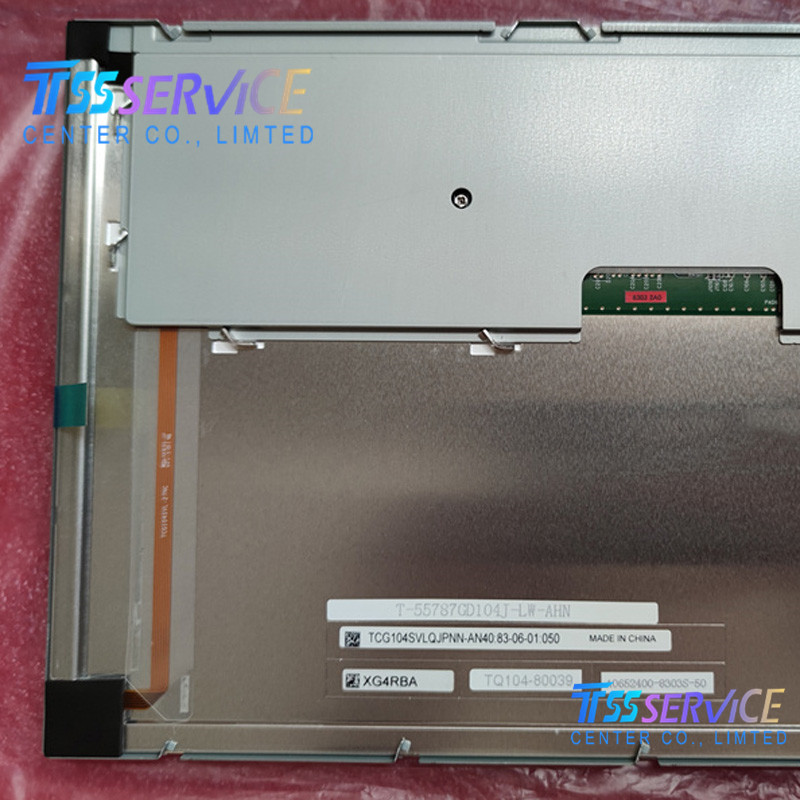
We will explore the unique architectural features that set this display apart, from its robust construction to its advanced optical performance. Moving beyond specifications, we will analyze the specific industrial environments where this screen excels, and finally, provide a framework for evaluating its integration into your next project. This is not just a product overview; it's a deep dive into a solution built for resilience.
Engineering Resilience: Deconstructing the Kyocera T-55787GD104J-LW-AHN
At its core, the Kyocera T-55787GD104J-LW-AHN is a feat of precision engineering designed to transcend the limitations of commercial displays. Its foundation is a 10.4-inch diagonal TFT LCD with a resolution of 1024 x 768 (XGA), offering a balanced blend of sufficient detail and lower system processing load compared to higher-resolution panels. The true differentiation lies in its construction and component quality. The module utilizes advanced LED backlighting, which provides immediate advantages: lower power consumption, a longer operational lifespan (typically rated at 50,000 to 70,000 hours), and a more consistent luminance output compared to older CCFL technology.
Furthermore, the display is built to withstand physical stress. It often incorporates a strengthened glass surface or hard coating to resist scratches and abrasions—a common occurrence in factory or warehouse settings. The internal bonding of layers is designed to minimize Newton rings and reduce glare, ensuring readability in varied lighting conditions. From the driver board to the connectors, every sub-component is selected and tested for extended duty cycles, forming a cohesive unit where reliability is the primary design parameter, not an afterthought.
Optical Performance in Demanding Environments
Specifications on a datasheet tell only part of the story. The real test of an industrial display is its optical performance under actual operating conditions. The Kyocera 10.4-inch screen is engineered for exceptional readability. It boasts a high brightness rating, typically around 1000 nits or more, which is essential for combating ambient light in sunlit warehouses or outdoor kiosks. Conversely, it also offers a wide dimming range, allowing it to be used effectively in low-light control rooms without causing operator eye strain.
Critical to its performance are the wide viewing angles, often achieving 80/80/80/80 (Left/Right/Up/Down) metrics. This ensures color stability and image integrity when viewed from off-axis positions, which is crucial for multi-operator stations or displays mounted at unconventional angles. The color gamut and contrast ratio are tuned for clarity of data and graphics, not for vibrant media consumption, ensuring that diagnostic charts, schematic diagrams, and user interface elements are rendered with precision and legibility, shift after shift.
Application-Specific Advantages: Where This Display Excels
The defining characteristic of the T-55787GD104J-LW-AHN is its suitability for mission-critical applications. Its value becomes most apparent in sectors where failure is not an option. In industrial automation and HMI, it serves as the nerve center for controlling machinery, monitoring PLCs, and visualizing SCADA systems, enduring constant vibration, temperature fluctuations, and particulate exposure. Within medical diagnostic and monitoring equipment, its reliability and stable performance are paramount, ensuring that healthcare professionals have uninterrupted access to vital patient data.
Additionally, it is an ideal candidate for transportation and logistics (in-vehicle systems, forklift terminals), ruggedized POS and kiosks in hospitality or retail, and utility and energy management systems. In each scenario, the display must contend with unique stressors: extreme temperatures, mechanical shock, 24/7 operation, and the need for immediate, error-free readability. This Kyocera module is not merely a screen; it is a durable component built to be an integral, dependable part of a larger, more complex system.
Integration and Lifecycle Considerations for System Designers
Selecting this display is a strategic decision that impacts the entire product lifecycle. For engineers and system integrators, the benefits extend into logistics and long-term support. Kyocera, as a manufacturer, is known for its commitment to long-term product availability, a critical factor for industrial products that may be in the field for a decade or more. This mitigates the risk of costly redesigns due to component end-of-life notifications.
Integration is streamlined through a standard LVDS interface, a common and robust protocol for transmitting high-speed video signals with low noise. The mechanical dimensions and mounting options are designed for compatibility with industrial chassis. When evaluating total cost, one must consider the cost of ownership rather than just the unit price. Reduced failure rates, lower power consumption, minimal need for replacement, and avoidance of system downtime collectively contribute to a significantly lower total cost over the operational lifespan of the equipment, providing a compelling return on investment for quality-conscious developers.
In conclusion, the Kyocera 10.4-inch LCD Display T-55787GD104J-LW-AHN represents a specialized tool for industrial challenges, where its value is measured in reliability, optical clarity under duress, and seamless integration. It excels by prioritizing durability and consistent performance over consumer-oriented features, making it a cornerstone for HMIs in automation, medical, and transportation systems. For engineers designing the next generation of industrial equipment, specifying this display is an investment in product integrity, operational continuity, and ultimately, the trust of the end-user who depends on the system every day.


