In the landscape of industrial and medical display technology, the choice of a liquid crystal display module is rarely a matter of casual selection; it is a critical decision that impacts user safety, operational efficiency, and system longevity.
In the landscape of industrial and medical display technology, the choice of a liquid crystal display module is rarely a matter of casual selection; it is a critical decision that impacts user safety, operational efficiency, and system longevity. The Kyocera TCG121XGLPBPNN-AN40-S, a 12.1-inch XGA (1024x768) LCD module, stands as a specific and compelling example of this niche. This article delves into the architectural and performance nuances of this particular model, moving beyond generic specifications to explore its practical implications for engineers and procurement specialists. We will dissect how its optical characteristics, interface design, and environmental resilience position it not just as a screen, but as a functional component of a larger, demanding system.
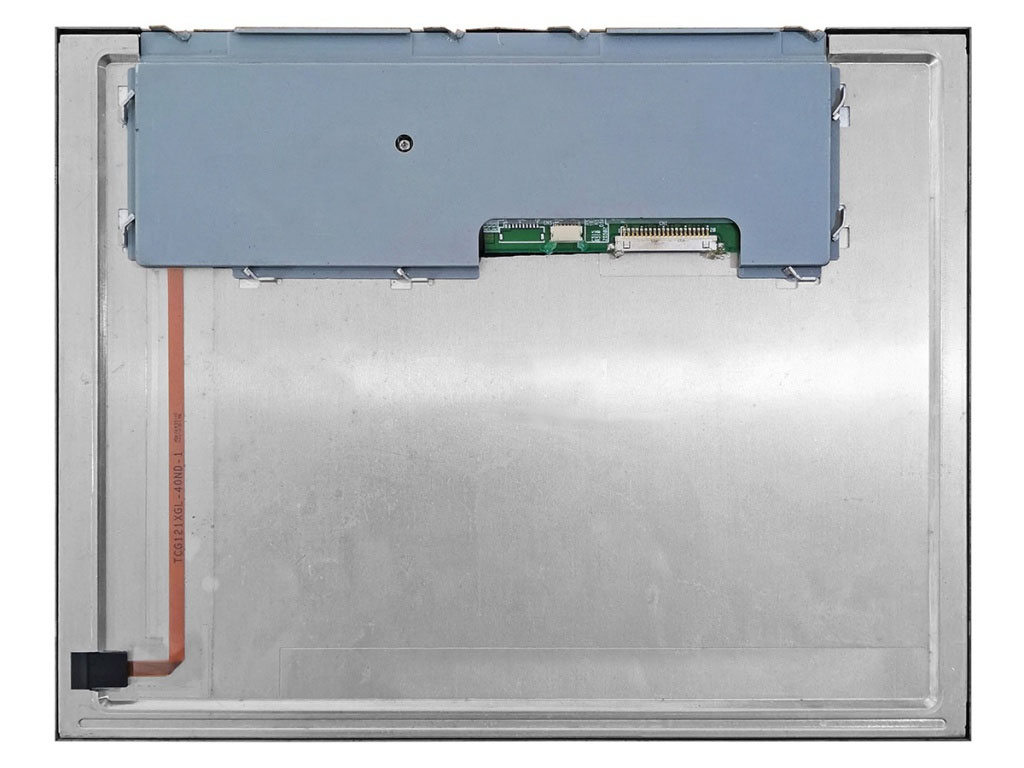
The Optical Architecture: Beyond Resolution and Brightness
While the 1024x768 (XGA) resolution and 12.1-inch diagonal might appear as standard figures, the manner in which the Kyocera TCG121XGLPBPNN-AN40-S achieves its visual output is what distinguishes it. This module typically employs a twisted nematic (TN) technology, a deliberate choice for applications prioritizing rapid response times and high brightness over the wider viewing angles typical of IPS panels. For a diagnostic imaging display on a medical ventilator or a real-time control interface in a factory, the TN’s fast pixel response is non-negotiable, as it effectively reduces motion blur when monitoring dynamic data streams.

Furthermore, the module’s typical brightness rating, often exceeding 1000 cd/m², is not arbitrary. This level of luminance is engineered to overcome high ambient light conditions common in industrial settings, such as direct sunlight near a production line or bright surgical lighting in an operating room. The 6-bit or 8-bit color depth implementation here is optimized for grayscale and primary color differentiation, ensuring that subtle changes in a waveform or a temperature gauge are visually distinguishable. The optical film stack is also tailored to enhance contrast in these challenging environments, providing a crisp delineation between an active icon and a dark background, a critical factor for reducing operator eye strain during prolonged use.
Interface and Integration: The LVDS Protocol as a Foundation for Stability
The connectivity of the TCG121XGLPBPNN-AN40-S is built around the Low-Voltage Differential Signaling (LVDS) interface, a standard that is as much about reliability as it is about data throughput. In the context of this device, the LVDS interface is not merely a data pathway; it is a carefully shielded communication channel. By transmitting image data over differential pairs, the module inherently rejects common-mode noise—electrical interference that is ubiquitous in environments with motors, pumps, and high-frequency surgical tools. This electrical robustness ensures that the displayed image remains free from visual artifacts like sparkle or ghosting, which could otherwise compromise data integrity.
For the integrating engineer, the pinout and connector arrangement are designed for mechanical security. The 30-pin or 20-pin LVDS connector is typically keyed and locked, preventing accidental disconnection due to vibration—a primary cause of field failures in mobile or heavy-equipment applications. The power supply architecture is also noteworthy; it often features a single +3.3V or +5V rail, simplifying the system power design and reducing the bill of materials (BOM) for the host device. This integration simplicity, however, belies the complexity of the timing controller (TCON) embedded within the module, which is precisely calibrated to the panel's specific pixel array and drive characteristics, ensuring uniform image stretching and electrical timing across the entire 1024x768 matrix.
Environmental Resilience and Thermal Management for 24/7 Operations
True operational value in a module like the Kyocera TCG121XGLPBPNN-AN40-S emerges from its ability to function in non-ideal conditions. The module is routinely specified for an operating temperature range of -10°C to +70°C (or wider), which is critical for outdoor or unheated indoor equipment. This is not simply a matter of certification; it involves material selection for the liquid crystal itself, which must retain its molecular switching properties without freezing or becoming sluggish. The backlight unit (BLU), usually constructed with high-reliability LEDs, is a key thermal component. The module’s chassis and heat-spreading layers are designed to dissipate the heat generated by these LEDs, preventing localized hot spots that could degrade brightness uniformity over the product's intended lifespan of 50,000 to 70,000 hours.
For engineers, the term Mean Time Between Failures (MTBF) is often a more significant metric than raw lifespan. The Kyocera module’s construction using industrial-grade components, including solid-state capacitors and robust IC drivers, contributes to a high MTBF. This reliability is further supported by attention to humidity resistance; the module’s polarizer films and sealant materials are chosen to resist delamination in high-humidity environments like washing tunnels or sterilizing autoclaves. The mechanical design, featuring mounting brackets and a stiff metallic frame, provides the necessary physical protection against shock and vibration, ensuring the delicate glass substrate inside remains intact even in portable or vehicular installations.
Application-Specific Advantages in Medical and Industrial Domains
The true differentiation of the TCG121XGLPBPNN-AN40-S becomes apparent when analyzing its performance in specific verticals. In medical device applications, such as patient monitors or anesthesia machines, the module’s predictable power consumption and low heat output are vital for maintaining the device's overall thermal profile in a patient-adjacent environment. The fast response time also ensures that high-priority alarms, which often flash rapidly, are rendered instantly without perceptual lag. Furthermore, the purely digital nature of the LVDS interface simplifies compliance with stringent electromagnetic compatibility (EMC) regulations like IEC 60601, as it inherently generates less radiated interference compared to older analog interfaces.
In the industrial automation sector, this display finds a home in Human-Machine Interfaces (HMIs) for CNC machines and robotic controllers. The high brightness is a direct countermeasure against the glare from welding arcs or bright factory lighting. The XGA resolution is a pragmatic sweet spot: it is high enough to display complex schematics and SCADA graphics with clarity, yet efficient enough to be driven by legacy or cost-optimized embedded processors that might struggle with higher-resolution XGA++ panels. The module’s compatibility with standard operating systems and graphics drivers, due to its adherence to the VESA LVDS standard, significantly reduces software development time, allowing the end-product manufacturer to focus on application logic rather than low-level display debugging.
Conclusion
The Kyocera TCG121XGLPBPNN-AN40-S is a testament to the fact that optimal display design is not about chasing the highest pixel count, but about achieving a precision balance between optical performance, electrical integrity, and mechanical endurance. Its deliberate use of TN technology for speed, a robust LVDS backbone for noise immunity, and a wide operating temperature range for unfailing reliability make it a mature and calculable choice. For system integrators and product managers, this module represents a low-risk, high-consistency solution for mission-critical interfaces where a display failure is simply not an option. By selecting this specific model, you are investing in a proven platform that prioritizes operational stability and clear data conveyance under the harshest of real-world conditions.


