In the competitive arena of automotive innovation, the humble dashboard display is undergoing a radical transformation, evolving from a simple information panel into a critical interface for safety and connectivity. At the forefront of this shift is Kyocera, a global leader in advanced ceramics and components, which has unveiled a groundbreaking automotive display module
In the competitive arena of automotive innovation, the humble dashboard display is undergoing a radical transformation, evolving from a simple information panel into a critical interface for safety and connectivity. At the forefront of this shift is Kyocera, a global leader in advanced ceramics and components, which has unveiled a groundbreaking automotive display module. This article delves into the engineering marvel behind this development, focusing on its enhanced backlight technology that promises to deliver unprecedented visual clarity, significantly reduce energy draw, and, most importantly, contribute to a safer driving experience for all.
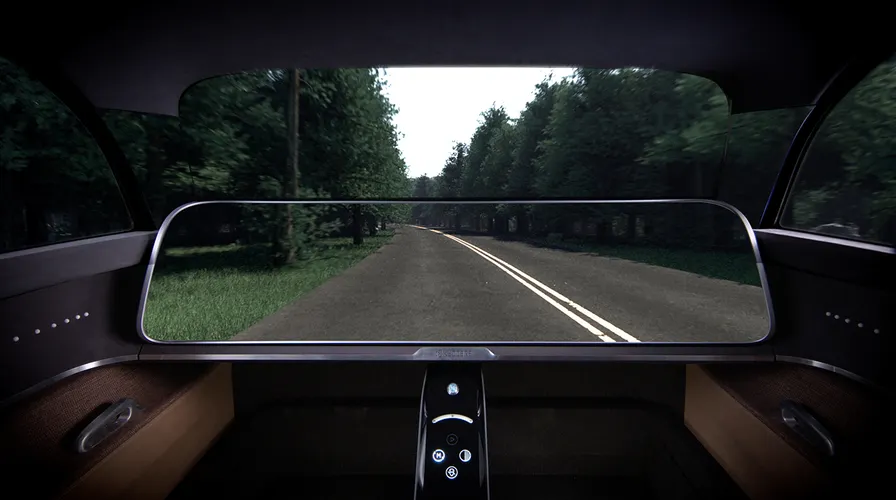
The Quest for Visual Perfection in the Cockpit
The modern vehicle cockpit is an information hub, demanding displays that are instantly readable under the glaring sun, in pitch darkness, and at every oblique angle in between. Traditional LCDs often struggle with this dynamic environment, suffering from washed-out colors, poor contrast, and distracting glare. Kyocera's approach addresses these fundamental flaws at their source. By re-engineering the core illumination system—the backlight—the company is not merely iterating on an old design but redefining the visual performance parameters for automotive screens. This foundational improvement sets the stage for a cascade of benefits that extend far beyond simple picture quality, impacting the very interaction between driver and machine.
Deconstructing the Enhanced Backlight Technology
At the heart of Kyocera's innovation lies a sophisticated multi-zone local dimming system integrated with advanced optical waveguides. Unlike conventional backlights that illuminate the entire panel uniformly, this technology divides the light source into hundreds of independently controllable segments. When a segment of the screen needs to display a deep black or a dark color, the corresponding backlight zone can dim completely or significantly, rather than leaking light through the liquid crystals. This precision is achieved through a combination of high-density Mini-LED arrays and proprietary optical diffusion materials that ensure seamless transitions between bright and dark zones, eliminating the "blooming" or halo effects common in early local dimming implementations.
A Leap in Contrast and Power Efficiency
The immediate and most visually striking result of this precise backlight control is a dramatic increase in contrast ratio. By enabling true, inky blacks right next to brilliant highlights, the display achieves a dynamic range that rivals high-end consumer televisions. This superior contrast translates directly to enhanced legibility, reducing eye strain and allowing critical information like navigation cues or warning symbols to "pop" from the screen. Concurrently, this architecture is a powerhouse of efficiency. By dynamically powering down zones that don't need to be bright, overall power consumption is slashed. In an era where every watt counts—especially in electric vehicles to preserve range—this reduction in parasitic drain from ancillary systems is a significant engineering victory.
Engineering for Enhanced Driving Safety
Kyocera's development transcends technical specs to address the paramount concern of automotive design: safety. A display that is easier to read requires shorter driver glance times, allowing attention to return to the road more quickly. The high contrast and optimized brightness ensure information is comprehensible in a fraction of a second. Furthermore, the technology allows for intelligent adaptation. By integrating with ambient light sensors and vehicle data, the display can automatically adjust its global brightness and local dimming behavior to suit driving conditions—dimming non-essential elements during night driving to reduce distraction, for instance. This proactive adaptation minimizes cognitive load, creating a less fatiguing and more focused driving environment.
Material Science and Rugged Reliability
Kyocera's heritage in advanced ceramics and component manufacturing plays a crucial role in the display's viability for the harsh automotive environment. The modules are engineered to withstand extreme temperatures, constant vibration, and long-term exposure to UV light without degradation in performance. The optical materials used in the waveguides and diffusers are selected for their stability and clarity over a vehicle's entire lifespan. This focus on rugged reliability ensures that the stunning visual performance and power savings are not just temporary benchmarks but consistent features throughout years of service, meeting the stringent durability and longevity requirements of global automakers.
The Road Ahead: Implications for Future Mobility
The implications of this advanced display technology extend well beyond today's instrument clusters and center consoles. As the industry accelerates toward autonomous driving and augmented reality (AR) head-up displays (HUDs), the demand for ultra-reliable, high-contrast, and energy-efficient visualization will become even more critical. Kyocera's backlight technology provides a scalable platform for larger, more complex screens that will serve as the primary interface in future cabins. Its low-power profile is essential for the dense electronics of self-driving systems, while its visual fidelity is a prerequisite for safely overlaying AR navigation and safety cues onto the driver's real-world view, seamlessly blending the digital and physical realms.
Kyocera's advanced automotive display represents a holistic rethinking of in-vehicle visual communication, where material science, optical engineering, and human factors design converge. By mastering backlight control, the technology delivers a trifecta of benefits: superior visual contrast that aids comprehension, substantial power savings that support vehicle electrification, and an adaptive interface that actively promotes driver safety. This innovation is not merely an incremental upgrade but a foundational step toward the intuitive, reliable, and efficient digital cockpits that will define the next generation of personal mobility, proving that clarity of vision is fundamental to the journey ahead.


