In the rapidly evolving cockpit of the modern automobile, the display has become the central nervous system. Yet, a persistent challenge remains: the viewing angle. A map or media perfectly clear to the driver can appear washed out or distorted for a passenge
In the rapidly evolving cockpit of the modern automobile, the display has become the central nervous system. Yet, a persistent challenge remains: the viewing angle. A map or media perfectly clear to the driver can appear washed out or distorted for a passenger, compromising both safety and shared experience. This technological hurdle is now the focus of a significant industry partnership.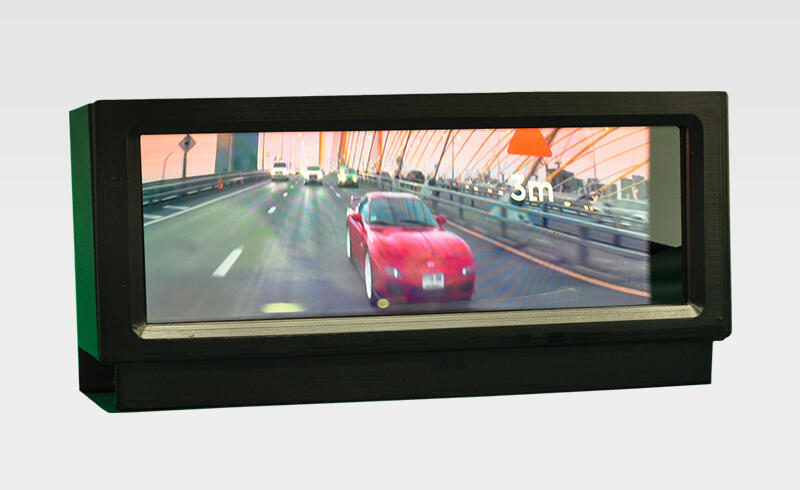
Kyocera Corporation, a global leader in advanced ceramics and components, has joined forces with a major LCD material manufacturer to pioneer a new generation of ultra-wide viewing angle technology specifically for automotive displays. This collaboration aims to shatter the conventional limitations of in-vehicle screens, ensuring exceptional visual clarity and color fidelity for every occupant, regardless of their seating position. This article delves into the strategic implications of this alliance, the technical breakthroughs it promises, and how it will redefine the standards for automotive human-machine interfaces.
The Strategic Alliance: Combining Material Science with Component Mastery
This partnership is not a simple supplier agreement but a deep, strategic co-development venture. Kyocera brings its decades of expertise in precision manufacturing, component reliability, and integration into harsh automotive environments. Their partner, a leader in LCD optical films and materials, contributes fundamental chemical innovation at the polymer level. The synergy is clear: one defines the "recipe" for superior light control, while the other masters the "cooking" process to implement it robustly at scale.
For the automotive industry, such vertical collaboration is crucial. It moves beyond incremental improvements, targeting a fundamental display property. By working at the material genesis, the alliance ensures the wide-viewing angle capability is baked into the display's core, rather than added as a compromise-laden afterthought. This approach promises not just performance, but the durability and temperature stability required for automotive-grade certification.
Deconstructing the Technology: Beyond Conventional LCD
Traditional automotive LCDs often use Twisted Nematic (TN) or even advanced In-Plane Switching (IPS) panels, which have inherent viewing angle constraints. IPS improved upon TN but can still suffer from color shift and contrast loss at extreme angles. The new technology likely focuses on advanced optical compensation films and modified liquid crystal alignments.
The core innovation lies in meticulously engineering the path of light through every layer of the display stack. Specialized polymer films with sophisticated microstructures are designed to control the spread of light emitted from the backlight unit, ensuring it exits the panel uniformly across a near-180-degree hemisphere. This means the luminance and chromaticity experienced by the driver looking directly ahead are virtually identical to those seen by a passenger glancing sideways from the far seat.
The Automotive Application: Safety, Shared Experience, and Design Freedom
The implications for vehicle interiors are profound. For safety, critical driving information on digital instrument clusters or head-up displays can maintain integrity, reducing eye strain and misinterpretation risk. For the shared experience, front-seat passenger displays used for entertainment can be easily viewed by the driver during stops without distracting color distortion, while center-stack navigation maps become universally legible.
Furthermore, this technology grants designers new freedom. Displays can be positioned more flexibly within the cabin's curved surfaces without worrying about "sweet spots." It enables larger, panoramic screens that deliver a consistent visual experience across their entire expanse, truly making the dashboard a cohesive digital canvas for all occupants.
Market Impact and the Road to Adoption
This development arrives as vehicles transition towards becoming "smart devices on wheels." Consumer expectations for screen quality, forged by smartphones and tablets, are now non-negotiable in cars. Kyocera's partnership directly addresses this demand, positioning their components as essential for premium, next-generation digital cockpits.
The adoption path will likely begin in high-end electric vehicles and luxury segments, where digital immersion is a key selling point. As production scales and costs optimize, it will trickle down to mass-market models. Success will hinge on passing rigorous automotive reliability tests and demonstrating tangible value to OEMs—not just as a spec sheet feature, but as a genuine enhancer of usability, safety, and brand perception in an increasingly screen-saturated market.
In conclusion, the partnership between Kyocera and its LCD material partner represents a targeted assault on one of the last bastions of display compromise in automotive interiors. By fusing material science with engineering excellence, they are developing a solution that prioritizes equitable visual access for all occupants. This ultra-wide viewing angle technology is more than a minor upgrade; it is a foundational step towards creating truly harmonious, safe, and immersive digital cabin experiences. As the industry charges towards an all-screen future, such collaborations ensure that what appears on those screens is uncompromisingly clear, no matter where you sit.


