In the relentless pursuit of redefining the modern vehicle cabin, display technology has become a central battleground. Kyocera Corporation has now fired a significant salvo with the development of the world's thinnest automotive touch display module.
In the relentless pursuit of redefining the modern vehicle cabin, display technology has become a central battleground. Kyocera Corporation has now fired a significant salvo with the development of the world's thinnest automotive touch display module. This breakthrough is not merely a feat of miniaturization; it represents a fundamental shift in the design philosophy of automotive interiors. By drastically reducing thickness while integrating critical components, Kyocera's innovation promises to unlock unprecedented levels of flexibility, creativity, and functionality for car manufacturers, paving the way for the next generation of immersive and human-centric cockpits.
The Engineering Marvel: Deconstructing the Ultra-Thin Module
Kyocera's achievement lies in a radical re-engineering of the traditional display stack. Conventional automotive displays are constructed from separate layers—a cover glass, a touch sensor, and the actual LCD or OLED panel—each requiring its own structural support and air gaps, leading to significant bulk. Kyocera has pioneered a novel, monolithic structure. They have successfully fused a chemically strengthened glass substrate, a high-sensitivity capacitive touch sensor, and a durable, low-reflection hard coat into a single, incredibly slim unit. This integration eliminates redundant materials and air spaces, resulting in a module that is reportedly less than 1 millimeter thick at its thinnest point. This is a dramatic reduction compared to the several-millimeter thickness of current solutions, achieved without compromising the optical clarity, touch responsiveness, or ruggedness required for the demanding automotive environment.
Liberating Design: A New Canvas for Automotive Interiors
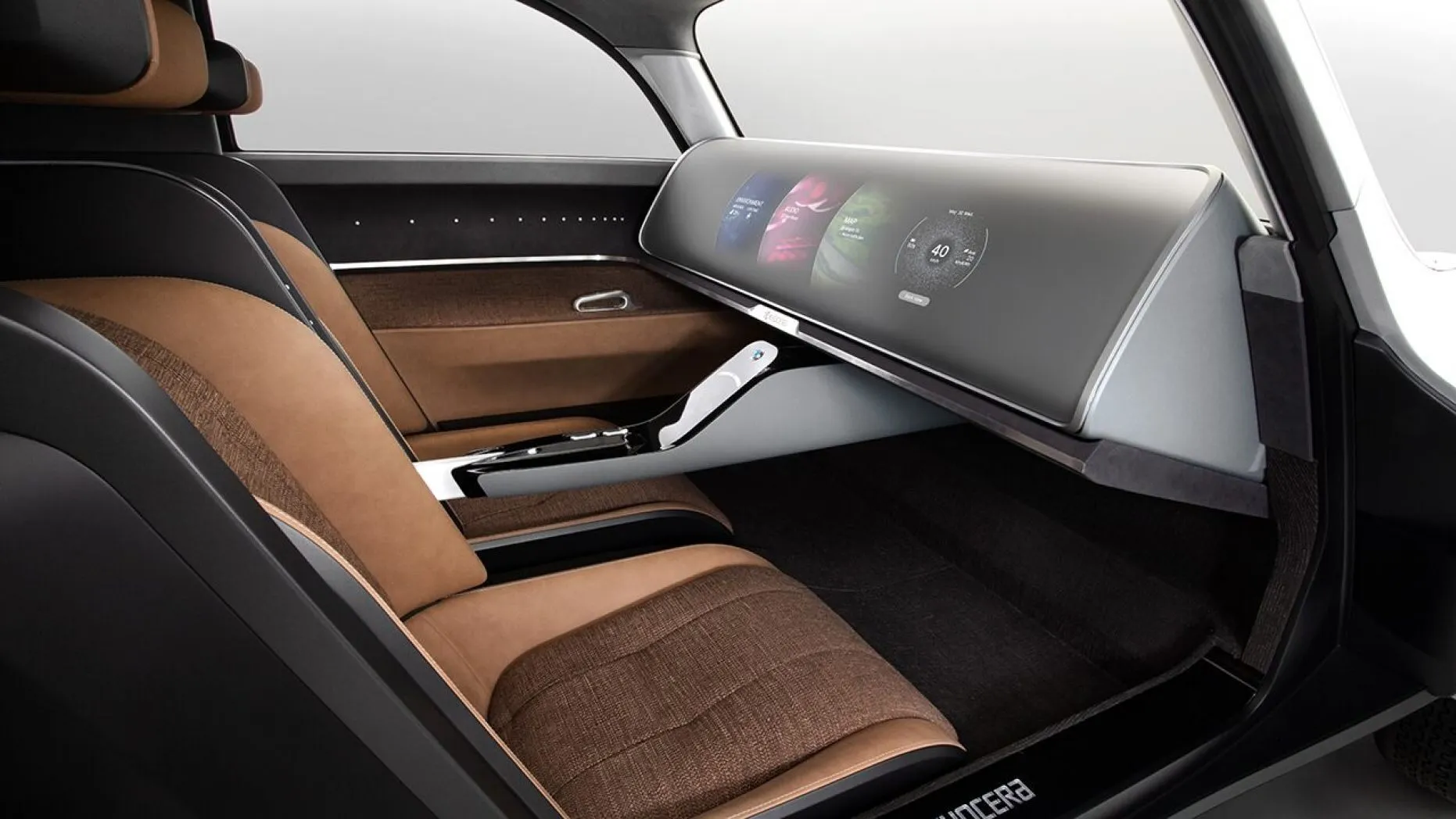
The profound impact of this thinness transcends mere specification sheets; it fundamentally liberates automotive designers. With modules that can be bent and formed to gentle curves, designers are no longer constrained to flat, rectangular screens awkwardly bolted onto dashboards. This allows for seamless integration of displays into flowing, organic interior surfaces, creating a more harmonious and cockpit-like environment. The technology enables displays to be embedded in locations previously considered impractical, such as wrapping around pillars, blending into curved door panels, or forming continuous panoramic dashboards. This newfound freedom shifts the display from being an added component to an intrinsic, sculptural element of the interior itself, enabling brand-specific design languages to be expressed more fluidly and futuristically.
Enhancing User Experience: Beyond the Visual Thinness
The benefits directly cascade to the end-user's experience. The ultra-thin profile allows for superior optical performance, minimizing parallax error—the perceived gap between the touch point and the underlying image—which results in a more direct, precise, and satisfying touch interaction. Furthermore, the reduction in layers and materials enhances optical clarity and brightness, improving readability under harsh sunlight. For advanced interfaces, this technology is a key enabler for haptic feedback systems. A thinner module allows haptic actuators to transmit vibrations more effectively and realistically through the glass, simulating the feel of physical buttons. This is crucial for reducing driver distraction, as it provides tactile confirmation without the user needing to look away from the road, marrying cutting-edge technology with enhanced safety.
The Manufacturing and Supply Chain Advantage
From an engineering and production standpoint, Kyocera's integrated module simplifies the assembly process for car manufacturers. The traditional multi-layer assembly, with its precise alignment requirements and potential for dust ingress between layers, is replaced by a single, pre-assembled unit. This reduces complexity on the production line, potentially lowering assembly time and cost. It also enhances reliability, as there are fewer interfaces and connection points that could fail. For the supply chain, it streamlines logistics and inventory management, as automakers source one certified module instead of multiple components from different suppliers. This robustness and simplicity are critical for automotive-grade quality and the scale of global vehicle production.
Accelerating the Future: Enabling Next-Generation Vehicle Concepts
This technological leap is perfectly timed to catalyze emerging automotive trends. For electric vehicles (EVs), where interior space and minimalist design are paramount, ultra-thin displays contribute to a sense of airiness and advanced aesthetics. It is a cornerstone technology for the realization of the "display everywhere" concept, transforming vast swathes of the interior into interactive surfaces. More importantly, it is a critical enabler for autonomous vehicle interiors. As the role of the driver evolves, interiors will reconfigure into mobile living or workspaces. Kyocera's flexible, thin displays can be integrated into retractable surfaces, tables, or immersive entertainment systems that deploy only when needed, allowing the cabin to dynamically adapt to its purpose, be it driving, relaxing, or conferencing.
Challenges and the Road to Commercialization
Despite its promise, the path to widespread adoption involves navigating significant challenges. Automotive qualification is a lengthy, rigorous process involving extreme temperature cycling, vibration resistance, UV exposure, and long-term reliability testing. Proving the durability of this fused, ultra-thin structure under a 10-15 year vehicle lifespan is paramount. Furthermore, cost-effectiveness at mass production scale must be demonstrated to entice cost-sensitive automakers. Kyocera must also work closely with OEMs and Tier-1 suppliers to adapt their manufacturing and design processes to utilize this new form factor effectively. Success will depend not just on the technology's brilliance, but on Kyocera's ability to forge strong partnerships and prove the module's value across the entire automotive ecosystem.
Kyocera's development of the world's thinnest automotive touch display module is a pivotal innovation that redefines the boundaries of in-cabin technology. It moves the conversation from simply adding screens to intelligently integrating them as fluid, functional elements of the vehicle's architecture. By granting designers unprecedented freedom, enhancing user interaction, and enabling the flexible cabins of tomorrow, this technology is more than an incremental improvement—it is a key that unlocks new paradigms for automotive interior design. As the industry charges towards electrification and autonomy, such foundational advancements in human-machine interface will be crucial in shaping vehicles that are not only smarter but also more intuitive, comfortable, and seamlessly connected to their occupants.


