In a technology landscape often dominated by consumer electronics chatter, a significant yet understated segment is posting remarkable gains. Kyocera Corporation, the global ceramics and electronics giant, recently reported a standout performance in its Display Segment,
achieving a robust 15% year-over-year sales growth. This surge is not attributed to fleeting consumer trends but is firmly rooted in the sustained, high-demand waves from the industrial and automotive sectors.
This performance offers a compelling narrative about the shifting drivers of technological advancement. It signals a move towards specialized, ruggedized, and highly reliable components that form the backbone of modern automation and mobility. This article will delve into the strategic pillars behind Kyocera's display success, exploring the specific market demands it fulfills, the technological differentiators that give it an edge, and the broader implications for the industrial and automotive supply chains in an era of rapid digital transformation.
Strategic Market Focus: Beyond Consumer Screens
Kyocera's display growth story is fundamentally a story of strategic market selection. While consumer device screens compete on ultra-high resolution and refresh rates in a fiercely cost-sensitive market, Kyocera has doubled down on
industrial and automotive applications. These sectors prioritize parameters that align perfectly with Kyocera's core competencies in materials science. Here, the key demands are not merely visual appeal but extreme reliability, longevity, and performance under duress.
Industrial environments expose equipment to temperature extremes, vibration, dust, and moisture. Automotive interiors, especially for evolving electric and autonomous vehicles, require displays that can withstand years of sun exposure, wide thermal cycles, and constant touch. By focusing its R&D and sales efforts on these challenging, value-driven applications, Kyocera has insulated itself from the volatile consumer market and attached its growth to the steadier, long-term investment cycles of industry and automotive OEMs. This focus transforms displays from a commodity component into a critical, engineered subsystem.
The Technology Edge: Durability as a Default
The 15% sales figure is underpinned by tangible technological advantages. Kyocera's heritage in fine ceramics and crystal technologies is directly infused into its display products. This material science expertise translates into several critical differentiators. Firstly, superior durability: many of their displays utilize strengthened glass or proprietary constructions that offer exceptional resistance to scratches, impacts, and chemical exposure.
Secondly, enhanced optical performance for specialized use cases. This includes high-brightness displays readable in direct sunlight for automotive dashboards or outdoor kiosks, and wide-temperature-range operation ensuring functionality from freezing cold to scorching heat. Furthermore, Kyocera often integrates touch solutions (like projective capacitive touch) that work reliably even with gloves or under wet conditions—a non-negotiable feature in many industrial settings. This "built-tough" philosophy, where durability is not an add-on but a design prerequisite, creates a high barrier to entry for competitors and justifies a premium in the markets they serve.
Drivers of Demand: Automation and the Smart Vehicle Revolution
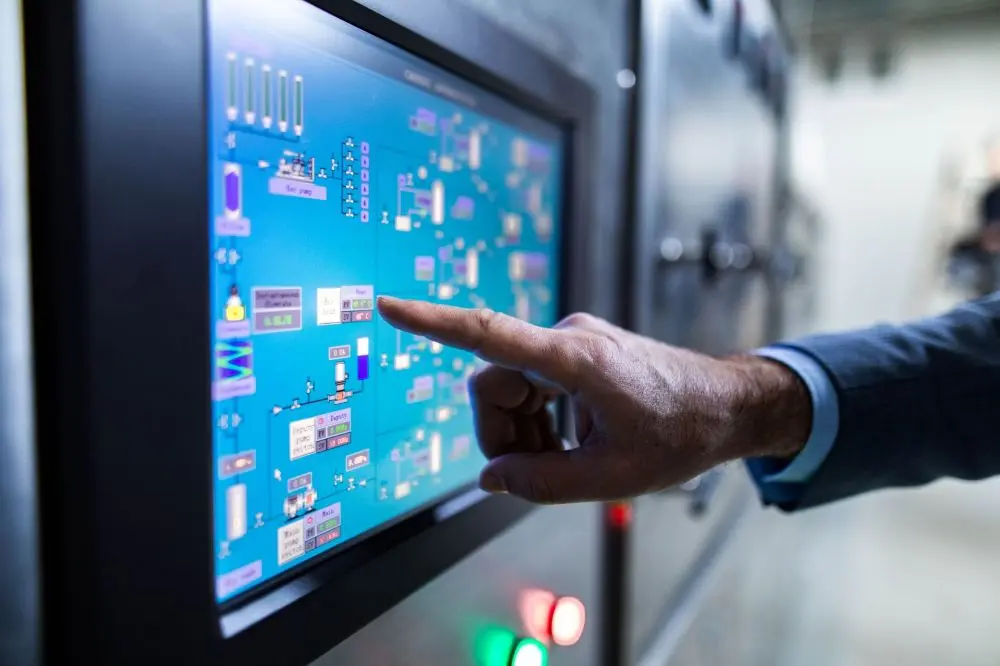
The growth drivers are two powerful macro-trends: Industry 4.0 and the evolution of the automobile. In the industrial sphere, the push towards automation and smart factories is relentless. This requires more human-machine interfaces (HMIs) on factory floors, logistics control systems, and medical equipment—all points where operators need clear, interactive, and utterly reliable visual feedback. Kyocera's displays are integral to these interfaces.
In the automotive world, the transformation is even more visual. The rise of electric vehicles (EVs) and advanced driver-assistance systems (ADAS) is leading to a profound increase in screen real estate inside vehicles. Digital instrument clusters, large central infotainment screens, head-up displays, and passenger screens are becoming standard. Each of these represents an application requiring automotive-grade reliability, spanning a decade or more of service life. Kyocera's ability to supply displays that meet stringent automotive qualifications (like AEC-Q100) positions it at the heart of this cockpit revolution.
Competitive Landscape and Future Trajectory
Kyocera's success does not exist in a vacuum. It competes with other specialized display makers and divisions of larger electronics firms. Its winning formula lies in a vertically integrated approach that combines proprietary materials, component manufacturing, and often system integration. This control over the supply chain ensures quality and allows for custom solutions, which are highly valued in industrial and automotive projects.
Looking ahead, the company's trajectory seems poised for continued strength. The demand drivers are structural, not cyclical. As industrial IoT expands and vehicles evolve towards greater autonomy and connectivity, the need for robust, high-performance displays will only intensify. Kyocera's challenge will be to continue innovating at the intersection of materials and electronics—perhaps integrating more embedded functionality or developing even more resilient form factors—to maintain its leadership in these demanding but rewarding sectors.
Kyocera's 15% display sales growth is a clear indicator of where real value is being created in the electronics component industry today. It underscores a strategic victory achieved by focusing on durability, reliability, and deep engineering over mass-market specs. The performance is directly fueled by the irreversible trends of industrial automation and automotive digitalization. For industry observers and investors, Kyocera's report is more than a financial highlight; it is a case study in how deep technological expertise, when precisely aligned with long-term societal and industrial shifts, can drive sustained and defensible growth in a competitive global market


