Kyocera Corporation, a global leader in advanced ceramics and electronic components, has strategically expanded its industrial TFT LCD portfolio with a new series engineered for extreme reliability. This article delves into the introduction of their high-brightness, wide-temperature-range displays, a direct response to the escalating demands of outdoor and harsh-environment applications
Kyocera Corporation, a global leader in advanced ceramics and electronic components, has strategically expanded its industrial TFT LCD portfolio with a new series engineered for extreme reliability. This article delves into the introduction of their high-brightness, wide-temperature-range displays, a direct response to the escalating demands of outdoor and harsh-environment applications. We will explore the technical specifications that set these panels apart, the critical challenges they address in sectors like transportation and industrial automation, and the tangible benefits they deliver to system integrators and end-users, ultimately examining how this expansion strengthens Kyocera's position in the ruggedized display market.
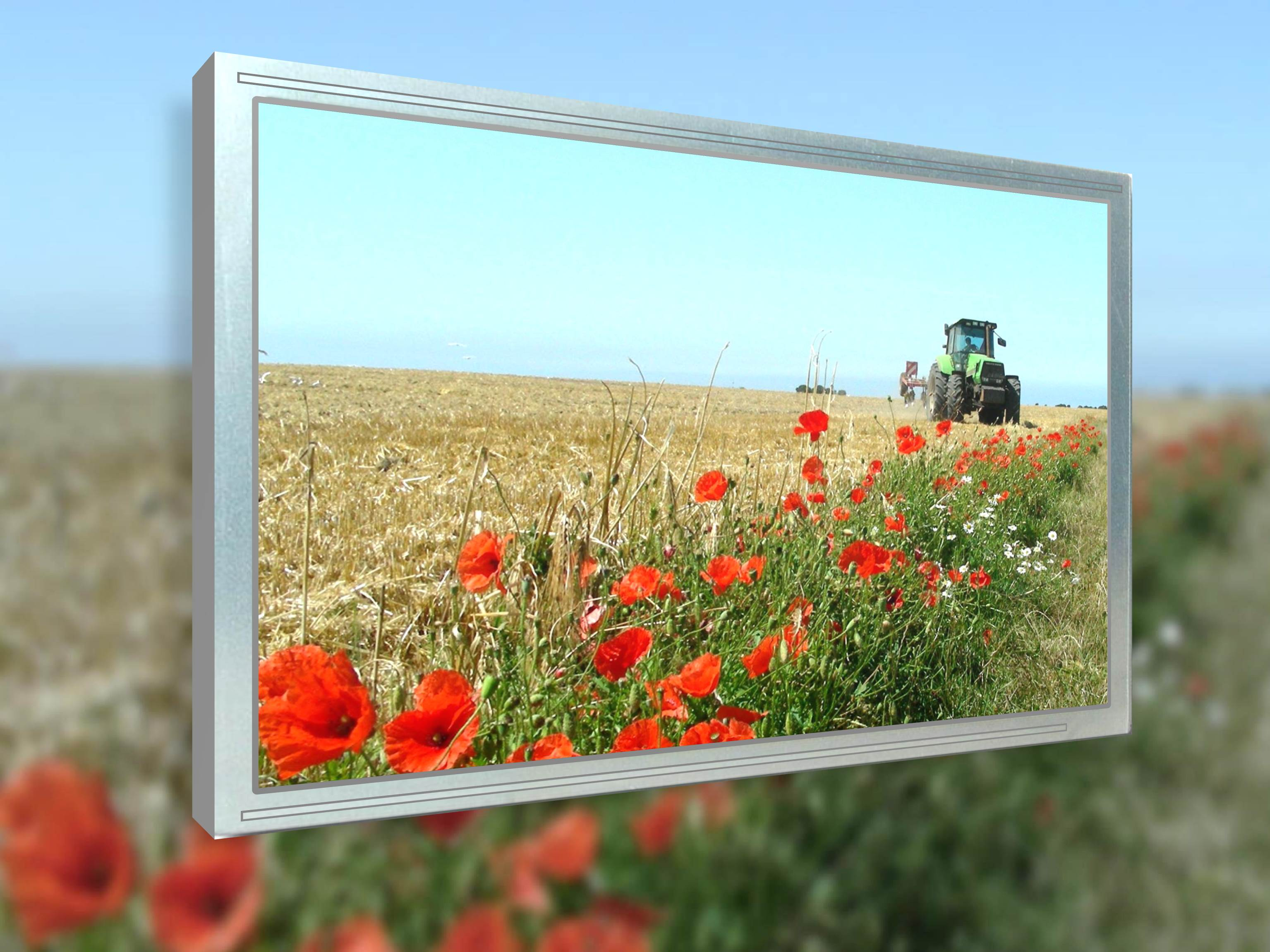
Engineering for Extremes: The Core Specifications
At the heart of Kyocera's new lineup are specifications that transcend standard industrial display capabilities. The panels boast exceptional high-brightness levels, typically ranging from 1000 to 1500 nits or higher, ensuring flawless readability under direct sunlight—a common failure point for conventional screens. Coupled with this is an extended operating temperature range, often from -30°C to +80°C or wider, allowing consistent performance in freezing cold or scorching heat. This robustness is further underpinned by durable construction designed to resist vibration, shock, and moisture ingress. These are not incremental improvements but foundational requirements for devices deployed in uncontrolled environments, where display failure can mean operational shutdown or safety risks.
Conquering the Environmental Adversaries
Outdoor and industrial settings present a triumvirate of adversaries for electronic displays: light, temperature, and physical stress. Solar loading not only washes out the image but generates significant heat within the display module itself. Kyocera's high-brightness LEDs combat the former, while their thermal management designs, often utilizing high-conductivity materials, address the latter. Wide-temperature components, including specially formulated liquid crystals and cold-cathode backlight systems, prevent slowdown, freezing, or discoloration. Furthermore, enhanced sealing techniques (conformal coating, robust gaskets) protect against corrosive agents, dust, and humidity, ensuring longevity where standard displays would rapidly degrade.
Transformative Applications Across Critical Industries
The practical impact of these displays is most evident in their application domains. In transportation, they become reliable dash displays for agricultural and construction machinery, railway control systems, and maritime navigation—interfaces that must be legible in all weather conditions. Within factory automation, they serve on ruggedized HMIs for logistics robots, outdoor kiosks, and mining equipment control panels. The energy sector utilizes them in remote monitoring stations for oil rigs, wind farms, and solar installations. In each case, the display transitions from a mere output device to a critical, failure-resistant node in a larger operational chain, enabling continuity and decision-making in the most challenging field conditions.
The Integrator's Advantage: Reliability and Reduced TCO
For system integrators and OEMs, Kyocera's expansion offers significant advantages beyond basic specs. The primary value proposition is risk mitigation. By integrating a display built for harsher conditions than the application may ever encounter, they future-proof their products and minimize field failures, which are extraordinarily costly in remote or critical installations. This leads to a lower Total Cost of Ownership (TCO). While the upfront unit cost may be higher than a commercial panel, it pales in comparison to the expenses of warranty claims, service calls, downtime, and reputational damage. The displays' longevity and stability simplify the integration process and provide a compelling selling point for the final product.
Kyocera's Strategic Material Science Edge
This product expansion is not an isolated venture but a direct application of Kyocera's core competency: advanced ceramics and material science. Their expertise allows for unique solutions, such as ceramic-based substrates or components that offer superior thermal dissipation and structural integrity compared to standard PCB materials. This deep material knowledge informs every layer of the display stack, from the optical bonding process that reduces glare and strengthens the assembly to the selection of glass and polarizers. It’s a vertical integration of expertise that competitors without a ceramics foundation cannot easily replicate, giving Kyocera a distinct technological moat in the high-end industrial display segment.
The Future of Ruggedized Human-Machine Interfaces
Kyocera's move signals a broader industry trend toward intelligent, connected, and ultra-resilient HMIs. The next evolution for these displays will likely involve integrating more embedded functionality, such as touch technology that works with gloves and in wet conditions, and higher levels of system-on-chip (SoC) integration to create smarter, standalone panel PCs. As the Internet of Things (IoT) penetrates harsh environments, the display becomes a local hub for data visualization and interaction. By establishing a strong portfolio in high-brightness, wide-temperature displays now, Kyocera is positioning itself as a foundational supplier for the next generation of ruggedized industrial and outdoor equipment, where the interface must be as tough and dependable as the machinery itself.


