In the demanding world of industrial automation, medical equipment, and human-machine interfaces (HMIs), the display panel is far more than a simple window to data. It is a critical component that must deliver unwavering reliability, crystal-clear readability, and robust performance under the most challenging conditions.
In the demanding world of industrial automation, medical equipment, and human-machine interfaces (HMIs), the display panel is far more than a simple window to data. It is a critical component that must deliver unwavering reliability, crystal-clear readability, and robust performance under the most challenging conditions. This article delves into the Kyocera KCG047QV1AA-A210, a 4.7-inch TFT-LCD panel engineered specifically to meet and exceed these rigorous industrial standards. We will move beyond basic specifications to explore the technological and design philosophies that make this display a trusted solution for engineers and system integrators.
Our analysis will systematically unpack its key attributes: the advanced IPS technology that ensures consistent visual performance, the meticulous integration of touch functionality and rugged construction, the critical role of its optimized interface and control features, and finally, its practical application across diverse industrial sectors. Understanding these facets is essential for selecting a display that not only shows information but also enhances system integrity and operational longevity.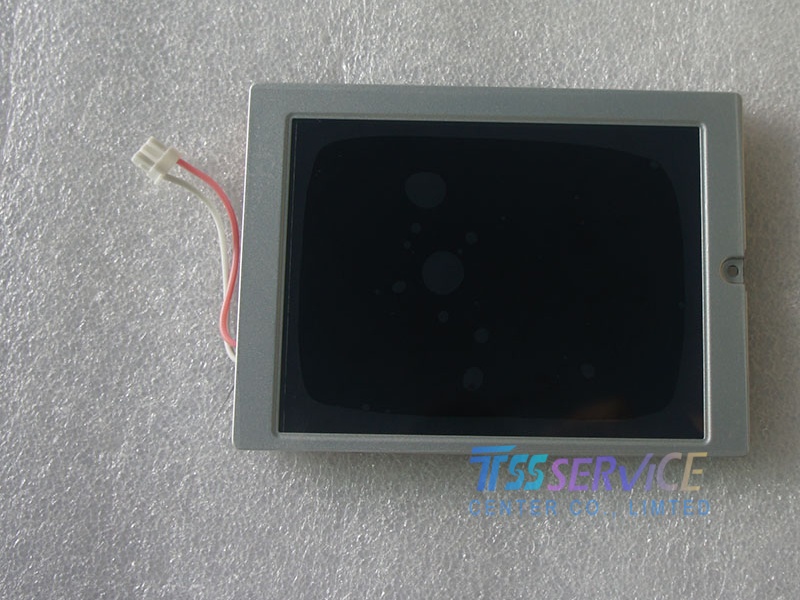
Superior Optical Performance with Advanced IPS Technology
At the heart of the Kyocera KCG047QV1AA-A210's capability is its In-Plane Switching (IPS) LCD panel. Unlike conventional TN (Twisted Nematic) panels, IPS technology is renowned for its exceptional viewing angle characteristics. This display boasts wide viewing angles of 80/80/80/80 degrees (typical), meaning that the image remains stable, with minimal color shift and contrast degradation, even when viewed from extreme side, top, or bottom positions. This is not a mere convenience; in industrial settings, operators may need to read data from various angles around a machine or console, and consistent readability is paramount for safety and efficiency.
Furthermore, the panel offers a balanced combination of a 450 cd/m² high brightness and a 700:1 contrast ratio. The high brightness ensures clear visibility in brightly lit environments, such as factories with overhead lighting or outdoor applications in partial shade. The strong contrast ratio delivers deep blacks and bright whites, improving text legibility and graphical detail. This optical stack is complemented by a resolution of 480 x 272 pixels (WVGA), providing adequate pixel density for detailed schematics, diagnostic readouts, and intuitive user interface elements on its 4.7-inch diagonal screen.
Rugged Integration: Touch, Durability, and Thermal Resilience
An industrial display must be an interactive and physically resilient component. The KCG047QV1AA-A210 addresses this through its integrated Projected Capacitive (PCAP) touch panel. PCAP technology offers multi-touch capability, superior optical clarity compared to resistive touch, and excellent responsiveness with gloved hands—a frequent requirement in manufacturing and medical environments. The integration is seamless, designed to minimize parallax and reflection, thereby maintaining the optical quality discussed earlier.
Durability extends beyond the touch layer. The module is constructed to withstand the vibrations, shocks, and particulate exposure common in industrial workspaces. Perhaps more critically, it features an extended operating temperature range of -30°C to +80°C. This wide range is a hallmark of true industrial-grade components. It guarantees startup and stable operation in freezing cold storage facilities, high-temperature factory floors near machinery, or in enclosed outdoor kiosks subjected to direct sunlight. This thermal resilience ensures system uptime and prevents display failure, which could lead to costly production halts or safety issues.
Optimized Interface and Control for Seamless System Design
The true value of a display module is realized in how effortlessly it integrates into a larger system. Kyocera has engineered the KCG047QV1AA-A210 with a focus on design-in simplicity and control flexibility. It features a low-voltage differential signaling (LVDS) interface, a robust and noise-resistant standard for transmitting high-speed video data over relatively long distances within a device chassis. This simplifies the connection to many industrial-grade System-on-Chip (SoC) or FPGA controllers.
Equally important are the integrated features that reduce engineering burden. The module includes an LED backlight driver circuit, eliminating the need for external driver design. It also offers comprehensive power sequencing control and a programmable lookup table for gamma correction and color temperature adjustment. This allows engineers to fine-tune the white point and color curve to match specific application needs or to compensate for variations in the backlight over time, ensuring consistent visual output throughout the product's lifecycle.
Application Versatility in Demanding Sectors
The convergence of its optical, rugged, and integration features makes the Kyocera KCG047QV1AA-A210 a versatile solution across a spectrum of high-stakes industries. In factory automation, it serves as the face of PLCs, control panels for robotics, and diagnostic monitors on production lines, where its readability and touch response under duress are critical. The medical device field benefits from its reliable performance in patient monitoring systems, portable diagnostic equipment, and surgical instrument displays, where clarity and accuracy are non-negotiable.
Furthermore, it is ideally suited for transportation and infrastructure HMIs, such as in-vehicle control systems for agricultural or construction vehicles, and public information kiosks. Its ability to operate across extreme temperatures and resist vibration makes it a dependable choice. In each scenario, the display transitions from being a commodity part to a core enabler of system reliability and user confidence, directly impacting operational success and safety.
In conclusion, the Kyocera KCG047QV1AA-A210 stands out as a meticulously engineered display solution that embodies the core requirements of industrial applications. Its IPS panel guarantees consistent visual fidelity, while its ruggedized construction with PCAP touch ensures interaction and survival in harsh environments. The integrated interfaces and controls facilitate streamlined system design, and its broad applicability underscores its inherent versatility. For engineers seeking a display that prioritizes long-term performance and integration integrity over mere cost-saving, this module represents a strategic investment in the robustness and usability of the final product, proving that in industrial technology, reliability is the ultimate feature.


