In the demanding world of outdoor digital signage, visibility is currency. Sunlight, glare, and environmental extremes have long been the nemeses of clear communication, forcing compromises in display placement and content legibility. This persistent challenge makes Kyocera's latest announcement a potential watershed moment for the industry.
In the demanding world of outdoor digital signage, visibility is currency. Sunlight, glare, and environmental extremes have long been the nemeses of clear communication, forcing compromises in display placement and content legibility. This persistent challenge makes Kyocera's latest announcement a potential watershed moment for the industry.
The Japanese technology giant has unveiled a groundbreaking outdoor LCD screen, shattering conventional brightness barriers with a staggering 5000 nits. This isn't merely an incremental upgrade; it represents a fundamental leap in display engineering, promising to make digital content visible and vibrant even under the most punishing direct sunlight. This article delves into the significance of this release, exploring the technological breakthroughs behind it, its transformative applications across key sectors, and the new strategic considerations it introduces for deployers of outdoor digital media.
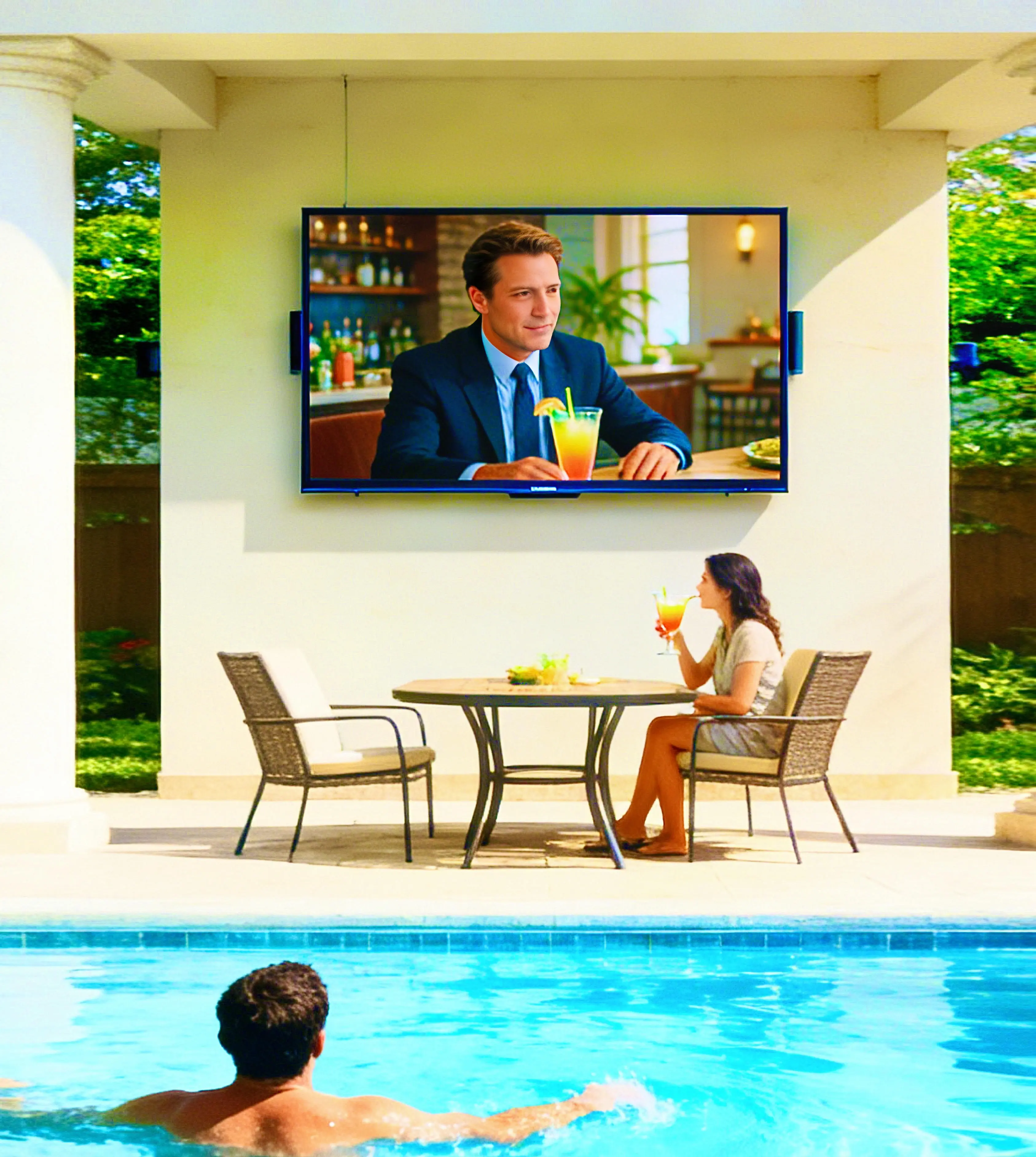
Engineering Sunlight Readability: The 5000-Nit Breakthrough
Reaching a sustained brightness of 5000 nits is a feat that goes far beyond simply turning up the backlight. Traditional high-brightness displays often struggle with massive heat generation, accelerated component degradation, and excessive power consumption. Kyocera's achievement likely hinges on a systems-level approach integrating several advanced technologies.
Key to this is a high-efficiency LED backlighting system with precise local dimming control, coupled with optical films and polarizers engineered to maximize light output while minimizing dispersion and glare. Furthermore, robust thermal management—using materials like Kyocera's proprietary ceramics for heat dissipation—would be critical to maintain performance and longevity under continuous high-brightness operation. This engineering marvel directly translates to what users experience: unprecedented contrast ratios and color fidelity outdoors. Where standard screens wash out, this display maintains deep blacks and saturated colors, ensuring messages are not just seen, but are compelling and legible from wider angles and greater distances.
Redefining Outdoor Engagement: Sector-Specific Applications
The practical implications of this brightness level extend across industries where outdoor communication is critical. In transportation and smart cities, these screens can serve as ultra-reliable dynamic wayfinding signs at busy intersections, real-time passenger information displays at sun-drenched transit hubs, or critical safety alert systems, all immune to solar glare. For advertising and retail
Beyond commercial use, the technology is poised to enhance public spaces and safety. Imagine interactive kiosks in parks that remain fully usable at noon, or digital bus shelters that provide clear information regardless of the weather. The robustness required for such brightness also suggests enhanced durability against temperature fluctuations and moisture, making it a versatile solution for transforming how information and advertising are delivered in the public realm.
Beyond Brightness: Strategic Considerations for Deployment
While the 5000-nit specification is the headline, integrating such a powerful tool requires strategic planning beyond the initial technical awe. The first consideration is energy efficiency and total cost of ownership. Higher brightness traditionally correlates with higher power draw; therefore, understanding the display's power management features and operational efficiency is crucial for calculating long-term ROI, especially for large-scale or always-on networks.
Secondly, content creation must evolve. Simply porting indoor-designed graphics to this brilliant canvas is a missed opportunity. Marketers and designers must learn to leverage the exceptional contrast and visibility, potentially using more sophisticated animations and deeper color palettes that are finally viable outdoors. Finally, the very placement strategy for outdoor screens may shift. With glare eliminated, screens can be positioned for optimal pedestrian or vehicular sightlines without the previous constraints of sun path analysis, offering newfound flexibility in urban design and advertising placement.
Kyocera's 5000-nit LCD screen is more than just a brighter display; it is an enabling technology that pushes the boundaries of where and how we can communicate digitally outdoors. By solving the fundamental challenge of sunlight readability through sophisticated engineering, it opens doors to more effective advertising, more resilient public information systems, and smarter city infrastructure. Its introduction prompts the industry to think strategically about energy, content, and placement, moving from simply displaying information to guaranteeing its reception under any condition. This innovation doesn't just illuminate a screen—it illuminates new possibilities for outdoor engagement.


