In a move that signals its ambitions beyond its core industrial and printer businesses, Kyocera recently unveiled a flexible OLED display prototype at an internal technology showcase. This development, while not yet a commercial product
In a move that signals its ambitions beyond its core industrial and printer businesses, Kyocera recently unveiled a flexible OLED display prototype at an internal technology showcase. This development, while not yet a commercial product, offers a fascinating glimpse into the material science and engineering explorations underway within the venerable Japanese conglomerate. It underscores a strategic foray into the competitive arena of next-generation displays, where flexibility, durability, and novel form factors are becoming key differentiators.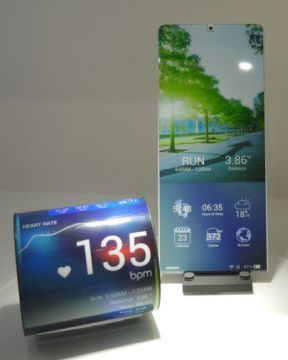
This article delves into the significance of Kyocera's prototype, analyzing not just the "what" but the "why" behind this demonstration. We will explore the unique material advantages Kyocera brings to the table, the potential applications unlocked by such technology, and the broader implications for the display industry landscape. This is more than a tech showcase; it's a statement of intent in the race to define the screens of tomorrow.
Kyocera's Strategic Pivot: From Ceramics to Cutting-Edge Displays
Kyocera's foundation in fine ceramics is not a distant legacy but the probable cornerstone of its flexible OLED endeavor. Traditional displays rely on glass substrates, which are rigid and brittle. Kyocera's deep expertise in advanced ceramic materials, known for their strength, thermal stability, and thin-film capabilities, provides a unique pathway. The prototype likely utilizes a ultra-thin, flexible ceramic or a hybrid ceramic-polymer substrate, a radical departure from the norm.
This material shift is strategic. It allows Kyocera to leverage its existing R&D and manufacturing strengths in a new, high-value market. By moving from passive components to active display systems, the company aims to diversify its portfolio and capture value in the consumer electronics and specialized industrial sectors. The internal showcase is a clear signal that Kyocera is investing to translate its material science mastery into a tangible, future-forward product category, moving up the technology value chain.
Unlocking New Form Factors and Durable Applications
The promise of flexible OLEDs extends far beyond simply creating a bendable smartphone screen. Kyocera's exploration hints at a future where displays become seamlessly integrated into a wider array of products and environments. The inherent durability suggested by a ceramic-based flexible substrate opens doors to applications where current glass-based OLEDs would fail.
Imagine automotive interiors with curved, conformal displays on non-flat dashboards or A-pillars; wearable devices that contour perfectly to the body without fear of shattering; or ruggedized industrial equipment with displays that can withstand vibration and impact. Kyocera's prototype suggests a focus on these functional and reliable implementations, aligning with its brand identity in B2B and industrial markets, rather than purely consumer-fashion-driven bendable phones.
The Technical Hurdles and Competitive Landscape
Bringing a flexible OLED from prototype to reliable, mass-produced product is fraught with challenges. Key hurdles include ensuring consistent performance over repeated bending cycles, preventing moisture and oxygen ingress (which degrades OLED materials), and developing scalable, cost-effective manufacturing processes for these novel substrates. Kyocera must prove its material solution can overcome these issues while meeting industry standards for color accuracy, brightness, and longevity.
Furthermore, the competitive landscape is intense. Giants like Samsung Display and LG Display have invested billions and have years of lead time in OLED production. Kyocera's potential advantage lies not in direct head-to-head competition on volume for smartphones, but in niche differentiation—offering superior durability, unique form factors enabled by its substrates, or targeting specific industrial and automotive clients where its material science credibility carries significant weight.
Implications for the Future of Display Technology
Kyocera's entry, even at the prototype stage, is a healthy disruptor for the display ecosystem. It validates the ongoing search for alternative substrate materials beyond polyimide (the current standard for flexible OLEDs), potentially leading to more robust and versatile displays. It also indicates that the future of displays will be shaped by cross-industry knowledge, where expertise from ceramics, chemistry, and precision engineering converges
.
This exploration pushes the industry toward a paradigm wheredisplays are no longer just "screens" but functional, structural components of a product. As the Internet of Things (IoT) and smart surfaces proliferate, the demand for durable, energy-efficient, and shapeable visual interfaces will grow. Kyocera's demonstration is a step toward that integrated future, proving that innovation can emerge from unexpected quarters, reshaping market expectations and technological possibilities.
Kyocera's flexible OLED prototype is a strategically significant proof-of-concept that marries the company's legacy in materials with a vision for future interfaces. It highlights a path toward more durable and versatile displays, targeting applications beyond mainstream consumer electronics. While significant commercialization challenges remain, this move enriches the display innovation landscape, promising new form factors and pushing the entire industry toward more integrated and resilient solutions. Kyocera has effectively signaled its readiness to be a player in defining the next wave of display technology.


