In the demanding world of professional imaging and commercial technology, the display is more than just an output device—it's the critical interface for decision-making. Kyocera Corporation, a global leader in fine ceramics and advanced electronics, has unveiled a new series of slim, bar-type displays designed to redefine integration in Camera Monitor Systems (CMS) and specialized commercial applications
In the demanding world of professional imaging and commercial technology, the display is more than just an output device—it's the critical interface for decision-making. Kyocera Corporation, a global leader in fine ceramics and advanced electronics, has unveiled a new series of slim, bar-type displays designed to redefine integration in Camera Monitor Systems (CMS) and specialized commercial applications. This launch addresses a core challenge in modern system design: achieving superior visual performance without compromising on space or flexibility.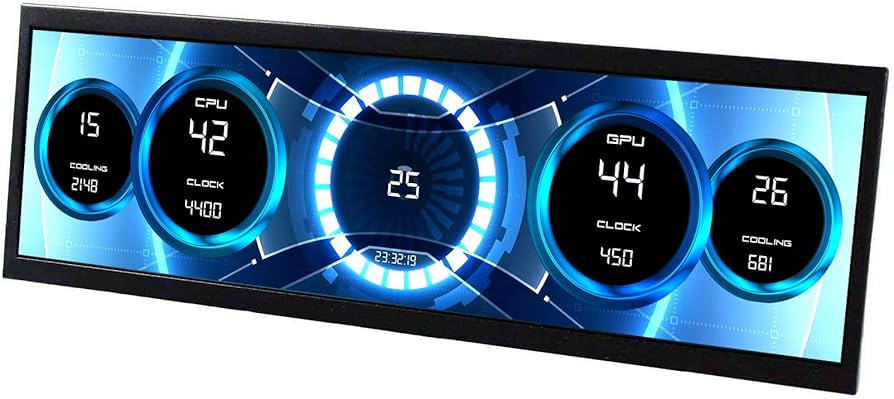
This article delves into the significance of Kyocera's innovation, exploring how these sleek displays enable new levels of design freedom, enhance functionality in critical environments, and set a new benchmark for reliability in specialized markets.
Redefining Form Factor: The Power of Slim, Bar-Type Design
Kyocera's new displays break away from the conventional bulky monitor archetype. Their defining characteristic is an exceptionally slim, elongated bar-type form factor. This is not merely an aesthetic choice; it's a fundamental engineering solution for spatial constraints. In automotive CMS, for instance, replacing traditional side mirrors requires displays that can be seamlessly embedded into narrow pillars, door panels, or dashboards without obstructing view or design lines. Similarly, in commercial settings like factory control rooms or retail information kiosks, the slim profile allows for installation in spaces previously deemed unusable for displays.
The flexible integration enabled by this design empowers OEMs and system integrators. Designers are no longer forced to build compartments around a display; instead, the display adapts to the contours of the existing system. This opens avenues for more aerodynamic vehicle designs, cleaner commercial interiors, and innovative product concepts where the display becomes an invisible yet integral component of the larger machine or environment.
Engineered for Demanding Environments: Beyond Basic Visualization
Kyocera's expertise in durable materials and precision manufacturing ensures these displays are built for mission-critical use. They are engineered to deliver consistent performance under conditions that would challenge standard commercial screens. Key features include:
-
High Brightness and Wide Viewing Angles: Essential for sunlight readability in vehicle CMS and clear visibility from various positions in public installations.
-
Extended Operating Temperature Ranges: Reliable functionality in both the freezing cold and scorching heat, crucial for automotive and outdoor industrial applications.
-
Robust Reliability and Long Lifespan: Constructed to withstand constant vibration, humidity, and 24/7 operation, minimizing downtime and total cost of ownership.
This robustness transforms the display from a passive component into an active, dependable system element. In a forklift CMS, it ensures the operator sees a clear, real-time feed regardless of warehouse lighting. In a digital signage network, it guarantees content is always on display. Kyocera’s approach ensures the hardware matches the reliability expected of the professional systems it serves.
Unlocking New Applications and System Architectures
The culmination of slim design and rugged performance is the creation of new possibilities. Kyocera's bar-type displays act as an enabler for next-generation applications. In transportation, they are pivotal for advanced CMS, e-mirror systems, and compact instrument clusters in vehicles ranging from trucks and buses to construction and agricultural machinery. The space saved can be reallocated for additional safety sensors or aesthetic design elements.
Beyond vehicles, this technology finds purpose in specialized commercial applications such as:
-
Ultra-compact monitoring displays for security and process control.
-
Integrated status panels for medical, industrial, or office equipment.
-
Sleek, space-saving information displays in retail and hospitality.
By providing a high-performance display that can fit into slender, unconventional spaces, Kyocera allows engineers to rethink entire system layouts. It encourages a more holistic design philosophy where the display is considered early in the development process as a flexible module, not a rigid afterthought, thereby accelerating innovation across multiple industries.
Kyocera's launch of slim bar-type displays represents a strategic response to the evolving needs of integrated system design. By masterfully combining a space-saving form factor with industrial-grade durability and high visual performance, these displays solve critical integration challenges for OEMs. They empower the creation of safer, more compact Camera Monitor Systems and open doors to innovative commercial applications where reliability and design flexibility are paramount. This innovation underscores Kyocera's commitment to providing not just components, but foundational technologies that enable its clients to build smarter, more efficient, and more advanced products for the future.


