In the demanding world of industrial automation, medical instrumentation, and human-machine interfaces, the display panel is far more than a simple window to data—it is the critical touchpoint of reliability and performance.
In the demanding world of industrial automation, medical instrumentation, and human-machine interfaces, the display panel is far more than a simple window to data—it is the critical touchpoint of reliability and performance. This article provides an in-depth exploration of the Kyocera TCG070WVLPAANN-AN00-EA, a 7-inch LCD display panel engineered specifically for the rigors of industrial applications.We will move beyond basic specifications to examine how its core technologies translate into tangible benefits in challenging environments.

Unlike consumer-grade screens, this panel is built as a system component, where longevity, signal integrity, and environmental resistance are paramount. Our analysis will dissect its robust optical performance, exceptional durability, seamless integration capabilities, and the strategic advantages it offers to engineers and product designers. Understanding these facets is key to selecting a display that ensures operational continuity and enhances the value of your industrial equipment.
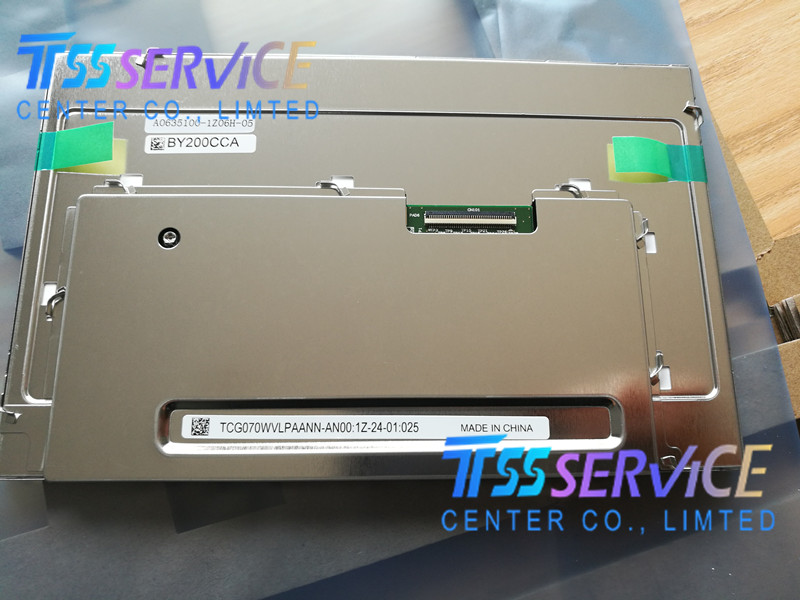
Optical Excellence Meets Industrial Readability
At the heart of the Kyocera TCG070WVLPAANN-AN00-EA is a high-performance a-Si TFT LCD with a resolution of 800 x RGB x 480 (WVGA). While the resolution is standard, the panel's true value lies in its optimized optical characteristics tailored for industrial settings. It features a high brightness rating, typically around 500 cd/m² or greater, which ensures clear visibility under strong ambient lighting commonly found in factories or outdoor installations.
Furthermore, the panel employs advanced technologies to achieve a wide viewing angle, crucial for applications where the operator's position is not fixed directly in front of the screen. This is often accomplished through specific pixel design or optical film technology, ensuring color and contrast consistency across a broad horizontal and vertical range. The contrast ratio is engineered to deliver sharp, legible imagery, reducing eye strain during prolonged monitoring sessions. This combination of brightness, viewing angle, and contrast transforms raw data into instantly actionable information, minimizing the risk of operator error.
Engineered for Resilience and Long-Term Reliability
The defining characteristic of an industrial display is its ability to withstand environmental stress that would incapacitate a consumer device. The Kyocera TCG070WVLPAANN-AN00-EA is built with this principle as its foundation. It is designed to operate reliably across an extended temperature range, often from -30°C to +80°C, ensuring functionality in both freezing cold storage and hot manufacturing floors.
Durability is further enhanced through a robust mechanical construction. The panel typically features a strengthened glass surface and a rigid metal frame to resist shock, vibration, and physical impact common in transportation and heavy machinery applications. Additionally, it may incorporate heater elements for reliable cold-start operation in sub-zero conditions. This resilience directly correlates to mean time between failures (MTBF), a critical metric for industrial operators. By selecting a panel engineered for such endurance, manufacturers significantly reduce downtime and total cost of ownership for their end-users.
Seamless Integration into Complex Systems
For design engineers, a display panel is not a standalone product but a module that must interface flawlessly with the broader system. The Kyocera TCG070WVLPAANN-AN00-EA excels as an integration-ready component. It comes as a complete unit, often including the LCD, LED backlight, and driver board, simplifying the supply chain and design-in process. The interface is typically a standard LVDS (Low-Voltage Differential Signaling) or RGB interface, ensuring broad compatibility with common industrial-grade system-on-chips (SoCs) and controllers.
The panel's design also considers practical integration factors. Its outline dimensions and mounting hole patterns are precisely defined for easy mechanical fitting into enclosures. Power requirements are clearly specified, allowing for accurate power supply design. Some variants may also offer options for optical bonding, a process where a transparent resin is applied between the LCD and the cover glass. This technique dramatically reduces internal reflection, enhances sunlight readability, and adds an extra layer of physical robustness, creating a superior solution for demanding HMI applications.
Strategic Value in Application-Specific Solutions
The technical attributes of this Kyocera panel coalesce to deliver strategic value in key vertical markets. In factory automation, its reliability ensures continuous monitoring and control of production lines. For medical devices (where applicable, following necessary certifications), its clear display and reliability are vital for diagnostic and monitoring equipment. In transportation and logistics, its wide temperature tolerance and vibration resistance make it suitable for fleet management systems and rugged portable terminals.
Choosing this industrial-grade component over a commercial alternative mitigates project risk. It assures performance over a longer product lifecycle, which is essential for industrial machinery that may be in service for a decade or more. Furthermore, partnering with a supplier like Kyocera provides access to technical support and a degree of supply stability crucial for long-term manufacturing plans. The panel is not merely a cost item but an investment in the product's core integrity and market reputation.
The Kyocera TCG070WVLPAANN-AN00-EA 7-inch display panel exemplifies the engineering rigor required for industrial success. It transcends basic visual output by delivering unwavering optical performance, exceptional environmental durability, straightforward system integration, and proven value across critical applications. For developers of industrial equipment, specifying such a component is a decisive step toward building a more reliable, durable, and user-friendly end product. In an era where interface reliability is paramount, this display panel stands as a robust and intelligent solution for the connected industrial world.


