In the world of industrial and medical display solutions, the choice of a panel is rarely a matter of simple preference; it is a critical engineering decision that dictates user interaction, system reliability, and long-term operational costs. The TCG075VGLDB-G00, a 7.5-inch TFT LCD display module from Kyocera, represents a specific niche in this high-stakes environment. Unlike consumer-grade screens optimized for vibrant color saturation, this module is engineered for clarity, durability, and readability under demanding conditions. This article delves beyond the basic specifications of a 640x480 resolution panel. We will explore the technical architecture, the practical implications of the VGA resolution in a landscape increasingly dominated by higher pixel counts, and the strategic advantages of choosing a Kyocera-manufactured module for your embedded system.
Our analysis will cover the display’s core attributes, its performance in challenging ambient light scenarios, and its integration potential within complex industrial ecosystems. By the end, you will understand not just what this module is, but precisely why it remains a relevant and powerful choice for mission-critical applications where failure is not an option.
The Enduring Relevance of VGA Resolution in Industrial Contexts
At first glance, the 640x480 (VGA) resolution of the TCG075VGLDB-G00 might appear dated, especially in a consumer market saturated with 4K panels. However, this perspective ignores the fundamentally different priorities of industrial applications. In this context, VGA resolution is not a limitation but a deliberate design choice for legacy compatibility, software stability, and cost efficiency.
The table below outlines why VGA remains a staple in the industrial sector:
Legacy System Integration: Many programmable logic controllers (PLCs) and embedded Human-Machine Interfaces (HMIs) run on software written decades ago. These systems were often designed around the VGA standard. Using a native VGA panel like the TCG075VGLDB-G00 eliminates the need for expensive scaling or protocol conversion, reducing latency and points of failure.
Software Simplicity & Boot Speed: Driving a higher resolution requires more processing power and memory. For a dedicated interface displaying machine status, gauges, or control buttons, 640x480 provides a perfectly crisp canvas. It allows the use of simpler, more reliable microcontrollers and reduces boot times—a critical factor in emergency equipment.
Cost-Per-Pixel Efficiency: In large-scale deployments, the incremental cost of a higher-resolution panel multiplies. The TCG075VGLDB-G00 offers a proven, cost-effective solution where the task is functional display, not cinematic immersion.
Furthermore, the 7.5-inch diagonal size is a strategic sweet spot. It is large enough to present a clear, comprehensive interface with readable text and touch targets, yet compact enough to fit into standard 19-inch rack-mount systems or portable diagnostic equipment. This balance of size and resolution makes it a universal workhorse for control rooms and factory floors alike.
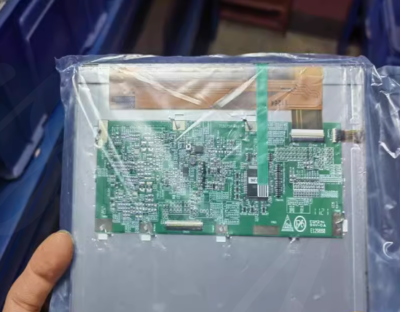
Optical Engineering: High Brightness, Contrast, and Viewing Stability
Moving beyond resolution, the true performance of the TCG075VGLDB-G00 lies in its optical characteristics. Kyocera has engineered this module to maintain high readability in environments where consumer displays would fail. The key differentiator here is the high brightness specification, typically around 400 to 600 cd/m², coupled with a high contrast ratio often exceeding 500:1.
This combination is vital for several reasons:
Readability in High Ambient Light: Factory floors, outdoor kiosks, and medical operating rooms often have harsh, variable lighting. A standard 250 cd/m² display would appear washed out. The TCG075VGLDB-G00’s brightness cuts through glare, ensuring operators can read critical data without squinting or shielding the screen.
Advanced Polarizer Technology: Kyocera frequently employs specific polarizer films (like normally white or anti-glare treatments) that optimize the viewing cone. For the TCG075VGLDB-G00, this translates to stable grayscale inversion and color consistency, even when viewed from the typical 6 o’clock or 12 o’clock perspectives.
Wide Operating Temperature Range: This is a silent feature often overlooked. The module is built to function within extreme temperature ranges (often -20°C to +70°C or wider). The active matrix TFT technology, combined with robust backlight management, prevents image retention and contrast decay that plague standard displays in cold storage or hot machinery environments.
Essentially, the optical engineering ensures that the information presented is not just visible, but reliable and true under every condition the application might face.
Mechanical Integration and Backlight Longevity
An industrial display module is only as good as its mechanical interface and its lifespan. The TCG075VGLDB-G00 excels in providing a robust platform for integration. The module typically features a standard 40-pin or similar digital interface (often LVDS), which is the industry standard for low-noise, high-speed data transmission over short distances inside a device chassis.
Critical mechanical design considerations include:
Mounting and Form Factor: The panel is designed with precise mounting holes and a defined active area, allowing for straightforward installation into bezels or enclosures without custom cutting. The slim profile of the module facilitates integration into depth-constrained devices.
LED Backlight Maturity: Unlike older CCFL panels, this module uses a white LED backlight. The longevity of the LEDs is a primary durability metric. Kyocera typically rates these for 50,000 to 70,000 hours of continuous use (half-brightness). For a 24/7 operation, this translates to over 5 years of reliable service before a significant drop in luminance occurs.
Touch Panel Compatibility: While the base model is a standard TFT, the TCG075VGLDB-G00 is often designed to be paired with resistive or capacitive touch panels (PCT). The optical bonding process—laminating the touch panel to the LCD with optically clear adhesive—eliminates the air gap. This significantly reduces glare, increases contrast, and prevents dust ingress, making it ideal for medical or food-processing environments where cleanliness is paramount.
This level of mechanical and backlight engineering ensures that the display can withstand the vibration, thermal cycling, and constant use typical of an industrial lifespan, reducing the total cost of ownership.
Strategic Value: Why Kyocera’s Proven Track Record Matters
Choosing the TCG075VGLDB-G00 is not just about the component specs; it is a vote for the supplier’s reliability. Kyocera has a long-standing reputation for manufacturing high-quality, long-life displays for the industrial, automotive, and medical sectors. This reputation carries specific, tangible benefits for the end-user.
Product Lifecycle Management: One of the greatest headaches for OEMs is component obsolescence. A consumer phone model changes every year. Kyocera often guarantees production stability for their industrial modules for 5, 7, or even 10 years. This allows product designers to build a device without the fear of a critical display becoming unavailable, forcing a costly redesign.
Technical Support and Documentation: Kyocera provides detailed datasheets, application notes, and mechanical drawings. This level of documentation is superior to generic or off-brand panels, reducing development time for the hardware engineer.
Quality Assurance: Kyocera’s manufacturing processes typically include rigorous testing for dead pixels, color uniformity, and temperature tolerance. This results in a lower field failure rate compared to budget alternatives.
By selecting this specific module, engineers are effectively hedging against risk. They are investing in a component that is supported, documented, and built to the highest standards of industrial reliability.
The TCG075VGLDB-G00 is a testament to the philosophy that in industrial design, stability and readability often outweigh the race for higher pixel counts. Its VGA resolution is a strategic asset for legacy and cost-sensitive systems, while its high brightness, robust mechanical design, and Kyocera’s long-term support make it a defensible choice for mission-critical equipment. For any engineer or procurement manager looking for a display that will perform reliably in harsh conditions for years without obsolescence, this 7.5-inch module is not just a component—it is a solution that safeguards both operational efficiency and product longevity.


