The Kyocera TCG121SVLPAANN-AN00 is a 12.1-inch TFT-LCD display that operates at the classic 800x600 SVGA resolution. While many modern consumer screens chase higher pixel densities and 4K benchmarks, this display remains a workhorse in the industrial and embedded sectors.
The Kyocera TCG121SVLPAANN-AN00 is a 12.1-inch TFT-LCD display that operates at the classic 800x600 SVGA resolution. While many modern consumer screens chase higher pixel densities and 4K benchmarks, this display remains a workhorse in the industrial and embedded sectors. Its longevity on the market is not a sign of obsolescence but a testament to its unmatched reliability under demanding conditions. This article delves into the technical architecture, optical characteristics, and interface compatibility that make this panel a preferred choice for mission-critical applications. We will explore why a resolution that seems outdated in the consumer world is actually an asset in environments where stability, readibility, and precise signal control matter more than pixel count. By understanding the specific engineering choices behind this model, engineers and procurement specialists can better evaluate its fit for their next system design.
Architecture and Resolution: Why 800x600 Still Matters
The Kyocera TCG121SVLPAANN-AN00 utilizes an a-Si TFT active matrix technology, which remains the gold standard for industrial-grade LCDs due to its mature manufacturing process and excellent yield rates. The 800x600 pixel (SVGA) arrangement provides a pixel density of approximately 83 PPI at the 12.1-inch diagonal. This is not a flaw; it is a deliberate design choice. In factory automation, medical imaging, and avionics, operators view displays from a distance of 50 to 100 centimeters. At this range, a lower pixel density reduces visual fatigue by eliminating the need to render excessive fine detail. Furthermore, the 4:3 aspect ratio is highly compatible with legacy SCADA (Supervisory Control and Data Acquisition) software, which often uses fixed-resolution interfaces designed before the wide-screen era. Retrofitting these systems with widescreen panels would require costly re-engineering of user interfaces. The panel’s native resolution also simplifies signal processing, requiring less bandwidth than a 1920x1080 equivalent, which translates directly into lower power consumption and reduced heat generation inside sealed enclosures. This architectural stability is the foundation upon which the display’s other critical features are built.
Optical Performance and Environmental Robustness
Moving from architecture to real-world behavior, the optical characteristics of the TCG121SVLPAANN-AN00 are engineered for harsh environments. Kyocera specifies a typical luminance of 450 cd/m², which is significantly higher than the 250-300 cd/m² found in standard office monitors. This brightness ensures clear visibility when the panel is installed behind polarized protective shields or when it faces strong ambient light from workshop windows. Coupled with a contrast ratio of typically 700:1, the display maintains deep blacks and vibrant colors, essential for differentiating between safety warnings on an HMI (Human-Machine Interface). The viewing angles—typically 80 degrees in all four directions (left, right, up, down)—are achieved through an optical film stack that minimizes color shift without resorting to expensive IPS technology. This makes the panel suitable for panel-mount installations where operators rarely view the screen from an extreme angle. More importantly, the operating temperature range spans from -20°C to +70°C, a limit that consumer panels cannot match. This is achieved through the use of wide-temperature liquid crystal fluid and a robust backlight unit, often with replaceable CCFL or LED arrays depending on the exact revision. Such specifications allow the display to function reliably in unventilated enclosures, outdoor kiosks, or near heavy machinery without performance degradation.
Interface Compatibility and System Integration Challenges
Understanding the optical performance leads naturally to the question of connectivity. The TCG121SVLPAANN-AN00 typically employs a 20-pin or 30-pin LVDS (Low-Voltage Differential Signaling) interface, a standard that has dominated the industrial display market for two decades. LVDS offers excellent noise immunity over short distances, which is critical in electrically noisy factory floors with powerful motors and inverters. For integrators, this means the display is compatible with a wide range of single-board computers, embedded controllers, and industrial motherboards from manufacturers like Advantech, Avalue, and DFI. However, compatibility is not trivial. Designers must verify the signal mapping—specifically the pin assignments for even and odd pixel data, lane polarity, and supply voltage (typically 3.3V or 5V). A mismatch in lane mapping can result in a scrambled image. Furthermore, while the panel accepts standard 24-bit color depth (16.7 million colors), many industrial controllers output only 18-bit color. The panel’s controller logic will dither the missing bits, but this can introduce flickering or banding if the timing parameters are not correctly set. Therefore, successful integration requires careful study of the data sheet’s timing diagram and the host controller’s user manual. This section is not a plug-and-play scenario; it is a precision engineering task that demands respect for the LVDS protocol.

Lifecycle Management and Aftermarket Considerations
Having covered integration, the final crucial layer is long-term support. Unlike consumer displays, which are redesigned every 12 months, the TCG121SVLPAANN-AN00 is part of Kyocera’s long-life product portfolio. Kyocera often guarantees production stability for 5 to 7 years, with a typical product lifecycle extending beyond a decade. This is vital for industries with lengthy certification processes, such as medical devices (Class II) and railway signaling. A change in display model can force expensive recertification. For procurement departments, this means the TCG121SVLPAANN-AN00 offers excellent lifecycle risk management. However, there are nuances. The exact backlight type—whether CCFL or LED—affects maintenance schedules. CCFL versions may require inverter replacement after 25,000-30,000 hours, while LED versions can exceed 50,000 hours. Spare part availability also varies; while the panel itself is widely stocked, the original LVDS cables or special mounting brackets may become scarce if the panel was used in a niche OEM system. Purchasing multiple units in a single lot or securing a supply agreement with a distributor like Digi-Key or Mouser is recommended for critical deployments. This strategic inventory planning prevents downtime when a panel fails in the field.
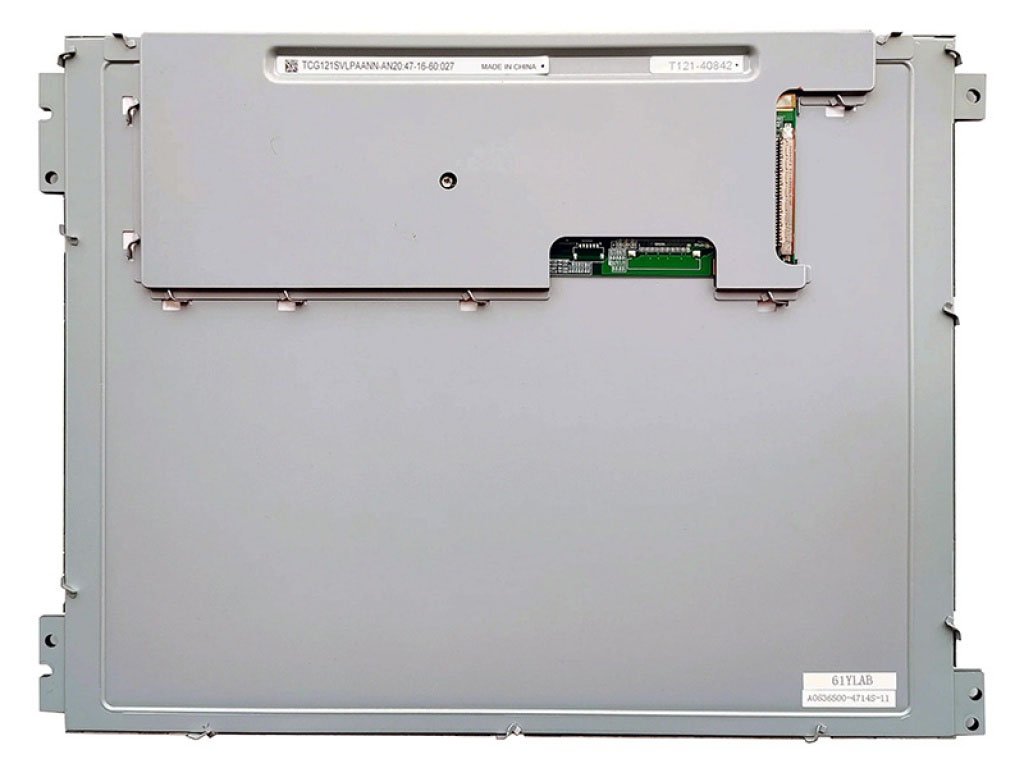
The Kyocera TCG121SVLPAANN-AN00 is a masterclass in functional engineering, where reliability trumps raw specifications. Its enduring 800x600 resolution, high luminance, wide operating temperature range, and long lifecycle support make it an ideal choice for industrial automation, medical, and transportation applications. While integration requires careful attention to LVDS pin mapping and power supply design, the resulting system stability is unmatched. For engineers designing systems that must perform flawlessly for a decade, this panel offers a proven solution that balances cost, performance, and lifespan. Prioritize thorough data sheet verification and establish a multi-year supply strategy to fully leverage its strengths in your next project.


