In the realm of industrial display technology, the challenge is rarely about raw performance in a controlled environment. The true test lies in operational extremes—where direct sunlight bleaches a standard screen into a mirror, where temperature swings cause LCD fluids to stagnate, and where the promise of outdoor readability often falls short.
In the realm of industrial display technology, the challenge is rarely about raw performance in a controlled environment. The true test lies in operational extremes—where direct sunlight bleaches a standard screen into a mirror, where temperature swings cause LCD fluids to stagnate, and where the promise of outdoor readability often falls short. This article examines the Kyocera TCG121XGLPBPNN-AN40, a 12.1-inch XGA (1024x768) display engineered specifically for such punishing conditions. Marketed as an industrial outdoor high-brightness solution, this panel represents a critical intersection of optical engineering and rugged reliability. We will dissect not just its specifications, but the underlying technologies that allow it to maintain clarity in sunlight, its mechanical resilience in variable climates, and its specific suitability for human-machine interface (HMI) applications in sectors like marine navigation, oil & gas, and outdoor kiosk systems. Understanding this display means understanding how to prioritize functional visibility over simple brightness.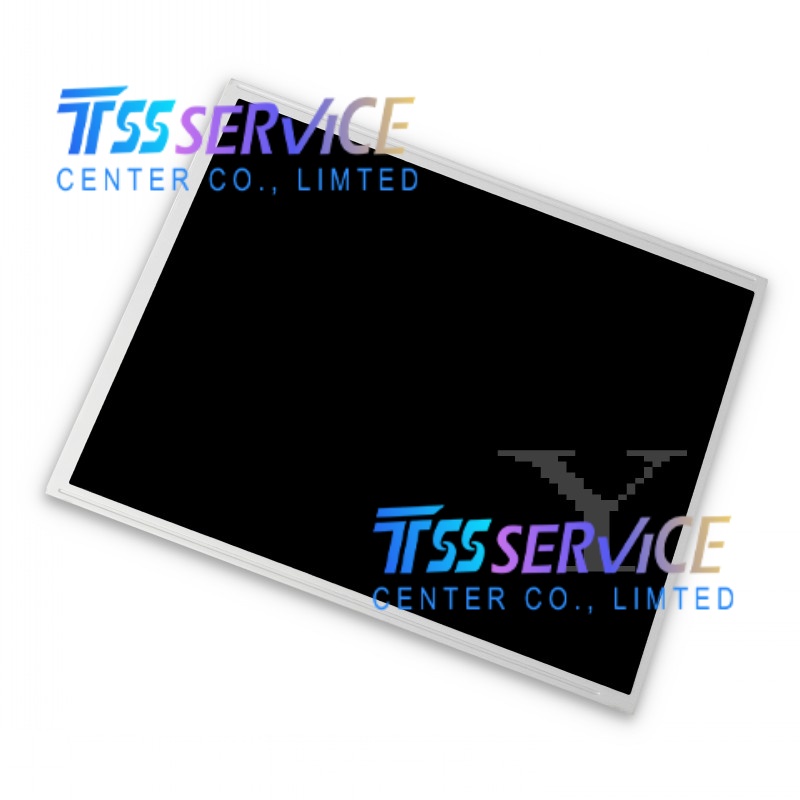
The Optical Proposition: Beyond Nit Counts
When evaluating the TCG121XGLPBPNN-AN40, the first parameter cited is typically its high brightness, often exceeding 1000 cd/m² (nits). However, a seasoned specifier knows that raw luminance alone does not guarantee readability. The Kyocera panel employs a specific backlight design—typically a white LED array—coupled with an optimized light guide plate to achieve uniform intensity across the entire 12.1-inch diagonal. Crucially, this display leverages a high-contrast ratio, often in the range of 700:1 or higher, which is far more critical for sunlight readability than peak brightness.
The surface treatment of the TCG121XGLPBPNN-AN40 is equally vital. To combat glare, Kyocera utilizes an anti-glare (AG) coating. Unlike a simple matte finish, a properly engineered AG surface diffuses reflected ambient light, preventing the formation of sharp, blinding reflections. This allows the operator to focus on the displayed content rather than fighting the environment. Furthermore, the panel supports a viewing angle of approximately 80 degrees in all directions (left/right/up/down), which is achieved through advanced In-Plane Switching (IPS) or similar VA technology. This wide latitude is non-negotiable in an outdoor industrial setting where the operator’s viewpoint changes constantly due to machine movement or mounting constraints. The optical stack is designed not to blind the user, but to provide a readable, color-accurate image that persists even when the sun is directly behind the operator.
Thermal and Structural Resilience in Harsh Environments
A high-brightness display generates significant heat. The LED backlight, while efficient, produces thermal load that must be managed to prevent luminance degradation and potential damage to the LCD cell itself. The TCG121XGLPBPNN-AN40 is designed with an extended operating temperature range, typically specified from -20°C to +70°C. Achieving this requires careful material selection, particularly for the liquid crystal mixture and the polarizer films. Standard commercial displays fail at low temperatures due to liquid crystal "freezing," which causes sluggish response times, or at high temperatures due to the polarizer delaminating. Kyocera addresses this through robust thermal management, often incorporating a metal frame or chassis that acts as a heat sink, drawing thermal energy away from the backlight and the driver ICs.
Structural toughness is another key tenet. The panel is built on a reinforced printed circuit board (PCB) and often includes mounting brackets that conform to VESA or custom industrial standards. This mechanical rigidity is essential for applications involving vibration, such as construction equipment, agricultural machinery, or marine vessels. The display’s physical construction also considers humidity and condensation. While not necessarily fully sealed, the internal components are coated or laminated to withstand high moisture environments. For the end-user, this means the TCG121XGLPBPNN-AN40 does not simply turn on in a desert heat or an arctic chill; it maintains consistent response times, stable color temperature, and reliable backlight intensity across its entire operational band. This thermal and structural design is the silent engineering that ensures the optical performance remains usable day after day.
Interface and Integration: Connecting to the Industrial Grid
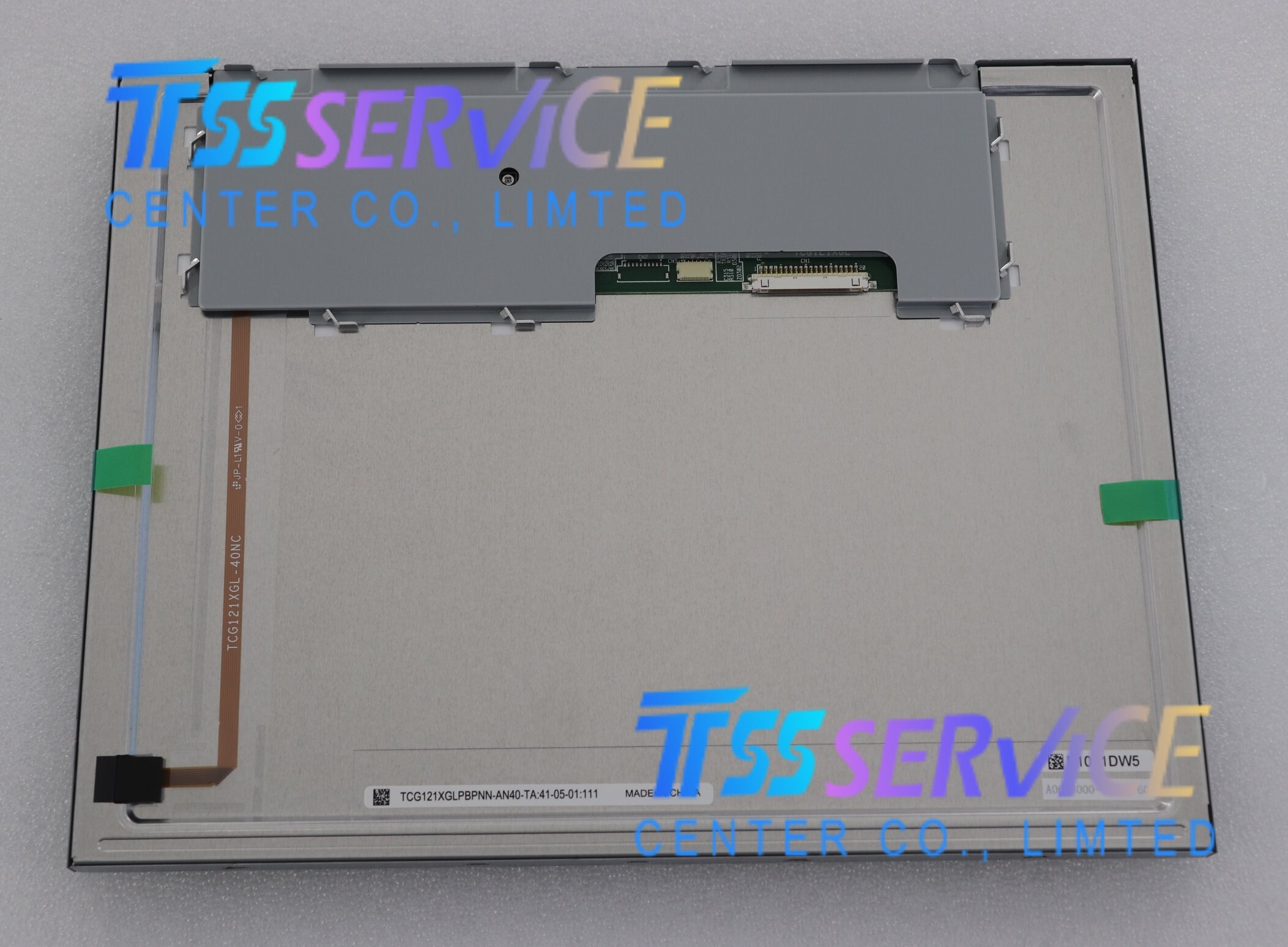
For a product to be truly valuable in the field, its electrical interface must be both standard and robust. The TCG121XGLPBPNN-AN40 typically employs a LVDS (Low-Voltage Differential Signaling) interface. LVDS is the de-facto standard for industrial displays, prized for its high data integrity over short distances and its inherent noise immunity. In an industrial setting, where electric motors, inverters, and RF transmitters create a noisy electrical environment, this interference resistance is paramount. A dropped pixel or a flickering line due to electromagnetic interference (EMI) could be catastrophic in a control system. The LVDS receiver on the Kyocera panel is designed to handle these conditions gracefully, maintaining a clean digital signal.
Beyond the signal protocol, the power consumption profile of the TCG121XGLPBPNN-AN40 is carefully considered. While its high brightness backlight draws more power than a standard indoor display, the panel is optimized for a typical input voltage of 3.3V or 5V for the logic, with a separate backlight driver. This separation allows system designers to use a dedicated, highly efficient DC/DC converter for the backlight, or to implement dynamic dimming based on ambient light sensors. Furthermore, the physical connector is typically a standard, ruggedized type, such as a 30-pin or 40-pin connector, ensuring compatibility with many off-the-shelf single-board computers and industrial motherboards. For the integrator, this means less custom cabling and a faster path to prototype and production, reducing the total cost of ownership. The electrical design of the Kyocera display is not just about passing data; it is about ensuring data integrity and power efficiency in a volatile electrical environment.
Lifecycle Management and Application Strategy
One of the most compelling reasons to select a Kyocera industrial display like the TCG121XGLPBPNN-AN40 over a commercial-grade alternative is longevity and availability. Industrial display manufacturers commit to long product lifecycles—often five, seven, or even ten years. This is critical for capital equipment manufacturers who must support their machines in the field for decades. Commercial panels are frequently discontinued and replaced, forcing costly and time-consuming re-qualification, redesign, and possibly firmware updates. The Kyocera product line provides stability in the supply chain, ensuring that replacement units or new builds can rely on the exact same optical, mechanical, and electrical characteristics year after year.
The application strategy for this display is therefore centered on scenarios where failure is not an option. In marine navigation, where screens are exposed to salt spray and direct sunlight, the AG coating and high brightness are essential. In oil and gas drilling, where vibration and extreme temperatures are a daily reality, the robust construction provides peace of mind. For outdoor payment kiosks and EV charging stations, the wide viewing angle ensures readability from various user heights and angles. The 1024x768 (XGA) resolution is a sweet spot for complex industrial graphics, providing enough pixel density for detailed diagrams and data readouts without the cost and processing overhead of WUXGA or higher resolutions. Choosing this panel is a strategic decision to prioritize operational uptime over initial cost savings, making it an ideal component for mission-critical outdoor interfaces.
The Kyocera TCG121XGLPBPNN-AN40 is far more than a high-nit panel; it is a meticulously engineered system of optical, thermal, and electrical subsystems designed for uncompromised visibility and reliability in the outdoor industrial arena. Its strength lies not in any single feature, but in the balanced integration of anti-glare technology, a broad operating temperature range, robust LVDS interfacing, and a guaranteed long lifecycle. For the engineer or procurement specialist, this display represents a calculable reduction in risk—the risk of failure in the field, the risk of a fading screen under the midday sun, and the risk of early obsolescence. In the demanding world of industrial HMI, this Kyocera panel stands as a testament to the philosophy that what truly matters is not just seeing the screen, but seeing the critical data you need, when you need it most.


