In a world where digital and physical spaces increasingly intertwine, the very surfaces around us are becoming dynamic canvases for information. Kyocera Corporation, a global leader in ceramics and electronics, has unveiled a groundbreaking display technology that fundamentally reimagines the interface between screens and their environment. This innovation features
switchable transparency, allowing a single panel to seamlessly transition between a vibrant, full-color display and a transparent window.
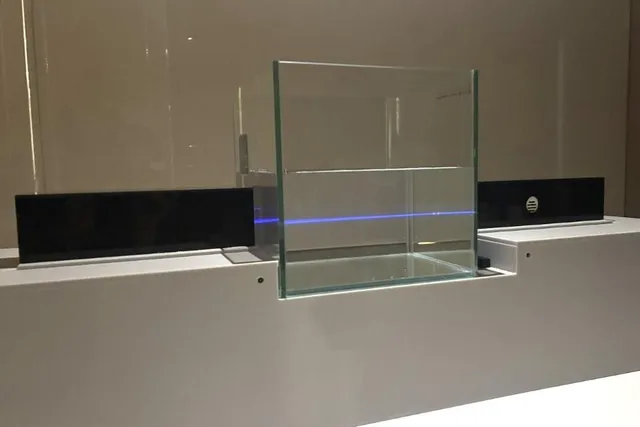
This development is far more than a simple technical curiosity; it represents a paradigm shift for commercial applications and personal privacy. By merging the functionalities of a high-quality digital sign and a clear pane of glass, Kyocera's technology opens new avenues for retail, corporate, automotive, and architectural design. This article delves into the mechanics of this transformative technology, explores its immediate commercial potential, examines its profound implications for privacy and user experience, and considers its broader impact on future interactive environments.
The Science Behind the Switch: How Transparency Becomes Dynamic
At the core of Kyocera's breakthrough is a sophisticated manipulation of light and liquid crystal technology. Unlike conventional displays that are always opaque or always transparent, this system integrates a special
polymer-dispersed liquid crystal (PDLC) layer or an advanced electrochromic element. In its default "off" state, the microscopic particles within the layer are randomly scattered, effectively scattering incoming light and rendering the panel translucent or opaque. When an electrical current is applied—the "on" state—these particles align uniformly, allowing light to pass through directly and creating a transparent window.
The true engineering feat lies in seamlessly combining this switchable layer with a high-resolution, full-color LCD display unit. The system is meticulously calibrated to ensure that when the display is active, images remain bright, crisp, and visible even in well-lit conditions. When transparency is desired, the display can be deactivated, and the panel clears, offering an unobstructed view. This dual-state capability is controlled instantaneously, enabling dynamic applications that respond to context, user interaction, or pre-programmed schedules.
Transforming Commercial Spaces: Retail, Hospitality, and Beyond
The commercial implications of switchable transparency are immediate and vast. In retail, storefront windows can by day be transparent, inviting shoppers to look in, then transform into high-impact promotional video screens by night, maximizing advertising real estate. Within stores, product display cases can switch from clear glass highlighting the merchandise to interactive screens providing detailed specifications, reviews, or pricing.
The hospitality and corporate sectors stand to benefit significantly. Conference room glass walls can offer privacy on demand during sensitive meetings, then become transparent to promote an open atmosphere or transform into collaborative digital whiteboards. In restaurants, menu boards can disappear when not needed, preserving aesthetic design, or become transparent partitions that offer diners privacy without a closed-off feeling. This technology turns static architectural elements into adaptive, multi-functional assets, enhancing both utility and engagement.
Redefining Privacy and User-Centric Design
Beyond commercial spectacle, this technology addresses a growing demand for contextual privacy in an always-connected world. For personal devices or office workstations, a screen could become opaque only in the specific area where sensitive information is displayed, while the rest remains transparent—a concept known as selective privacy. This allows for situational awareness and a connection to one's surroundings without compromising data security.
This capability pioneers a more human-centric approach to device interaction. It reduces the intrusive, always-on nature of traditional black screens, allowing technology to recede into the background when not actively needed. In automotive applications, a heads-up display or central console could appear only when necessary, otherwise leaving the driver's view completely unobstructed. This philosophy of ambient intelligence—where technology serves without dominating—is a key value proposition, reducing visual clutter and digital fatigue.
The Future Canvas: Architectural Integration and Smart Environments
Looking forward, Kyocera's technology points toward a future where display surfaces are fully integrated into the fabric of buildings and objects. Imagine entire office building facades that change from glass to giant communication displays based on the time of day, or smart home windows that are clear in the morning but project the day's news or weather forecast over breakfast. The line between structure and screen dissolves.
This evolution will be powered by convergence with IoT sensors and AI. A display could automatically switch to transparent when it detects someone approaching, or become an informational overlay in a museum when a visitor stops in front of an artifact. The environment itself becomes responsive and communicative. While challenges around cost, scalability, and energy efficiency for large-scale deployments remain, the foundational technology establishes a new template for interactive architecture, setting the stage for environments that are not just smart, but perceptive and adaptive.


