In the relentless drive of Industry 4.0, the human-machine interface (HMI) is far more than a simple control panel; it is the critical nexus of data visualization, real-time decision-making, and human-operator interaction. As factories become smarter and environments more demanding, the robustness and responsiveness of these interfaces directly impact operational efficiency and uptime.
In the relentless drive of Industry 4.0, the human-machine interface (HMI) is far more than a simple control panel; it is the critical nexus of data visualization, real-time decision-making, and human-operator interaction. As factories become smarter and environments more demanding, the robustness and responsiveness of these interfaces directly impact operational efficiency and uptime. Recognizing this imperative, Kyocera has announced significant upgrades to its industrial HMI display series, placing a sharp focus on enhanced touch sensitivity and unmatched durability.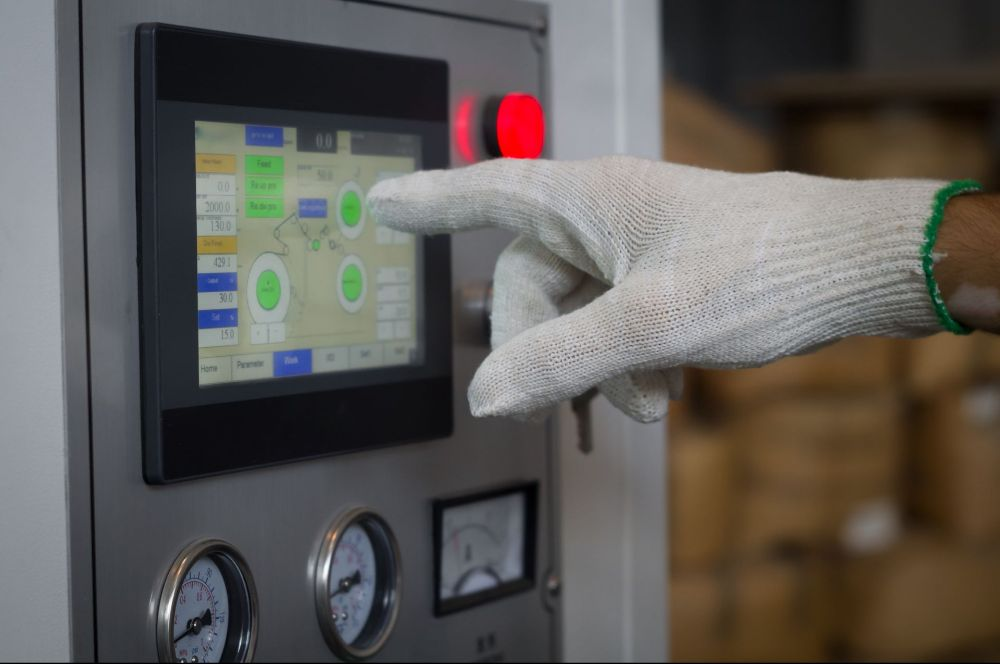
This evolution addresses the growing chasm between the need for intuitive, consumer-grade touch experiences in industrial settings and the requirement for hardware that can survive extreme conditions. This article delves into the technological advancements behind Kyocera's upgraded displays, exploring how they are engineered to meet the rigorous demands of modern automation, empower the workforce, and serve as a future-proof foundation for the connected factory floor.
Engineering Resilience: The Foundation of Uncompromising Durability
At the core of Kyocera's upgrade philosophy is the understanding that an HMI is a long-term investment operating in a hostile environment. The enhanced durability of these displays is not a single feature but a system-wide engineering achievement. The front panels now integrate chemically strengthened glass with superior resistance to scratches, impacts, and harsh chemicals commonly found in manufacturing, food processing, or outdoor applications. This directly combats a primary cause of HMI failure and costly downtime.
Beyond the surface, the displays are built to withstand extreme temperatures, humidity, and vibration—conditions that would cripple standard commercial touchscreens. This resilience is achieved through meticulous component selection, robust sealing (often meeting IP65 or higher ratings for dust and water ingress protection), and a design ethos that prioritizes longevity over cost-cutting. This durability ensures continuous operation in settings from automotive assembly lines with constant vibration to refrigerated warehouses, making the HMI a reliable constant in a variable and punishing physical world.
Beyond the Glove: The Nuance of Enhanced Touch Sensitivity
While durability ensures the HMI survives, enhanced touch sensitivity is what makes it genuinely usable and efficient for a diverse workforce. Kyocera's advancements here move beyond mere "touch" to create a more intuitive and inclusive interaction layer. The upgraded series employs advanced projected capacitive (PCAP) technology fine-tuned for industrial scenarios. This allows for highly accurate and responsive touch registration, even when operators are wearing thick work gloves—a non-negotiable requirement for safety in countless industrial settings.
Furthermore, the improved sensitivity mitigates issues from screen contaminants like light moisture, dust, or grease. It enables reliable multi-touch gestures (like pinch-to-zoom on a complex schematic), facilitating quicker navigation and decision-making. This human-centric design reduces operator fatigue, minimizes input errors, and shortens training time. By bridging the gap between consumer-grade touch expectations and industrial ruggedness, Kyocera is empowering workers to interact with complex machinery as seamlessly as they do with their personal smartphones, thereby enhancing overall productivity and user adoption.
The Strategic HMI: A Conduit for Data and Industry 4.0 Integration
The true value of these physical upgrades is fully realized when the HMI is viewed as a strategic data conduit, not an isolated terminal. Kyocera's robust and sensitive displays are engineered to be the perfect visual and interactive endpoint for the data deluge characteristic of Industry 4.0. Their reliability ensures a constant, clear window into IoT sensor networks, machine performance analytics, and production dashboards.
This integration capability is key. These HMIs can seamlessly connect with PLCs, SCADA systems, and MES/MOM platforms, visualizing real-time Key Performance Indicators (KPIs), predictive maintenance alerts, and digital work instructions. The enhanced touch interface allows operators to not just monitor, but to interact with this data—acknowledging alerts, adjusting parameters, or accessing augmented reality troubleshooting guides. Thus, the upgraded HMI transforms from a simple control point into an intelligent hub that facilitates data-driven decisions, supports predictive operations, and strengthens the feedback loop between the physical production floor and the digital twin, cementing its role as an indispensable component in the smart factory ecosystem.
Kyocera's strategic upgrades to its industrial HMI display series represent a significant leap in aligning physical hardware with the digital ambitions of Industry 4.0. By masterfully combining engineered durability with refined touch sensitivity, they have created interfaces that are built to last and designed to be used effortlessly. This dual focus ensures operational resilience in the harshest environments while empowering a modern workforce with intuitive control. Ultimately, these displays evolve into more than mere panels; they become reliable, interactive portals that bridge human intuition with machine intelligence, driving efficiency, minimizing downtime, and providing a solid foundation for the continuously evolving connected enterprise.


