Imagine a dance floor that sees, feels, and responds. The integration of intelligent LED floor tiles into the modern dance studio transcends mere lighting, creating a dynamic biomechanical canvas. This article delves into how this transformative technology, coupled with real-time feedback on step force and rhythm, is revolutionizing dance training. We will explore its impact from foundational skill development to artistic expression, examining how data-driven insights are empowering dancers and instructors to achieve unprecedented levels of precision, performance, and creativity in a truly interactive environment.
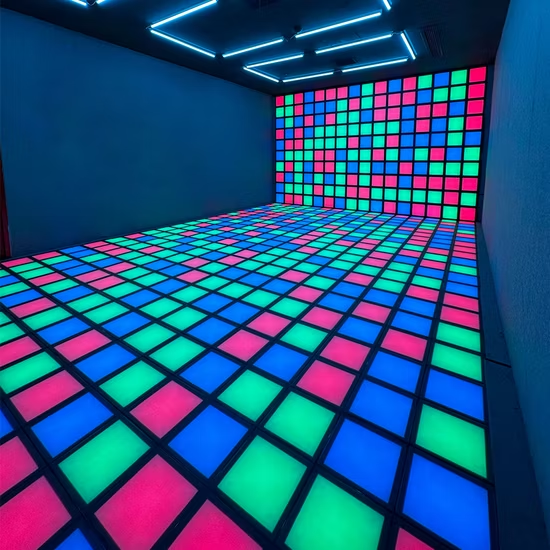
The Interactive Canvas: Beyond Static Floors
The traditional dance studio floor is passive—a surface to be acted upon. Intelligent LED floor tiles fundamentally redefine this relationship. Each tile is a pressure-sensitive panel embedded with sensors and responsive LEDs, turning the entire floor into an active, communicative interface. When a dancer steps, jumps, or glides, the tiles detect the exact location, duration, and intensity of the contact. This data is instantly processed, triggering visual feedback through dynamic light patterns that flow, burst, or change color in direct response to movement.
This creates a profound shift in training psychology. The floor is no longer silent; it provides an immediate, visceral connection between action and reaction. Dancers no longer just feel their movement internally; they see it manifested beneath their feet, making abstract concepts like rhythm, weight distribution, and spatial awareness tangibly visible. This transforms practice into an engaging dialogue with the performance space itself.
Decoding Movement: The Science of Step Force Analysis
At the core of this technology lies sophisticated step force analysis. The sensors within the tiles measure the vertical ground reaction force—the literal impact of a dancer’s body on the floor. This data is invaluable for technical precision. Instructors and dancers can visualize imbalances: Is the weight correctly centered during a pirouette? Is the push-off for a leap symmetrical? A heavier, red-hued flash on one foot versus a lighter, blue touch on the other provides instant, objective feedback.
This moves correction beyond subjective observation. It allows for the identification of subtle, habitual flaws that may lead to inefficiency or injury over time. By quantifying force, dancers can work methodically to distribute energy evenly, cultivate a lighter landing to reduce joint stress, and develop the powerful, controlled footwork essential for both ballet and high-impact contemporary styles. It brings the precision of a sports science lab directly into the creative studio.
The Rhythm Architect: Real-Time Tempo and Timing Feedback
While force analysis perfects technique, the system’s ability to track rhythm refines musicality. The tiles act as a metronome brought to life, analyzing the timing and consistency of each step against a programmed or imported musical score. Dancers can see if they are rushing a syncopated phrase in tap, lagging behind the beat in hip-hop, or maintaining the steady, even rhythm required for a waltz.
Visual cues can be set to highlight on-beat steps, flag late landings, or create sequences that must be followed in perfect time. This trains the dancer’s internal clock with unparalleled accuracy. It transforms rhythm from an abstract auditory skill into a concrete, visual-spatial task. For groups, it ensures absolute synchrony, as every member can see and align their movements to the same visual pulse emanating from the floor, achieving a new level of cohesive ensemble performance.
Transforming Pedagogy: A New Role for the Dance Instructor
This technology does not replace the instructor; it amplifies their expertise. The instructor evolves from being the sole source of feedback to a data-informed coach and curator. They can use the visualizations to quickly pinpoint common issues across a class or design exercises that target specific skills, such as light allegro footwork or sustained adagio control. The objective data helps in communicating corrections more clearly, removing ambiguity.
Furthermore, it allows for personalized training within a group setting. While one dancer works on balancing force distribution, another can focus on complex rhythm patterns, all on the same intelligent floor. The instructor can record sequences, replay them with data overlays, and track a student’s progress quantitatively over weeks or months, adding a powerful longitudinal assessment tool to their pedagogical arsenal.
From Rehearsal to Performance: Enhancing Artistic Expression
The application extends beyond technical training into the realm of pure artistry. Choreographers can use the LED tiles as an integral element of performance, where movement directly generates and manipulates the visual environment. A delicate step might ripple light like water, while a powerful stomp could trigger a wave of color radiating outward. This creates a deeply immersive experience for both performer and audience.
Dancers become co-creators of the visual spectacle, their choreography dictating the lighting narrative in real time. This fosters a heightened sense of presence and artistic agency. It encourages exploration of how movement qualities—sharp versus smooth, heavy versus light—can translate into different visual languages, pushing the boundaries of interdisciplinary performance and opening new avenues for creative storytelling.
Prevention and Longevity: The Injury Mitigation Advantage
A critical, often overlooked benefit is injury prevention. The repetitive impact of dance places significant stress on the body. The real-time force feedback system serves as an early warning mechanism. Consistently asymmetric landing patterns or excessively high impact forces are clearly flagged, allowing dancers and instructors to address biomechanical issues before they lead to chronic overuse injuries like stress fractures, tendonitis, or joint problems.
By promoting healthier movement patterns, the technology supports a dancer’s career longevity. It encourages mindfulness about how one moves, not just what moves are performed. Training with an awareness of force distribution builds resilience. This proactive, data-supported approach to dancer health represents a paradigm shift, aligning elite dance training with the best practices in athletic sports science and physiotherapy.
The installation of interactive LED floor tiles in dance studios marks a pivotal convergence of art and technology. By providing real-time, objective feedback on step force and rhythm, this innovation elevates technical training, enriches artistic expression, and safeguards dancer health. It empowers dancers with immediate insight, equips instructors with powerful analytical tools, and ultimately creates a more responsive, engaging, and intelligent training environment. This is not merely a new floor; it is a transformative partner in the relentless pursuit of dance excellence, turning every step into a source of knowledge and every routine into a dialogue with light and data.


