In the quest for sustainable and efficient food production, a groundbreaking innovation is taking center stage: smart LED lighting systems engineered specifically for horticulture.
In the quest for sustainable and efficient food production, a groundbreaking innovation is taking center stage: smart LED lighting systems engineered specifically for horticulture. This article delves into a transformative solution that promises to revolutionize indoor and vertical farming. We explore a smart plant-growing LED technology reported to slash the lettuce growth cycle by an astounding 40%. This isn't merely about brighter lights; it's about intelligent spectral control, adaptive systems, and data-driven cultivation. By manipulating light recipes with precision, this technology unlocks new potentials in yield, consistency, and resource management, addressing critical challenges of modern agriculture.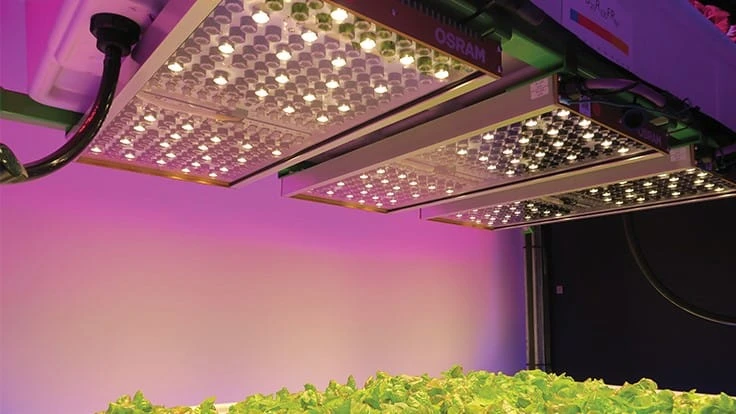
Beyond simple illumination, this advancement represents a fundamental shift towards photon farming, where light is a primary, tunable input for plant biology.
The Science of Spectral Precision: More Than Just Light
Traditional growing lights often provide a broad, static spectrum, wasting energy on wavelengths plants don't efficiently use. The core of this smart LED solution lies in its spectral precision. Plants utilize specific light wavelengths for different physiological processes: blue light regulates morphology and compact growth, while red light drives photosynthesis and biomass accumulation. Far-red light, often overlooked, can influence stem elongation and flowering responses.
This system employs narrow-band LEDs that can be meticulously blended to create optimal "light recipes" for each crop stage. For lettuce, this might mean:
-
A blue-dominant recipe during the seedling phase to produce sturdy, compact plants.
-
A shift to red-enhanced spectra during the vegetative growth stage to maximize leaf expansion and weight.
-
Subtle inclusions of far-red to potentially accelerate the transition to harvest-ready maturity.
By delivering only the photons the plant can use at the right time, energy efficiency skyrockets while providing the exact cues needed to accelerate development without compromising quality or taste.
Intelligence in Illumination: The Role of Adaptive Control Systems
Precision spectra are powerful, but their impact is magnified by integrated smart technology. These are not "set-and-forget" fixtures. Modern smart LED grow systems are embedded with sensors and connectivity, transforming them into active participants in the cultivation environment. They can dynamically adjust their output based on real-time data, creating a truly adaptive growth platform.
Key features of this intelligent layer include:
-
Light Intensity Modulation: Automatically adjusting PPFD (Photosynthetic Photon Flux Density) to maintain ideal levels throughout the day or in response to ambient light from other sources.
-
Photoperiod Automation: Precisely controlling the duration of light and dark periods to optimize plant circadian rhythms and growth stages.
-
Environmental Integration: Syncing with climate control systems (e.g., HVAC, CO2 injection). For instance, increasing light intensity only when sufficient CO2 is available to support the heightened photosynthetic rate, preventing resource waste.
This closed-loop, data-driven approach ensures plants receive not just perfect light, but perfect light in context, which is crucial for reliably achieving the reported 40% cycle reduction.
Transforming Agriculture: Impacts Beyond Faster Growth
The implications of cutting a growth cycle by 40% extend far beyond speed. This efficiency breakthrough cascades into significant operational, economic, and environmental benefits, reshaping the business case for controlled environment agriculture (CEA).
The primary impacts are multi-faceted:
-
Radical Productivity Gains: Nearly 40% more harvests per year in the same physical space. This dramatically improves land-use efficiency and output predictability, crucial for supply chain stability.
-
Resource Conservation : Although LEDs are inherently efficient, shortening the growth cycle reduces the total energy, water, and nutrient consumption per harvest. Water recycling in closed systems compounds these savings.
-
Enhanced Food Security & Quality: It enables local production in urban centers or regions with harsh climates, reducing food miles. Consistent, optimized light minimizes plant stress, leading to more uniform, potentially more nutritious, and pesticide-free produce year-round.
This technology makes high-density, local farming ventures more viable and profitable, supporting a resilient and decentralized food system less vulnerable to external disruptions.
In conclusion, the smart plant-growing LED solution that reduces lettuce growth cycles by 40% is a paradigm shift, moving from passive lighting to active, biological optimization. By mastering spectral precision and integrating adaptive intelligence, it unlocks unprecedented efficiency and control in agriculture. The result is a powerful tool that boosts productivity, conserves vital resources, and strengthens local food networks. This innovation is not just about growing lettuce faster; it's about cultivating a more sustainable and secure future for food production worldwide.


