In a bold move that redefines the frontiers of live entertainment, a recent landmark concert debuted a revolutionary
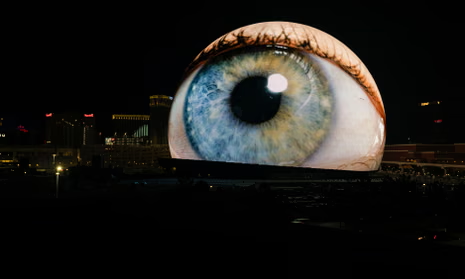
liftable spherical LED screen. This technological marvel did not merely serve as a backdrop but transformed into a dynamic, immersive celestial body at the heart of the performance. This article delves into this groundbreaking innovation, exploring how it merges cutting-edge engineering with artistic vision to create breathtaking
planet visuals. We will examine its technical underpinnings, its transformative impact on audience experience, and the new creative paradigm it establishes for performers and production designers, signaling a pivotal shift from flat displays to enveloping, three-dimensional storytelling.
The Genesis of a Spherical Vision: Beyond the Flat Canvas
For decades, concert visuals have been constrained by the two-dimensional plane of traditional LED walls and projection surfaces. While these have grown in size and resolution, they remain essentially windows into a digital world, not objects within our own. The conceptual leap to a spherical, liftable screen represents a fundamental break from this paradigm. The vision was to create a stage element that is itself a sculptural entity—a celestial body that can rise, fall, rotate, and become the central protagonist of the show. This shift from backdrop to performative architecture required solving immense challenges in structural engineering, pixel mapping on a curved surface, and seamless mechanical integration, all while ensuring the screen's presence enhances rather than overshadows the human performer.
Engineering the Impossible: Mechanics and Pixel Mapping
The realization of this vision rests on two pillars of advanced engineering. First, the lift mechanism must be utterly reliable and silent, capable of precise, fluid movements mid-performance to dynamically alter the stage's spatial composition. Second, and more complex, is the spherical pixel mapping. Unlike a flat panel, a sphere requires specialized software to warp and correct content so that it appears geometrically perfect from every audience sightline. Each LED module must be individually addressed to account for curvature, preventing distortion of the planetary visuals. This involves sophisticated real-time rendering engines that treat the sphere as a 360-degree canvas, allowing for visuals that seamlessly wrap around its form, creating a convincing illusion of a rotating planet or nebula.
Crafting the Cosmic Narrative: Content Creation for 3D Space
This new canvas demands an entirely new approach to content creation. Artists and VFX designers can no longer think in terms of rectangular frames. Instead, they must conceive stories and imagery for a volumetric object. Content for the spherical screen is designed to exploit its shape: galaxy swirls envelop it completely, planetary surfaces reveal continents as it turns, and abstract patterns pulse from its core. The narrative becomes spatial. A performer standing beside or within the sphere interacts with a visual environment that has real depth and dimension. This empowers directors to choreograph not just dance moves, but a symbiotic relationship between artist and a responsive, visual planet, deepening the thematic resonance of the music.
The Audience Experience: Total Immersion and Emotional Impact
The ultimate test of this technology is its impact on the audience. A flat screen, no matter how large, keeps viewers as external observers. A glowing, moving sphere in the center of the arena creates a profound sense of shared presence. It becomes a tangible object in the collective space, around which the energy of the crowd coalesces. The immersion is psychological and emotional; witnessing a "planet" rise during a climactic song fosters awe and a visceral connection to the music's scale and theme. This shared, awe-inspiring experience breaks the fourth wall, making the audience feel they are not just watching a show, but witnessing a cosmic event, thereby dramatically amplifying memorability and emotional engagement.
Redefining Stage Design and Artistic Expression
The liftable sphere is more than a screen; it is a transformative tool for stage design. It introduces verticality and dynamic topology to the stage, allowing for a show that evolves in its physical structure. Set designers now have a kinetic sculpture to incorporate into their layouts. For the artist, it offers unprecedented metaphorical power. The sphere can represent a personal world, a globe, a celestial guide, or a pulsing heart, depending on the song. This versatility unlocks new layers of artistic expression, enabling performers to physically interact with the visual metaphor of their music, creating powerful, iconic moments that define their tour's visual legacy.
The Future Horizon: Applications and Industry Evolution
The debut of this technology at a concert is merely the beginning. Its implications ripple across multiple industries. In live events, we can expect variations in size and configuration for theaters, award shows, and corporate launches. Beyond entertainment, imagine its application in planetariums for ultra-immersive education, in museum exhibits as a dynamic centerpiece, or in high-end retail for brand storytelling. The technology demonstrates a clear industry trajectory: the future of visual display is multi-dimensional, interactive, and sculptural. It pushes competitors and creators alike to think beyond the rectangle, accelerating innovation towards fully immersive, environment-based experiences.
The debut of the liftable spherical LED screen marks a watershed moment in live production, successfully transitioning visual storytelling from a flat plane into a captivating, three-dimensional realm. By solving profound engineering and creative challenges, it has delivered an unparalleled tool for immersion, placing a dynamic, visual planet at the emotional core of the audience experience. This innovation redefines the roles of stage design and content creation, offering artists a powerful new medium for expression. As this technology evolves and proliferates, it promises to elevate not only concerts but a wide array of experiential domains, firmly establishing that the future of spectacle is spherical, dynamic, and deeply immersive.


