In the demanding landscape of industrial automation and embedded systems, the choice of a display module is rarely about aesthetics; it is a critical decision that impacts operational efficiency, user safety, and system longevity. While consumer electronics chase high-resolution color vibrancy
In the demanding landscape of industrial automation and embedded systems, the choice of a display module is rarely about aesthetics; it is a critical decision that impacts operational efficiency, user safety, and system longevity. While consumer electronics chase high-resolution color vibrancy, the industrial sector often demands a different set of virtues: durability, clarity under direct sunlight, and extreme operational reliability. The LMBHAT014G4C, a 5.4-inch monochrome LCD panel with a resolution of 240*128 pixels, stands as a testament to this specialized design philosophy. This article delves beyond the basic specifications of this specific display, exploring its architectural rationale, its suitability for harsh environments, the integration challenges it presents to engineers, and its strategic value in modern control systems. We will unpack why a seemingly "low-resolution" display remains a cornerstone in factories, medical devices, and transportation hubs, offering a blend of simplicity and ruggedness that high-definition alternatives often fail to match.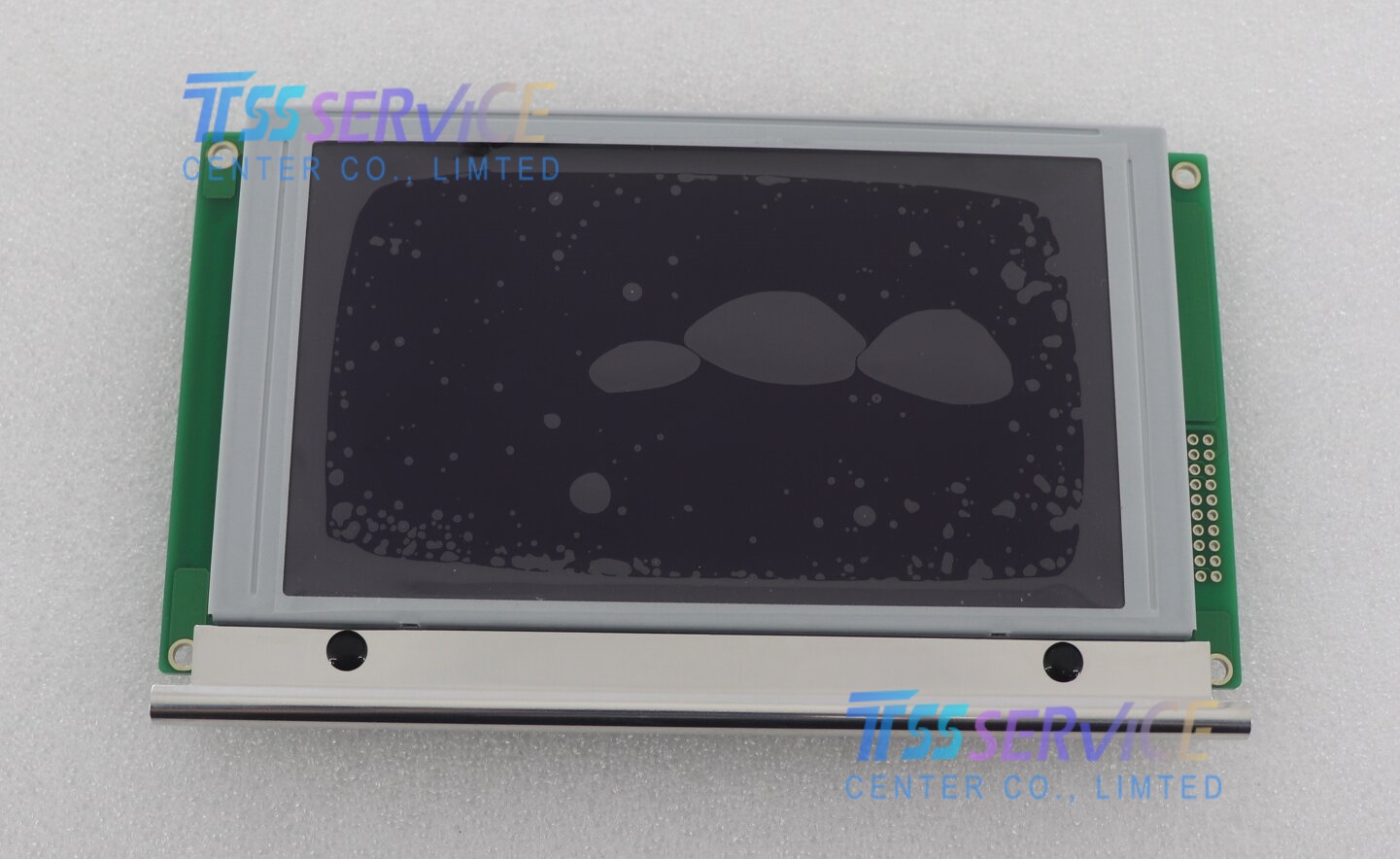
The Architectural Rationale: Why 240x128 Resolution Still Dominates Industrial Logic
The first question many observers ask is why a 5.4-inch display would be limited to 240x128 pixels in an era of 4K panels. The answer lies in the fundamental trade-off between information density and operational clarity. In an industrial context, an operator does not need to view a photograph; they need to read a pressure gauge, a temperature readout, or a system status command from across a factory floor or while wearing gloves. The LMBHAT014G4C is engineered for this specific use case. Its larger pixel size, dictated by the low resolution on a 5.4-inch diagonal, ensures that characters and symbols are rendered with substantial stroke width. This reduces eye strain during prolonged shifts and eliminates the need for operators to squint against glare.
Furthermore, the architecture of this panel is typically based on STN (Super Twisted Nematic) or FSTN (Film Compensated STN) technology. This is a deliberate choice. Unlike active matrix TFT-LCDs, which require constant voltage refresh to maintain an image, passive matrix STN displays are exceptionally power-efficient. They can hold a static image with minimal current draw, making them ideal for battery-backed or power-sensitive industrial terminals. The yellow-green or gray background, standard for these panels, is not a relic of the past; it offers superior contrast in high ambient light conditions compared to glossy color screens. For an engineer designing a system that must fail gracefully, this display architecture provides a predictable, low-latency interface that is immune to the common problem of image tearing seen in faster refresh-rate panels.
Surviving the Trenches: Thermal Tolerance, Shock Resistance, and Longevity
Perhaps the most compelling argument for the LMBHAT014G4C is its ability to thrive where consumer-grade displays fail. The industrial environment is rife with threats: extreme temperatures from -20°C to +70°C or wider, mechanical vibration from heavy machinery, and electrical noise from power lines. This specific panel is typically built with a broader temperature range IC and a robust polarizer that resists delamination under thermal cycling. Unlike color TFTs that use rapidly degrading backlights (CCFL or LED edge strips) requiring complex inverters, the backlight system of the LMBHAT014G4C is often a simple, single LED array or a robust CCFL tube designed for high mean time between failures (MTBF).
Maintenance and repair are also key factors. In a factory, downtime is the enemy of profit. If a color touchscreen fails, the entire HMI unit must often be replaced at great cost. The LMBHAT014G4C, however, is typically a component-level module. It connects to a controller board via a standard parallel interface (e.g., 8080 or 6800 protocol) or an SPI bus. This modularity means that if the display panel becomes physically cracked or the backlight dims, a technician can replace only the display module, leaving the expensive main logic board intact. This repairability drastically reduces the total cost of ownership over a decade-long industrial lifecycle. Moreover, its monochrome nature makes it inherently resistant to the "sunburn" effect s
een in color screens where UV light degrades the color filters over time, maintaining consistent readability for years.
Integration Deep Dive: Interfacing, Controller Selection, and Firmware Considerations
Integrating the LMBHAT014G4C into a custom embedded system requires a clear understanding of its technical demands. The display is a passive device; it requires an external controller or a direct connection to a microcontroller's GPIO pins. The 240x128 resolution maps to a frame buffer of 30,720 bytes (240*128/8 for a 1-bit monochrome display). This is a manageable size for a mid-range ARM Cortex-M series or even an 8-bit microcontroller with sufficient RAM. The developer must write a driver to handle the raster addressing, taking into account the column and page mapping typical of these displays.
-
Interface Protocol: The most common interface is a 8-bit parallel bus, which offers high speed but uses many pins. For space-constrained designs, an SPI interface is preferred, though it requires careful timing management for frame updates.
-
Contrast and Temperature Compensation: A critical firmware task is managing the display's contrast. The liquid crystal's viscosity changes with temperature. A robust design uses a thermistor to read the ambient temperature and dynamically adjust the bias voltage (V0) via a digital potentiometer. Failure to do so results in a display that is either too faint or too dark as the day warms up.
-
Backlight Management: The LED backlight is typically driven by a constant current source. PWM (Pulse Width Modulation) control can be implemented for dimming, but the frequency must be chosen carefully (above 200 Hz) to avoid visible flicker that can cause operator headaches.
Engineers must also consider the physical mounting. The LMBHAT014G4C often comes with metal bezels or mounting holes designed for panel-mount installation. The use of a gasket is recommended to prevent dust and moisture ingress. When selecting a mating connector, a 2.54mm pitch header is standard, but designers should verify the pinout documentation to avoid reverse-voltage damage, which can instantly kill the driver IC.
Strategic Value and Conclusion
In conclusion, the LMBHAT014G4C is far more than an outdated component; it is a strategic asset for systems designed around the principles of reliability, repairability, and clarity of function. Its 240x128 resolution is not a limitation but a deliberate optimization for legibility at a distance, while its monochrome STN technology offers inherent advantages in power efficiency and viewing angle stability over color alternatives. The true value lies in its modularity and thermal resilience, allowing it to function in environments that would quickly destroy a smartphone-grade screen, and its ease of integration with common microcontrollers makes it accessible for bespoke industrial designs. When your priority is a rock-solid interface that works reliably for two decades in a dusty, vibrating factory, the LMBHAT014G4C proves that the best


