In the intricate world of electronic design, the choice of a display module is far more than a simple specification check. It is a critical decision that influences user experience, power efficiency, system architecture, and ultimately, the success of the product itself. This article delves deep into the LQ057Q3DC12, a 5.7-inch LCD panel from Sharp, renowned for its clarity and reliability.
In the intricate world of electronic design, the choice of a display module is far more than a simple specification check. It is a critical decision that influences user experience, power efficiency, system architecture, and ultimately, the success of the product itself. This article delves deep into the LQ057Q3DC12, a 5.7-inch LCD panel from Sharp, renowned for its clarity and reliability. We will move beyond the basic datasheet parameters of 320(RGB)×240 resolution to explore what makes this component a compelling choice for engineers and product developers.
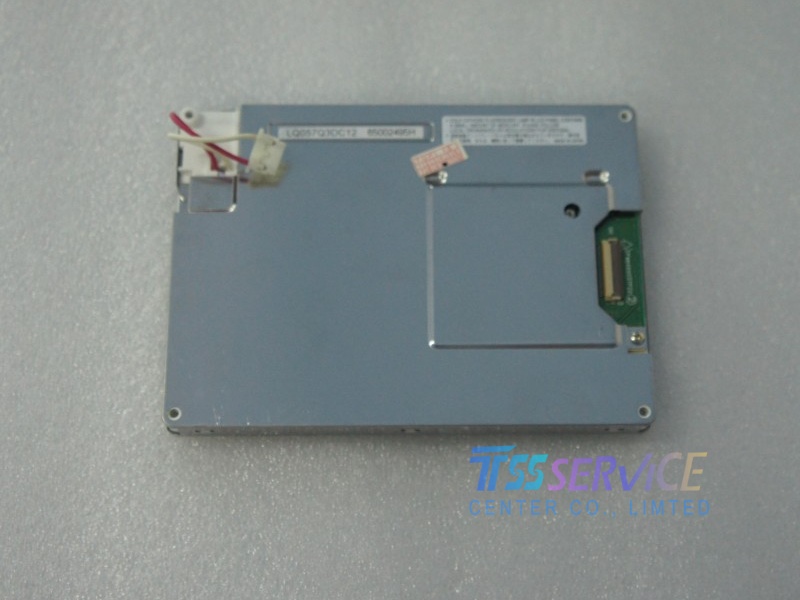
Our analysis will systematically uncover the panel's core technological advantages, its practical integration considerations, the specific application landscapes it is designed to dominate, and a forward-looking perspective on its role in the evolving market. This journey is designed to provide not just information, but actionable insights for selecting the optimal display solution.
Unpacking the Sharp Advantage: Core Technology and Visual Performance
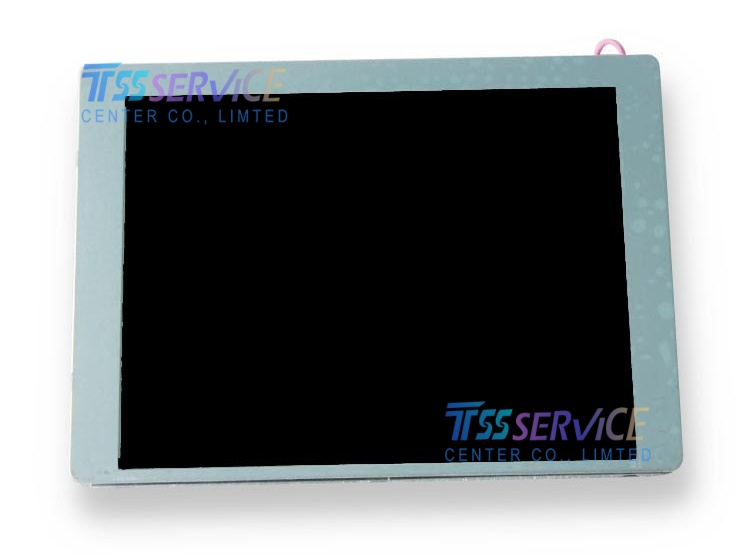
At first glance, the 5.7-inch diagonal and QVGA (320x240) resolution of the LQ057Q3DC12 might seem conventional. However, the value is profoundly embedded in its lineage and execution. As a Sharp LCD panel, it inherits a legacy of high-quality silicon and manufacturing precision. The "RGB" stripe designation is crucial, indicating a standard, full-color pixel arrangement that ensures excellent color reproduction and compatibility with common controller interfaces.
The panel utilizes a transmissive TFT-LCD technology, providing bright, high-contrast imagery that remains readable under various lighting conditions. Its 18-bit color depth (262K colors) offers a rich palette for detailed graphical user interfaces (GUIs), icons, and data visualization. Key performance metrics such as luminance, contrast ratio, and viewing angles are engineered to meet rigorous industrial and commercial standards, ensuring consistency and durability. This foundation of reliable visual performance is the first pillar supporting its widespread adoption.
Beyond the Screen: Integration and System Design Considerations
Selecting a display is an exercise in system engineering. The LQ057Q3DC12 excels here by simplifying integration challenges. It features a standard LVDS (Low-Voltage Differential Signaling) interface, which is a significant advantage for reducing electromagnetic interference (EMI) and ensuring stable data transmission over longer cable lengths within a device. This makes it suitable for complex embedded systems where the main PCB may not be adjacent to the display.
Designers must also consider the mechanical footprint, including the active area and overall outline dimensions, as well as the mounting method. The panel's power consumption profile is another critical factor, impacting battery life in portable devices and heat dissipation. Furthermore, integrating this display requires a compatible controller (often an SoC with an LVDS transmitter) and careful PCB layout to maintain signal integrity. Understanding these interdependencies is key to a smooth development cycle and a robust final product.
Ideal Application Landscapes: Where This Panel Excels
The specifications and design features of the LQ057Q3DC12 naturally align with specific market segments. Its combination of mid-size format, robust interface, and sharp readability makes it a premier choice for industrial human-machine interfaces (HMIs). In factory automation, test equipment, and process control systems, this display reliably presents critical data and controls in demanding environments.
Beyond industry, it finds a perfect home in point-of-sale (POS) terminals, handheld inventory scanners, and specialized medical monitoring devices. These applications benefit from a screen that is large enough for clear interaction yet compact enough for space-constrained designs. The panel is not typically aimed at consumer multimedia where high definition is paramount, but rather at "fit-for-purpose" tools where reliability, longevity, and clarity of information trump sheer pixel count. This focused applicability ensures it solves real problems for its target users.
The Evolving Context and Competitive Positioning
In an era of 4K OLEDs, the relevance of a QVGA TFT panel might be questioned. Yet, its strength lies in a mature, optimized, and cost-effective value proposition. For many embedded applications, excessive resolution is not just unnecessary; it increases system cost, processing load, and power consumption without delivering tangible user benefit. The LQ057Q3DC12 represents a sweet spot of performance and practicality.
Its position is further solidified by the trend towards longevity and supply chain stability in industrial sectors. Sharp's reputation and the panel's established design mean it is often available for multi-year production cycles, a non-negotiable requirement for industrial and medical products. While newer technologies emerge, this panel continues to serve as a dependable workhorse, competing on reliability, total cost of ownership, and a proven track record rather than on bleeding-edge specs.
In conclusion, the Sharp LQ057Q3DC12 5.7-inch LCD panel demonstrates that optimal component selection is defined by application context, not just peak specifications. Its enduring value is built upon Sharp's manufacturing quality, a system-friendly LVDS interface, and a form factor tailored for clarity in industrial and commercial devices. For engineers designing reliable HMIs, portable data terminals, or specialized equipment, this panel offers a balanced, proven solution that prioritizes operational integrity over technological novelty. It stands as a testament to the principle that in embedded design, the right tool for the job is often the one that performs its specific duty with unwavering consistency.


